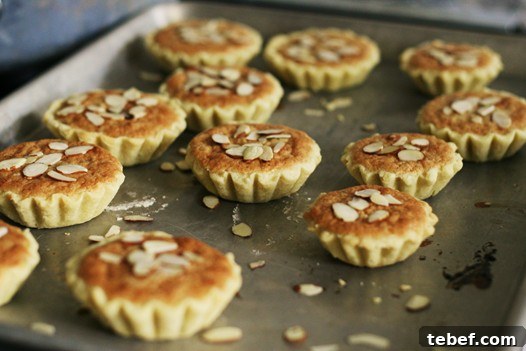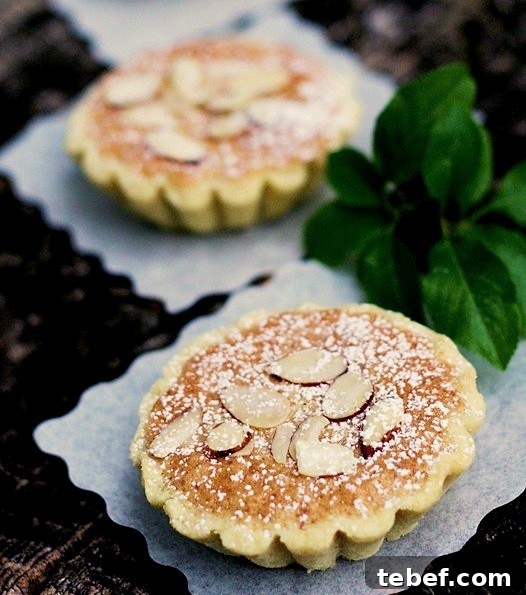
The June Daring Bakers’ challenge was hosted by Jasmine of Confessions of a Cardamom Addict and Annemarie of Ambrosia and Nectar. They selected the traditional British Bakewell Tart—often called a Bakewell pudding—a dessert rooted in English baking traditions that date back to the 1800s.
Bakewell tarts and puddings combine several dessert elements while showcasing seasonal fruit from your region.
There is no single definitive way to make a Bakewell; most modern versions fall into two main types. One type, often called the pudding, layers jam with an almond-flavored pastry cream and bakes it in puff pastry. The other, typically called the tart, uses a rich shortcrust pastry filled with jam and an almond sponge-like frangipane.
This recipe blends elements of both styles: a sweet almond-scented shortcrust pastry filled with frangipane and homemade jam.
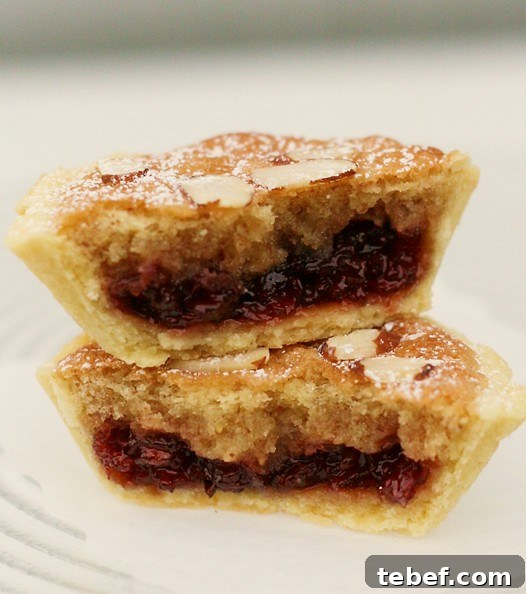
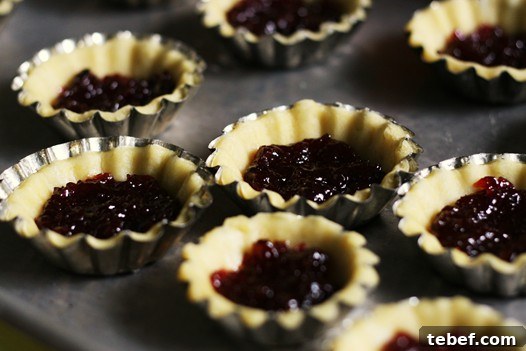
Rather than one large tart, I made several mini tarts. For the jam I used a homemade cherry preserve, which pairs beautifully with almond flavors. I was very pleased with the result and plan to make it again. Thanks to this month’s hostesses for the challenge.
Bakewell Tart History and Lore
Flan-like desserts that combine sweet egg custard with fruit or include spiced ground almonds in a pastry shell have medieval origins. The term “Bakewell pudding” first appeared in print in 1826, and by the 1840s Eliza Acton published a recipe featuring a baked egg custard over a thin layer of jam, noting its regional popularity.
By the late 1800s, the custard evolved into a frangipane-style almond filling; over time the jam layer became thinner while the almond filling grew richer.
Several origin stories exist. One popular legend credits Mrs. Greaves, landlady of The White Horse Inn in Bakewell, Derbyshire, who in the early 19th century asked her cook to prepare a pudding. According to differing accounts, the cook either spread jam on top of the almond mixture instead of beneath it, or mixed the custard differently—either way, the result delighted guests and a new regional specialty was born.
Since then, Bakewell tarts have become a classic English dessert, widely available in supermarkets and in mass-produced forms, sometimes topped with a sugary icing and a glazed cherry for decoration.
Enjoy a slice with tea or coffee, or indulge in successive sneaky slices until the whole tart mysteriously disappears.
Bakewell Tart …er… pudding Recipe
Makes one 23 cm (9”) tart
Prep time: Under 10 minutes (plus time for individual components)
Resting time: 15 minutes
Baking time: 30 minutes
Equipment needed: 23 cm (9”) tart pan or pie tin (preferably with fluted edges), rolling pin
One quantity sweet shortcrust pastry (recipe below)
Bench flour for rolling
250 ml (1 cup) jam or curd, warmed for easier spreading
One quantity frangipane (recipe below)
A handful of blanched flaked almonds
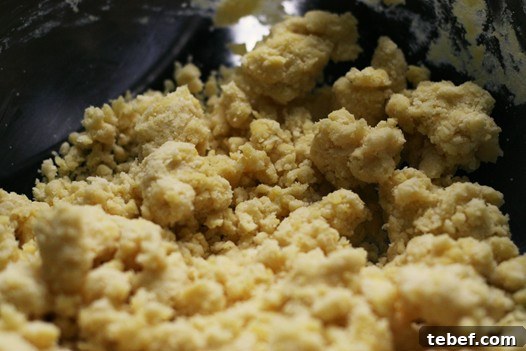
Sweet shortcrust pastry
Prep time: 15–20 minutes
Resting time: Minimum 30 minutes
Equipment needed: Bowls, box grater, cling film
225 g (8 oz) all-purpose flour
30 g (1 oz) sugar
1/2 tsp salt
110 g (4 oz) cold unsalted butter (frozen is fine)
2 egg yolks
1/2 tsp almond extract (optional)
1–2 tbsp (15–30 ml) cold water
Sift together the flour, sugar and salt. Grate the cold butter into the flour using the large holes of a box grater. Quickly rub the butter into the flour with your fingertips until the mixture resembles coarse breadcrumbs. Set aside.
Lightly beat the egg yolks with the almond extract if using. Mix them into the flour mixture, adding just enough cold water to bring the dough together into a slightly sticky, cohesive ball. Shape into a disc, wrap in cling film and chill for at least 30 minutes.
Notes:
• You can use vanilla salt and vanilla sugar in place of some of the sugar and salt if preferred.
• Substitute the almond extract with vanilla bean seeds, vanilla paste or vanilla extract for a different flavor.
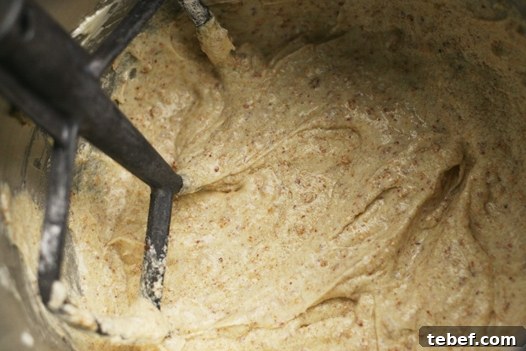
Frangipane
Prep time: 10–15 minutes
Equipment needed: Bowls, hand mixer, rubber spatula
125 g (4.5 oz) unsalted butter, softened
125 g (4.5 oz) icing sugar
3 eggs
1/2 tsp almond extract
125 g (4.5 oz) ground almonds
30 g (1 oz) all-purpose flour
Cream the butter and icing sugar together until light and fluffy, about a minute. Scrape down the bowl and add the eggs one at a time, beating well after each addition; the mixture may look slightly curdled—this is normal. Add the almond extract, then fold in the ground almonds and flour until well combined. The frangipane will be soft and slightly textured from the almonds.
Notes: If you grind your own almonds or mix by hand, allow extra time for thorough mixing.
Assembling the tart
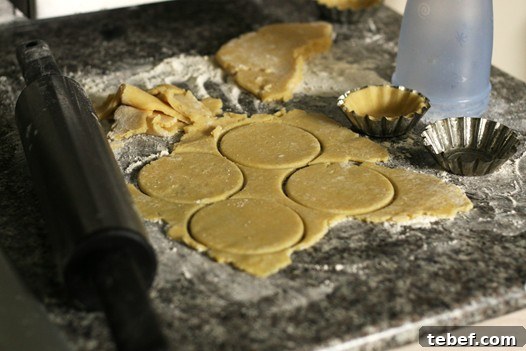
On a lightly floured surface, roll the chilled pastry to about 5 mm (1/4 inch) thickness, rolling in one direction from the center outward and turning the disc a quarter turn between rolls. Fit the pastry into the tart pan, trim the excess and patch any cracks with trimmed bits. Chill the lined shell in the freezer for 15 minutes.
Preheat the oven to 200°C (400°F).
Remove the tart shell from the freezer and spread an even layer of warmed jam over the base. Spoon the frangipane over the jam and spread to cover the surface. Smooth the top and bake for 30 minutes. Five minutes before the end of baking, the frangipane should be puffed and browned; scatter the flaked almonds over the top and return to the oven for the final five minutes.
The finished tart will have a golden crust with a slightly risen, browned frangipane. Remove from the oven and cool on the counter. Serve warm with crème fraîche, whipped cream or custard if you like.
When sliced, the almond filling should be firm but slightly yielding and the crust crisp without being tough.
More tips:
• If you need a nut-free alternative, a Victoria sponge layer can replace the frangipane.
• Use any jam you prefer; for seedy fruits like raspberry or blackberry, consider sieving out the seeds for a smoother texture.
• Jam quantity can range from about 60 ml (1/4 cup) to 250 ml (1 cup) depending on how moist and intensely flavored your preserves are. If unsure, spread around 150 ml (2/3 cup) on the crust.
• Excess shortcrust pastry can be rolled out and cut into cookies—its texture is similar to shortbread.