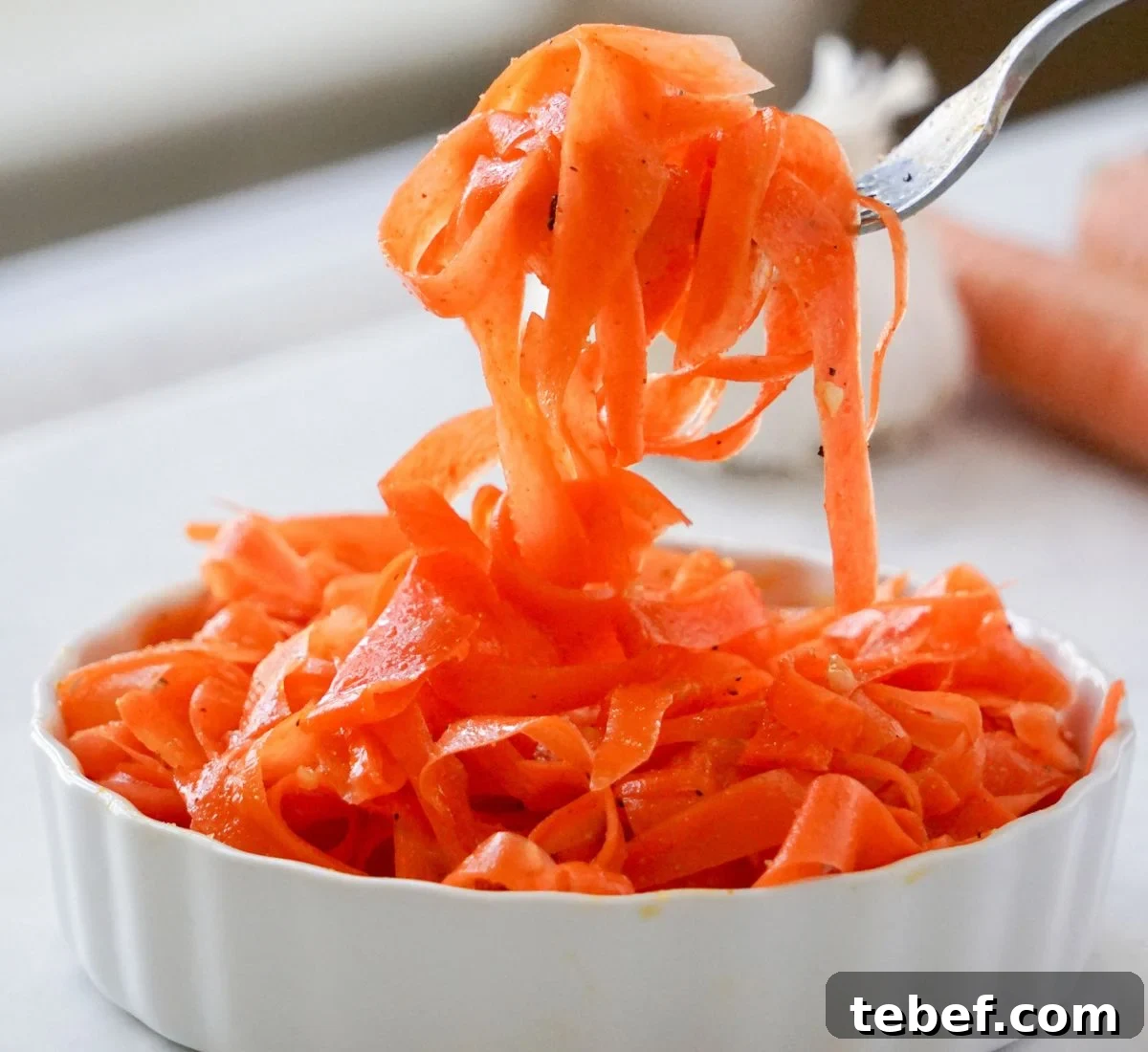
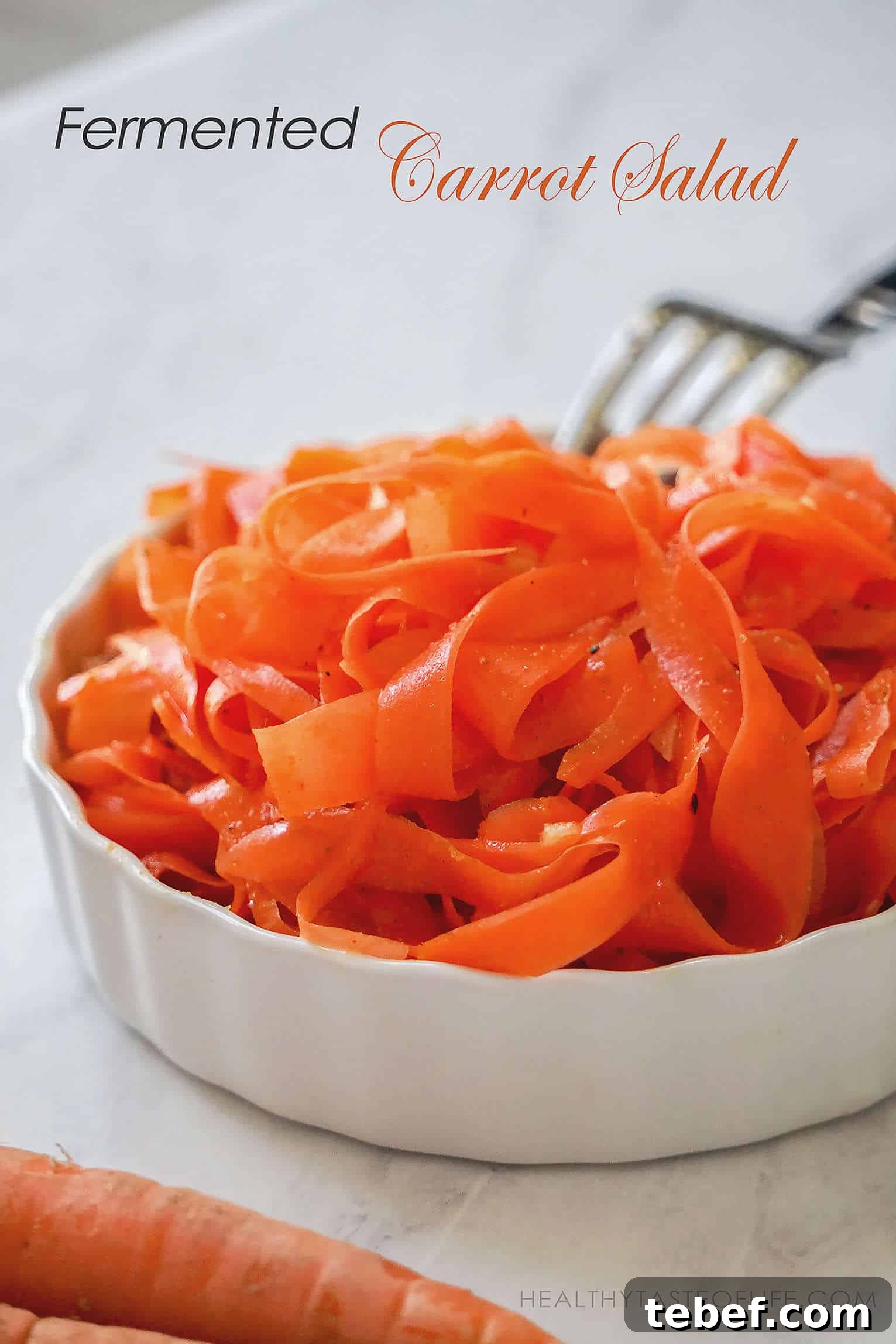
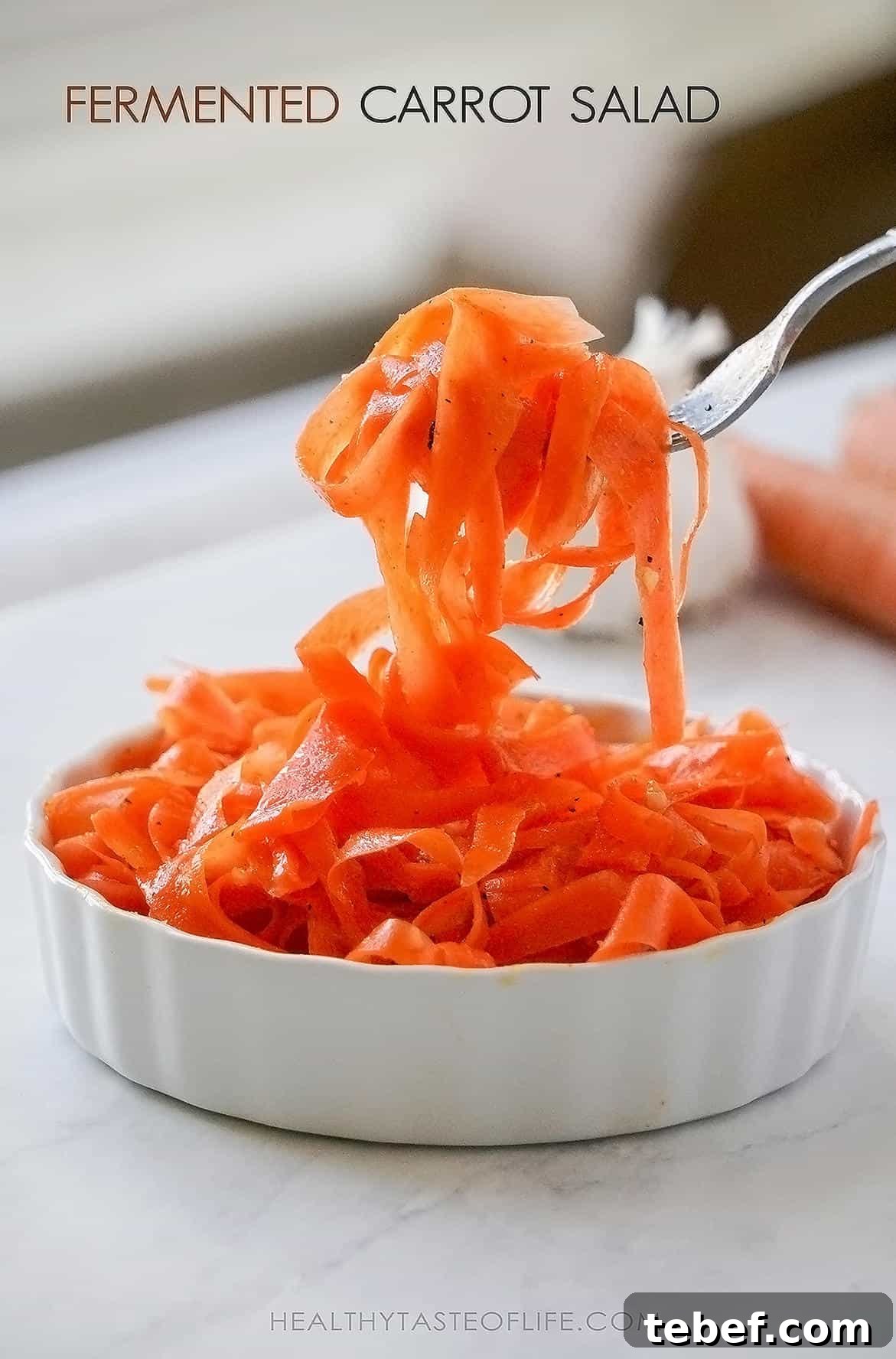
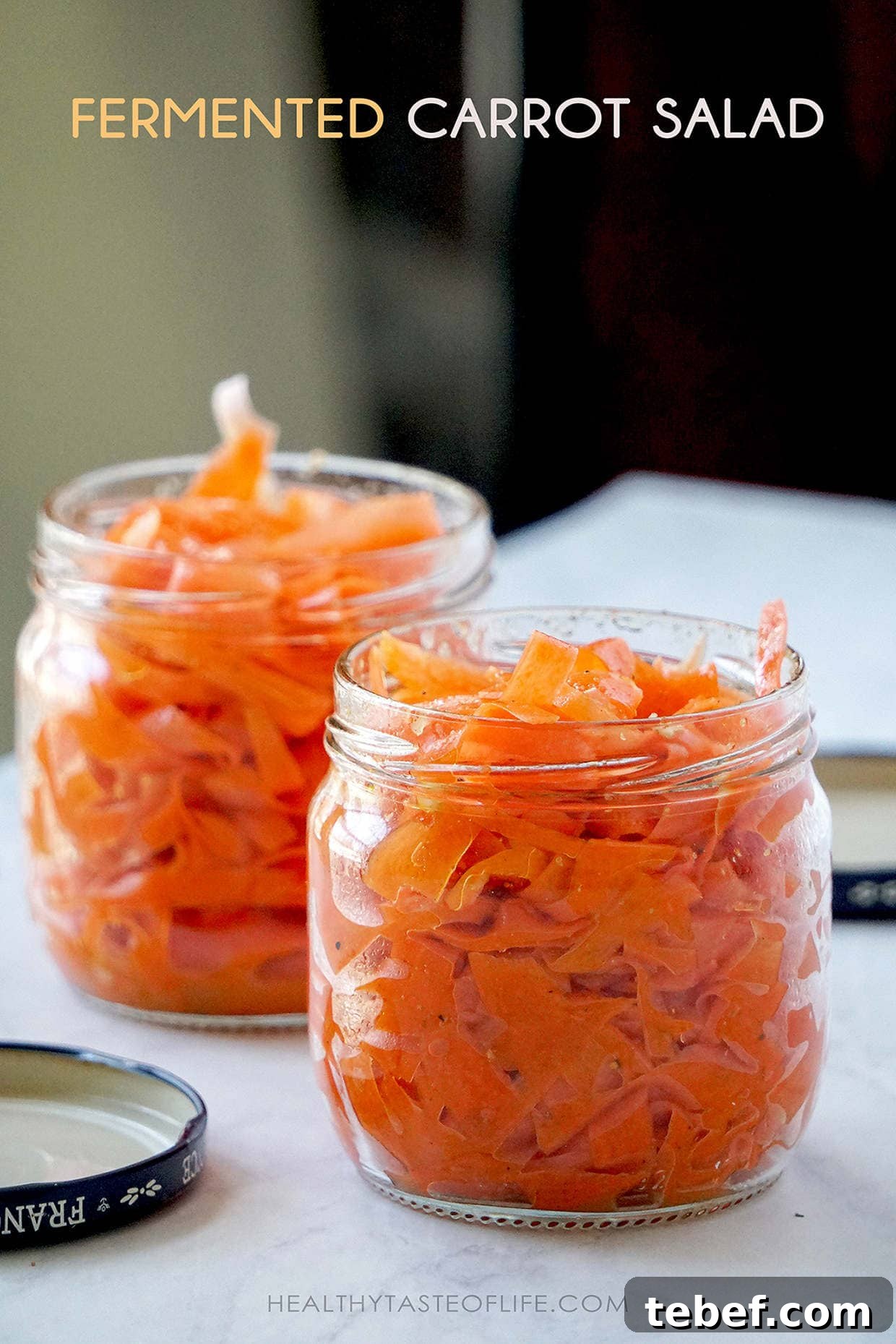
These fermented shaved carrots create a probiotic-rich, tangy and aromatic salad that works beautifully as a side dish or a topping for tacos, burgers and other mains.
This lacto-fermented shaved carrot salad is made by seasoning thin carrot ribbons with spices like garlic, paprika and coriander, then fermenting them until they develop a bright, tangy flavor with a hint of spice.
Benefits Of This Fermented Carrot Salad
- Versatile: Use it alongside grilled meats and fish, toss it into salads, or serve it on burgers and tacos. Shaved carrots are visually appealing and mix well with other fermented vegetables.
- Probiotic-rich: Lacto-fermentation encourages beneficial bacteria that support gut health.
- Improved nutrient absorption: Fermentation can increase certain vitamins and make carrots easier to digest, helping your body absorb nutrients more effectively.
- Supports digestion: Lactobacilli produced during fermentation assist with breaking down food and help limit harmful microbes.
- Bright, tangy flavor: Lactic acid lends a fresh, slightly spicy tang that lifts many dishes.
Related: Simple Easy Cabbage and Carrot Salad
Related Fermented Vegetables
- Fermented Beets + Cabbage (Probiotic Rich Beetroot Sauerkraut)
- Fermented Cucumbers (Dill Pickles) — no vinegar
- Fermented Cauliflower Recipe
- Guide to Fermented Tomatoes
- Fermented Zucchini and Cucumbers
- Fermented Peppers and Tomatoes
Heads up: some links are affiliated and may earn a small commission on qualifying purchases. For details see the site’s disclaimer.
How To Make Fermented Shaved Carrot Salad
This recipe is made in two stages: first ferment the carrots, then finish the salad with spice-infused oil and aromatics.
Step 1: Ferment the Carrots
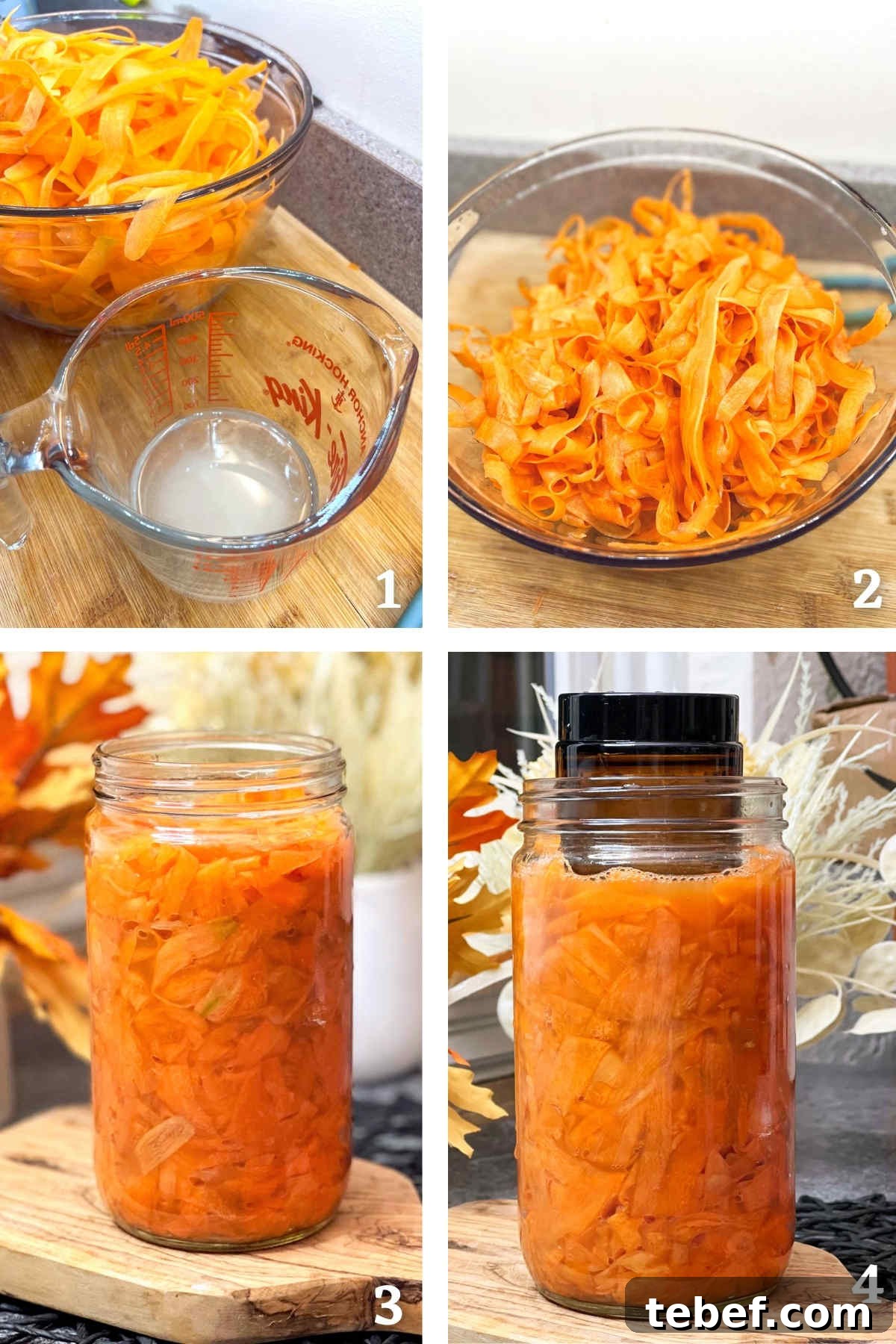
- Shave carrots into long, paper-thin ribbons using a vegetable peeler or mandoline. Place them in a bowl.
- Mix sea salt with filtered water and add a couple tablespoons of sauerkraut juice as a starter (optional). Pour over the carrots and massage until evenly coated.
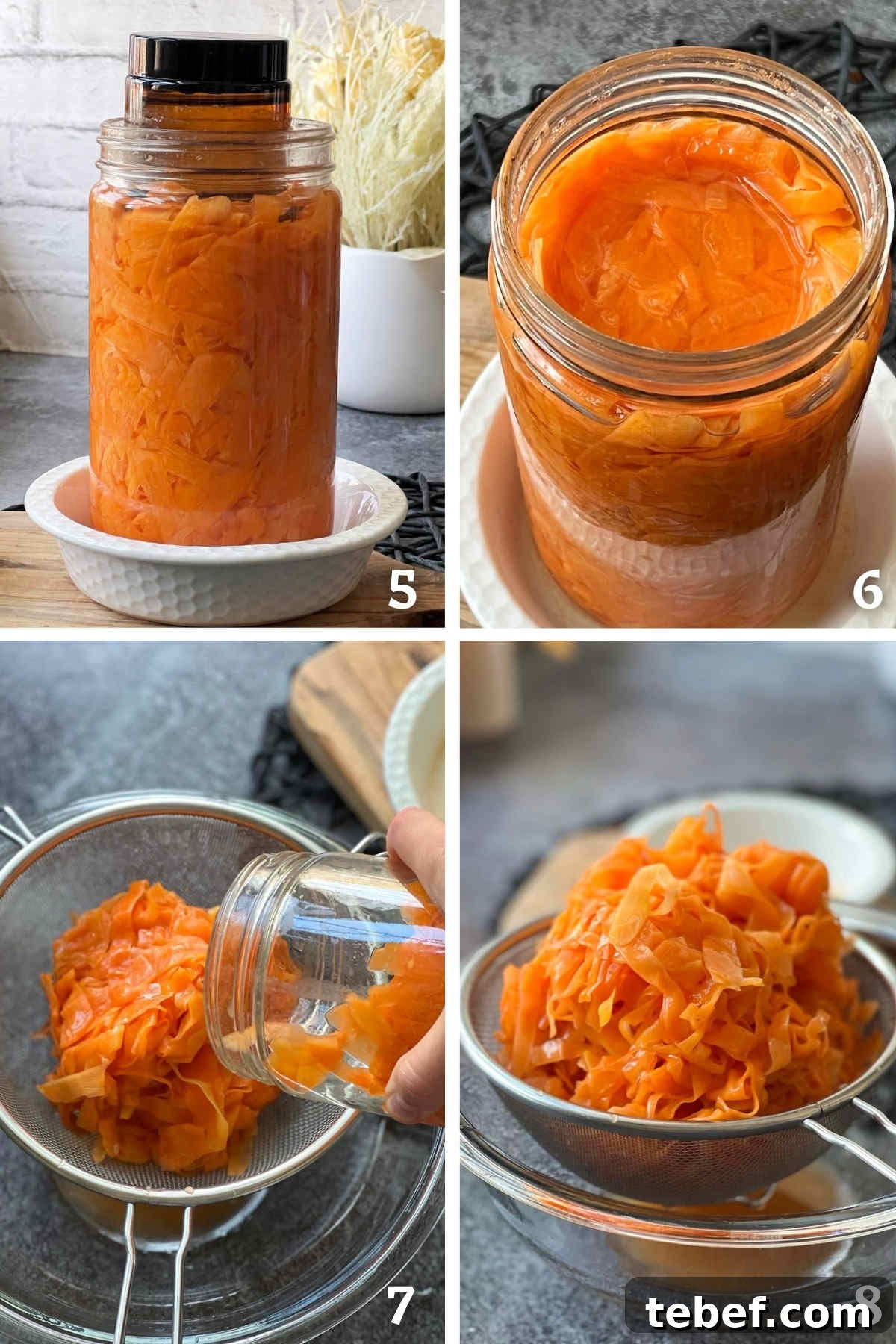
- Pack the carrots tightly into a clean jar so they release liquid, pour any remaining brine over them, and ensure they are fully submerged. Use a weight if needed. Cover with a coffee filter or cheesecloth secured with a rubber band.
- Ferment at room temperature (around 65°F / 18°C) for 4–6 days, depending on how tangy you want them. Check for a pleasant sour aroma and no unpleasant odors or heavy mold.
- Discard any pieces with persistent white film or off smells; small surface pellicles can sometimes be trimmed away.
Step 2: Add Spices and Finish the Salad
- When the carrots have the desired sourness, drain them and place in a bowl.
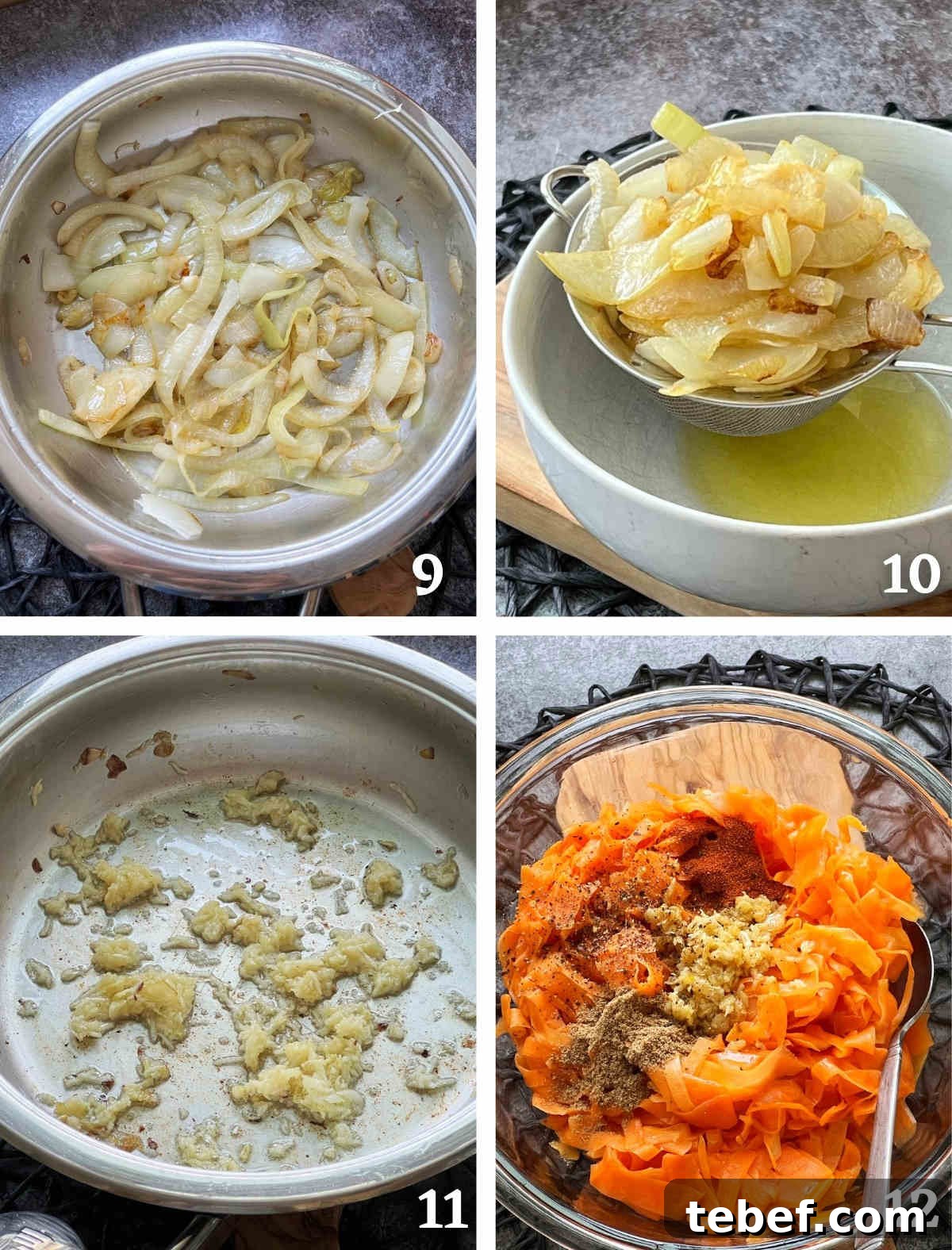
- Heat 1/4–1/3 cup oil in a skillet. Cook sliced onion in the oil until golden and fragrant, then remove the onion and strain the oil into a small bowl.
- Sauté minced garlic briefly in the remaining oil (about 1 minute), then remove from heat and let it cool.
- Add the strained oil and garlic to the fermented carrots, then stir in spices: coriander, paprika (or smoked paprika), ground black pepper and a pinch of cayenne if you like heat.
- Optional: add about 2 tablespoons of maple syrup or brown sugar to balance the flavors.
- Gently toss so every ribbon is coated. Adjust seasoning, sweetness or acidity to taste, using more chili, sugar or a splash of vinegar if desired.
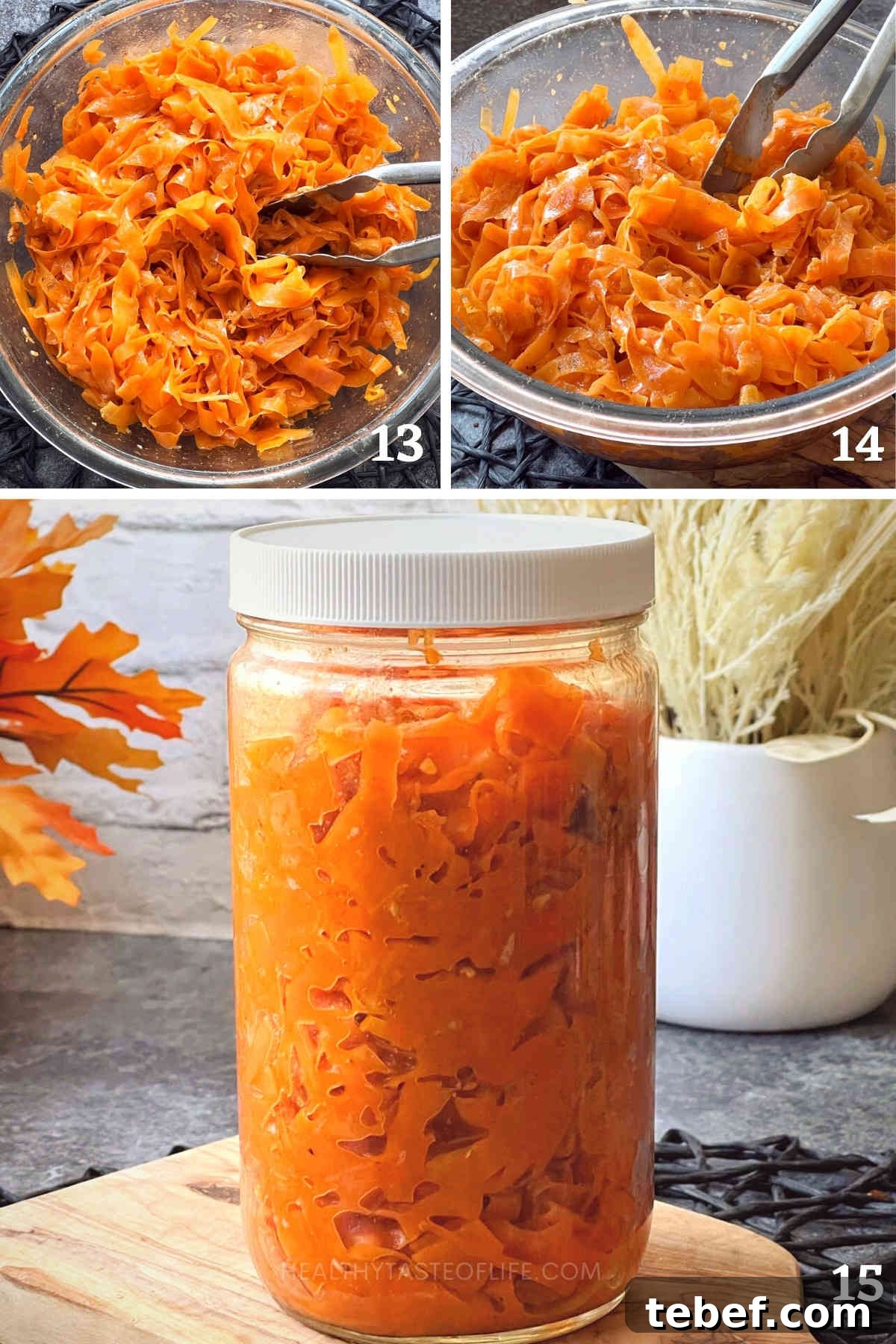
Taste and tweak the seasonings to your preference — more garlic, sweetness or heat as you like. I prefer a balance of garlic, sweet and sour with a moderate saltiness from fermentation.
Transfer the dressed carrots back into the fermentation jar (no need to wash it) or divide into smaller jars for storage.
Storing and Serving
Store the salad in airtight jars in the refrigerator to slow fermentation. Flavors will deepen over time. Properly stored, it can keep for several weeks to a couple of months, depending on salt and acidity.
Serve as a crisp, tangy side, add to salads for texture, or use as a bright topping for sandwiches, tacos, burgers, bowls and more.

Tips for Customizing Your Salad
- Add ginger, extra garlic or chili flakes to increase heat.
- Mix in fresh herbs like dill or parsley, or combine with other vegetables such as beets or turnips for color and texture.
- Adjust sweetness, spice and acidity to create a flavor profile that complements the meal.
FAQs
When fermented correctly and stored in a cool, stable environment, fermented carrots can last many months. In the fridge, flavors continue to develop and they should remain good for several weeks to a couple of months. Discard if you notice off smells, sliminess or large areas of discoloration.
Yes. Lacto-fermentation encourages lactobacilli and other beneficial microbes that can improve digestion, increase certain vitamins and support a healthy gut microbiome.
They complement fatty foods like meats, eggs, cheese and avocado, and work well in burritos, wraps, sandwiches and burgers. They also add brightness to soups, salads and grain or poke bowls.
What to Serve with These Shaved Fermented Carrots
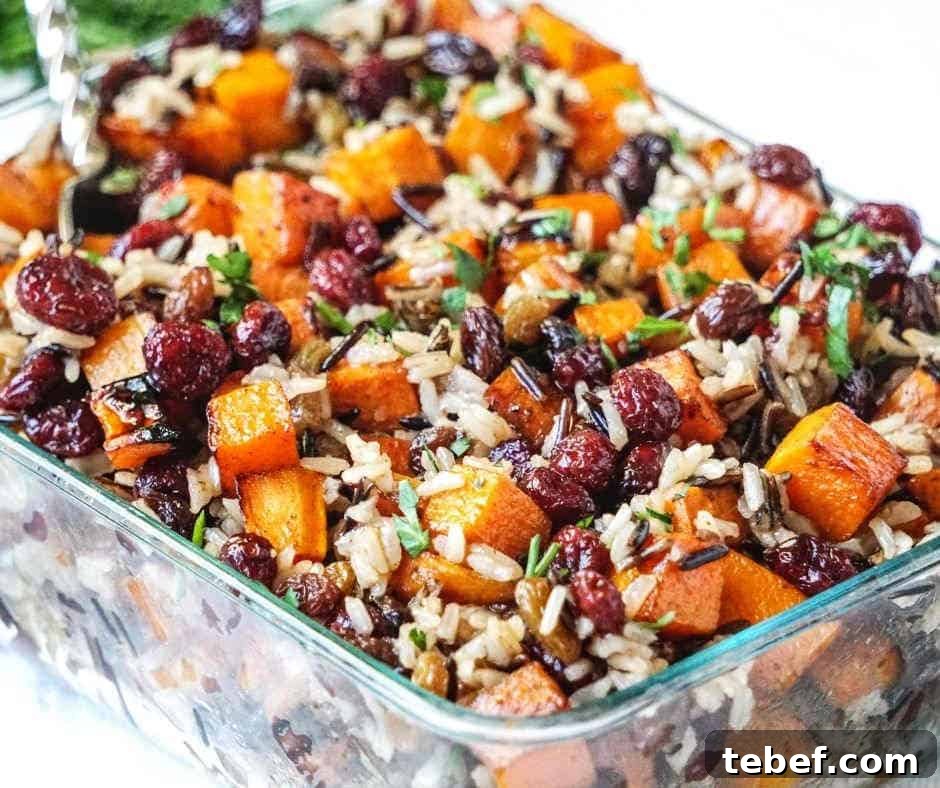
Butternut Squash & Sweet Potato Casserole (with Rice)
Tip: Carrots can be fermented in sticks, rounds or julienne cuts, but shaved ribbons look elegant and make a delightful texture.
If you try this fermented shaved carrot salad, please leave a comment to share how it turned out — I’d love to hear your feedback!
Also Try
- Fermented Watermelon (vs pickling)
- Fermented Fresh Fish (Mackerel)
- Fermented Red Cabbage (Sauerkraut)
©HealthyTasteOfLife. Content and photographs are copyright protected and require permission to use. Sharing the link to this recipe is encouraged and appreciated.