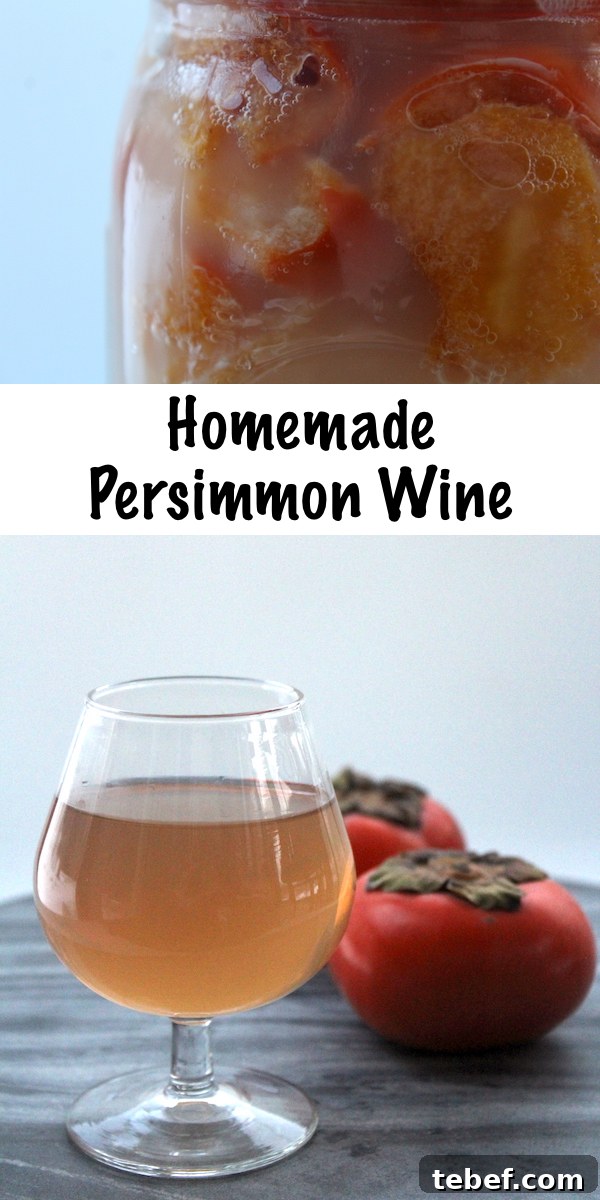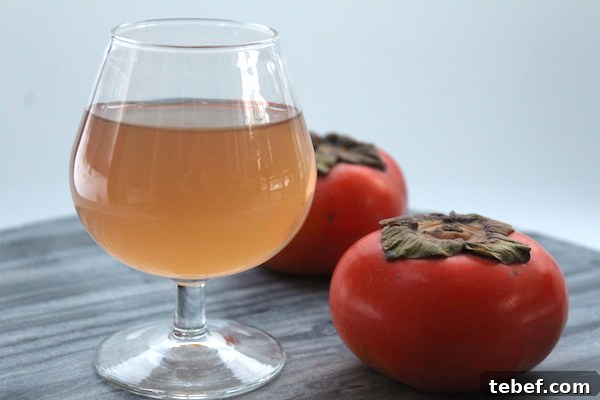
Persimmons are one of the last fruits of the year, ripening in November and December. Their late season makes them perfect for a final small-batch ferment before the new year, and homemade persimmon wine is a wonderful way to use extra fruit.
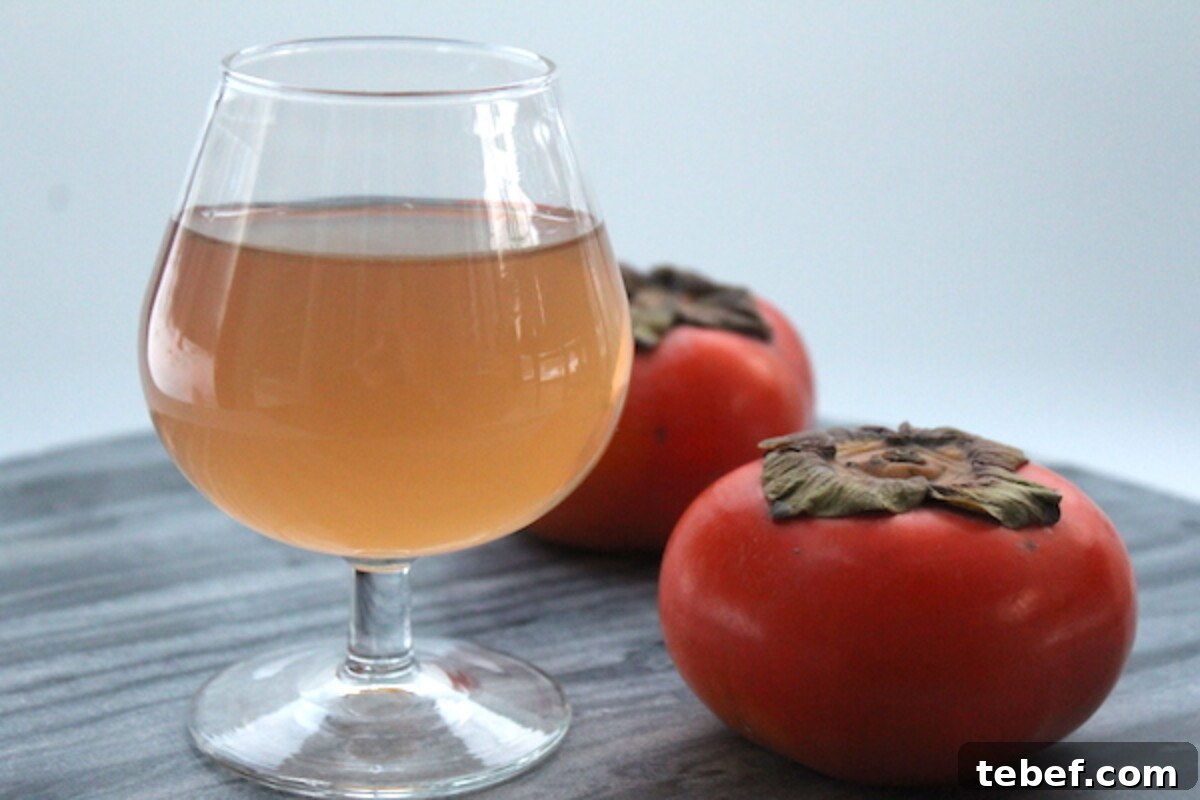
Persimmons can be pricey, but when you find a deal it’s smart to stretch them into multiple preparations. Most of mine went to persimmon jam, a family favorite, and some went into a persimmon upside-down cake made with honey and almond flour. With a few persimmons left over, fermentation was the obvious next step: persimmon wine.
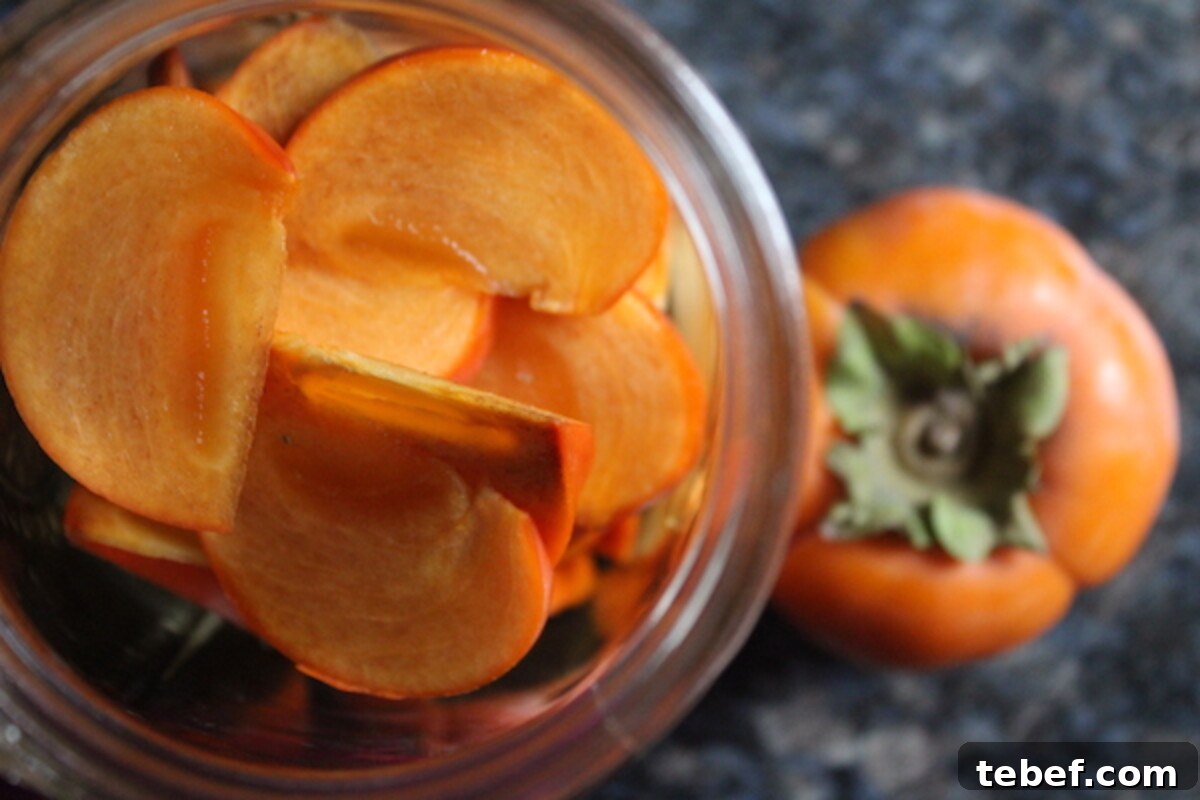
Persimmons are quite starchy, even at peak ripeness. That starch helps them thicken into jam without pectin but makes them slow to yield juice in a juicer. For this recipe I used a simple sugar maceration technique I’ve used successfully with other fruits: slice the persimmons, pack them into a mason jar and sprinkle sugar over them. Within hours the sugar draws water from the fruit, breaking down cell walls so the persimmons collapse and release a sweet juice.
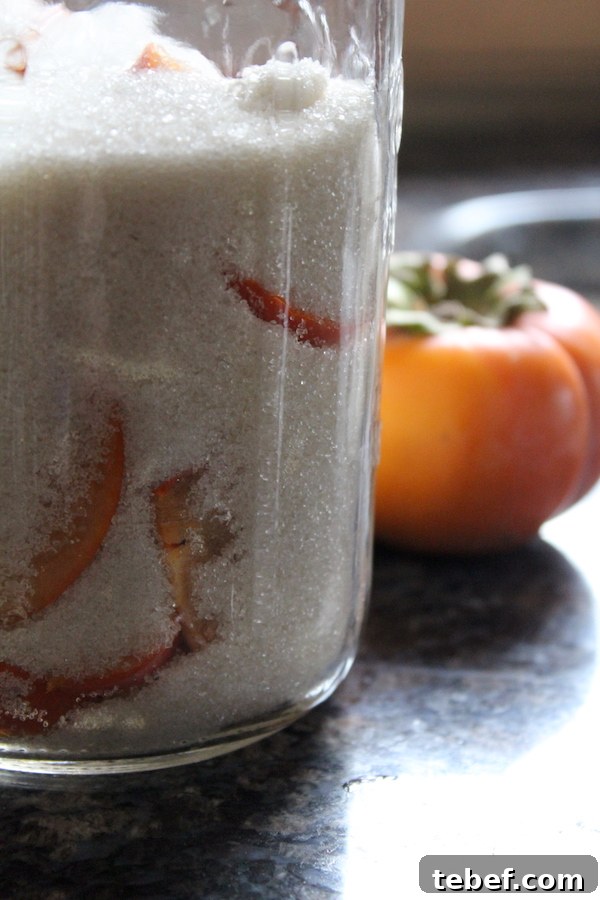
After 8–12 hours the fruit will be reduced and the jar will contain much of the persimmon liquid. At that point you can either muddle the pulp to extract the final juices and then strain it out, or leave the pulp in for the primary ferment. I recommend removing most of the pulp before fermentation—the solids take up volume and can lower your final yield unless you top up with water after primary fermentation. Chunky pulp can also clog traditional water locks, which is why a waterless silicone fermentation cap works well for small, active ferments.
Once you’ve separated the liquid, rinse the remaining pulp with a little water and add that wash back to the jar to capture as much persimmon flavor as possible.
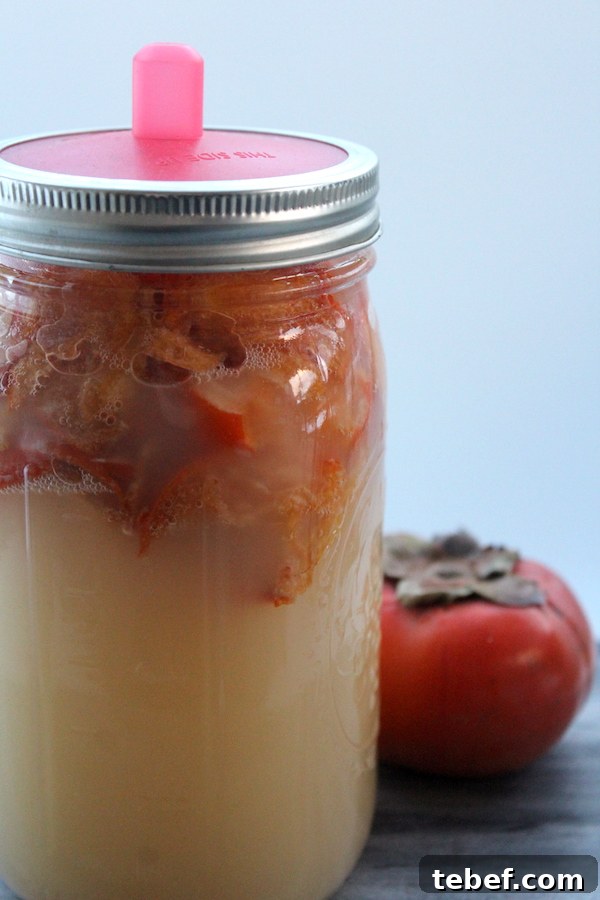
This is an intentionally simple wine recipe. I didn’t use pectic enzyme in my original batch, so the finished wine remained somewhat cloudy. For a clearer result I suggest using pectic enzyme; it’s included in the ingredient list below. I also add acid—lemon juice in this recipe—to brighten the persimmon’s flavor. If you prefer a more neutral acidity, substitute a winemaking acid blend instead of lemon juice.
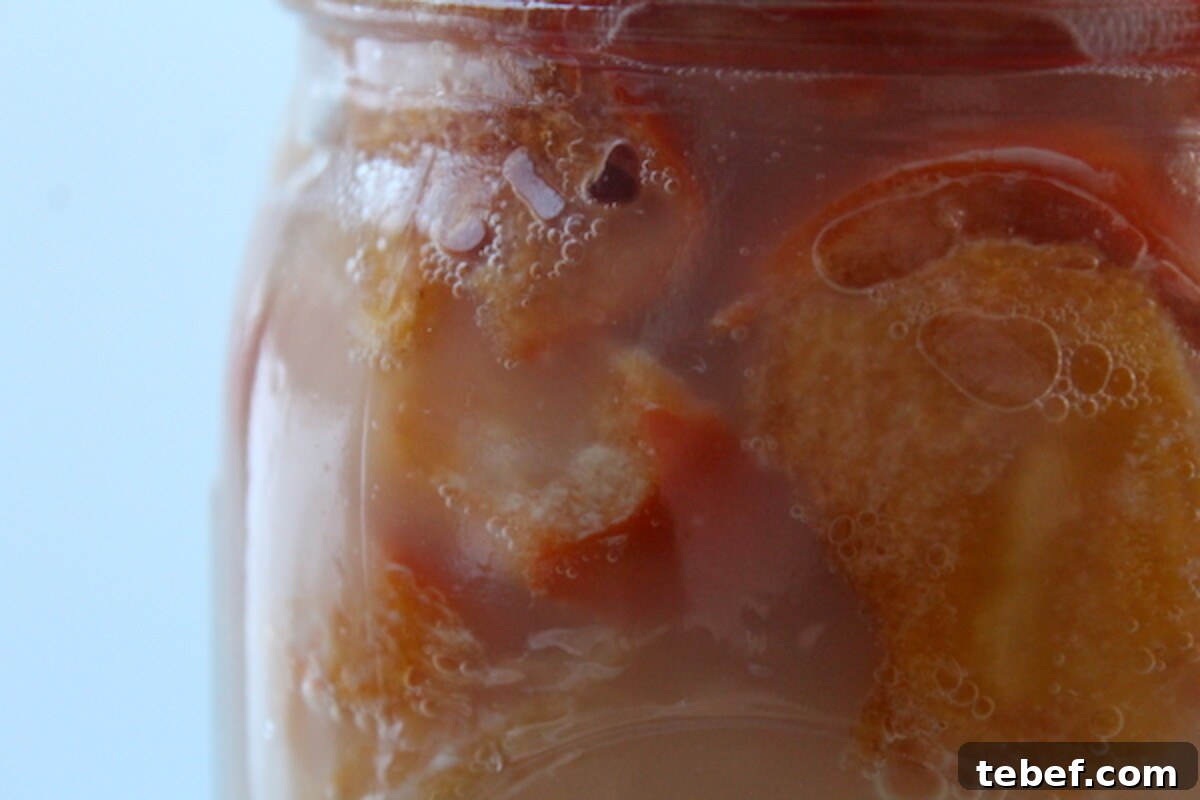
Basic winemaking additives you might consider: pectic enzyme to help break open fruit cells and clarify the wine; an acid blend or lemon juice to balance pH; yeast nutrient to support fermentation; and potassium metabisulfite/potassium sorbate to stabilize the wine before bottling if you want to halt fermentation. Tannin is optional for body and astringency, but I left it out of this small-batch recipe.
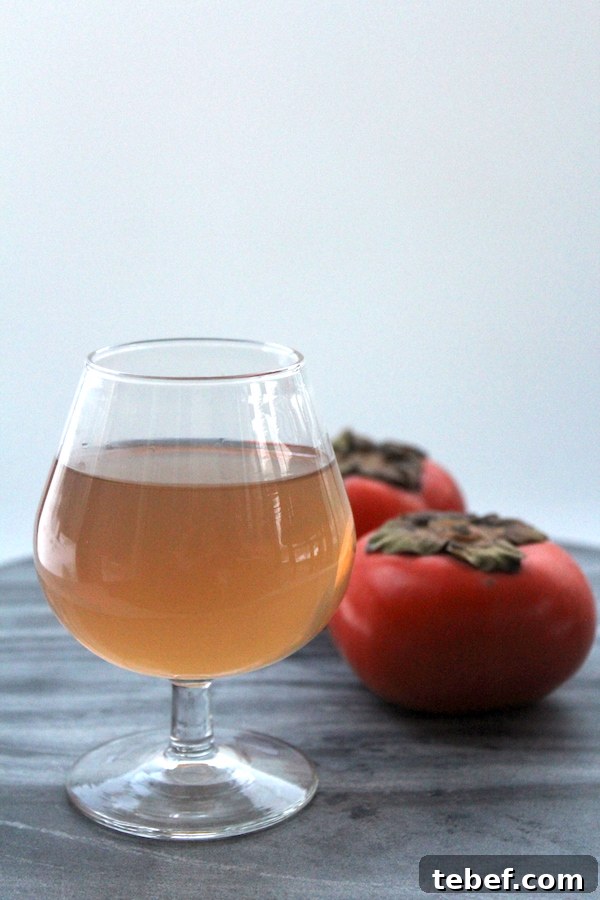
This recipe is written as a small quarter-batch (one quart). Multiply the ingredients by 4 for a one-gallon batch or by 20 for a five-gallon batch. If you leave pulp in during a larger primary ferment, use a wide-mouth one-gallon jar with a waterlock for easier cleaning and better primary fermentation management.
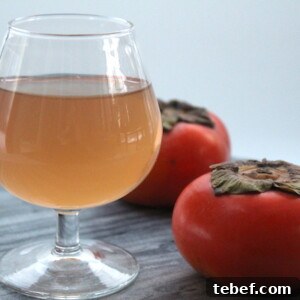
Homemade Persimmon Wine
Equipment
-
One Gallon Carboy
-
Sanitizer
-
Wine Bottles
-
Wine Corks
-
Bottle Corker
Ingredients
- 3/4 lb persimmons, about 2 large fuyu
- 10 oz sugar
- 1 tbsp lemon juice, or 1 tsp acid blend
- 1/4 tsp Pectic Enzyme
- 1/4 tsp yeast nutrient
- 1/4 wine yeast, dissolved in water
Instructions
-
Slice persimmons and place them in a quart mason jar. Top with sugar and allow the sugar to extract the persimmon juice for 8–12 hours.
-
Filter out the persimmon pulp, muddling it to extract the remaining juice. Pour a small amount of water over the pulp to wash off residual sugar and add that liquid back to the jar. (Alternatively, leave the pulp in the primary and filter it out after the initial ferment, about 7 days.)
-
Add the acid source (lemon juice or acid blend), yeast nutrient and pectic enzyme.
-
Dissolve the wine yeast in a little water and allow it to rehydrate for at least 5 minutes. Then add it to the fermenter.
-
Add water as needed to fill the jar to within 1 inch of the top. Cover with a mason jar airlock or waterless silicone lid and ferment for 5–7 days, until activity visibly slows.
-
Carefully rack the wine into a clean secondary jar, leaving sediment and any remaining pulp behind. If you left pulp in the primary, filter it out now.
-
Top the secondary to within 1 inch of the top and allow the wine to ferment and clear for another 4–6 weeks, or until fermentation has mostly stopped and the wine begins to clear.
-
Bottle in flip-top Grolsch bottles for small batches or in standard wine bottles with corks for larger batches. Age at least one month before drinking; three to four months is better.
Notes
Small batches bottle nicely in flip-top bottles; for larger batches use traditional wine bottles and corks for the best results.
Nutrition
Nutrition information is an approximation.
Like this? Leave a comment below!
More Wine Recipes
- Blueberry Wine
- Blackberry Wine
- Pomegranate Wine
- Cranberry Wine