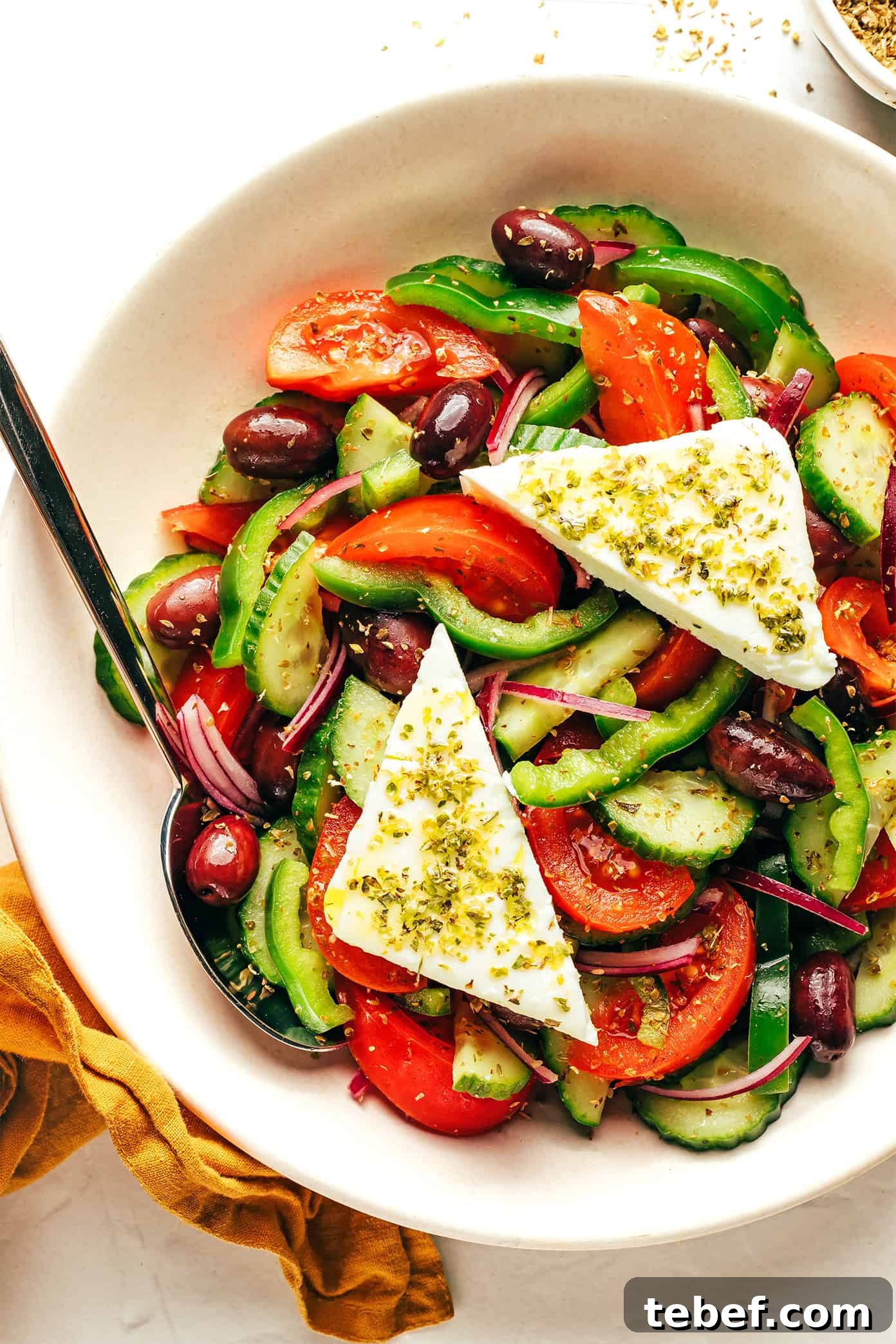
Everything we learned from our time in Greece about how to create an authentic, fresh and delicious Greek salad.
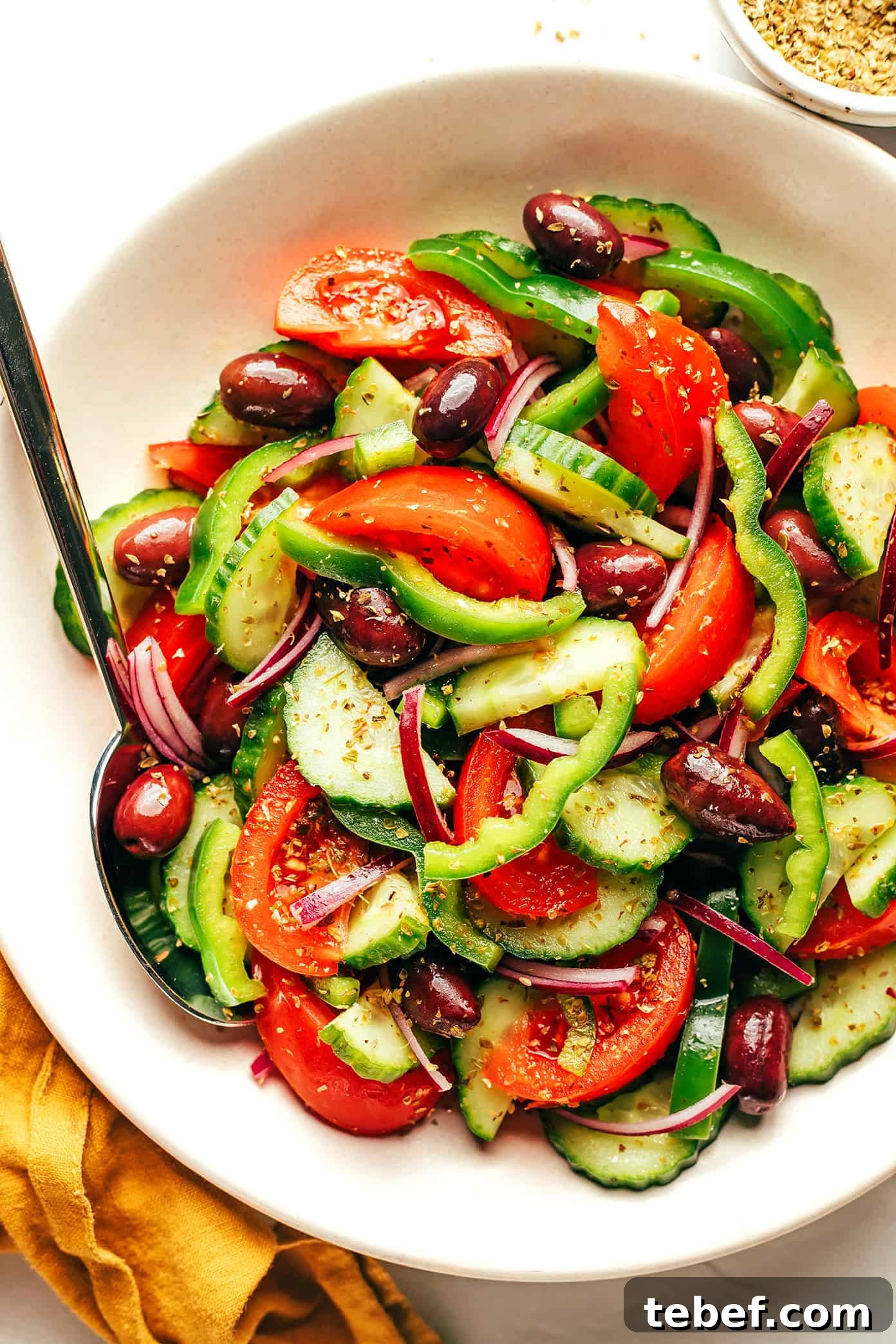
When Barclay asked what I wanted to do in Greece for my birthday, I had three simple goals:
- Enjoy beautiful views.
- Read lots of books.
- Eat as many Greek salads as possible.
I’m happy to report all three goals were met—especially the last one. This trip turned into a Greek-salad marathon of the best kind. In Greece, salads are enjoyed at lunch, dinner and sometimes even breakfast, and we sampled them whenever we could. Visiting in late May, when produce is at peak flavor, made a huge difference. The salads were incredibly fresh, vibrant and straightforward. They also differed in a few notable ways from what many of us expect from a “Greek salad” in the United States. We loved them and came home eager to recreate them ourselves.
Here’s what we learned about authentic Greek salad.
Authentic Greek Salad Recipe | 1-Minute Video
The Hallmarks of an Authentic Greek Salad
Greek salads in Greece are remarkably consistent: they use the same fresh ingredients and a simple presentation that highlights bright flavors. While some regions offer local variations—like Santorini or Folegandros versions that add a regional twist—the classic horiatiki (village) salad follows a familiar pattern:
- No lettuce. Traditional horiatiki is built from vegetables, olives and cheese, not leafy greens.
- No elaborate dressing. In Greece you won’t usually find the bottled “Greek” dressing common in the U.S. Instead, salads are dressed simply with extra virgin olive oil, sometimes a splash of red wine vinegar, and a sprinkle of dried oregano and salt.
- Large chunks of vegetables. Tomatoes are typically cut into wedges rather than using tiny cherry tomatoes.
- A large slab of feta. Feta—often sheep’s milk feta—is presented as a block placed on top of the salad, not crumbled. If you only have crumbled feta available, it still works, but the block is the traditional look.
- Green bell peppers. Salads usually include bright green bell pepper slices rather than red, orange or yellow varieties.
- Kalamata olives with pits. Olives are served whole and usually unpitted.
- Simple presentation. Salads are often served plain, with olive oil and vinegar available on the table so diners can dress their portion. They’re not overly tossed or garnished—those fresh vegetables speak for themselves.
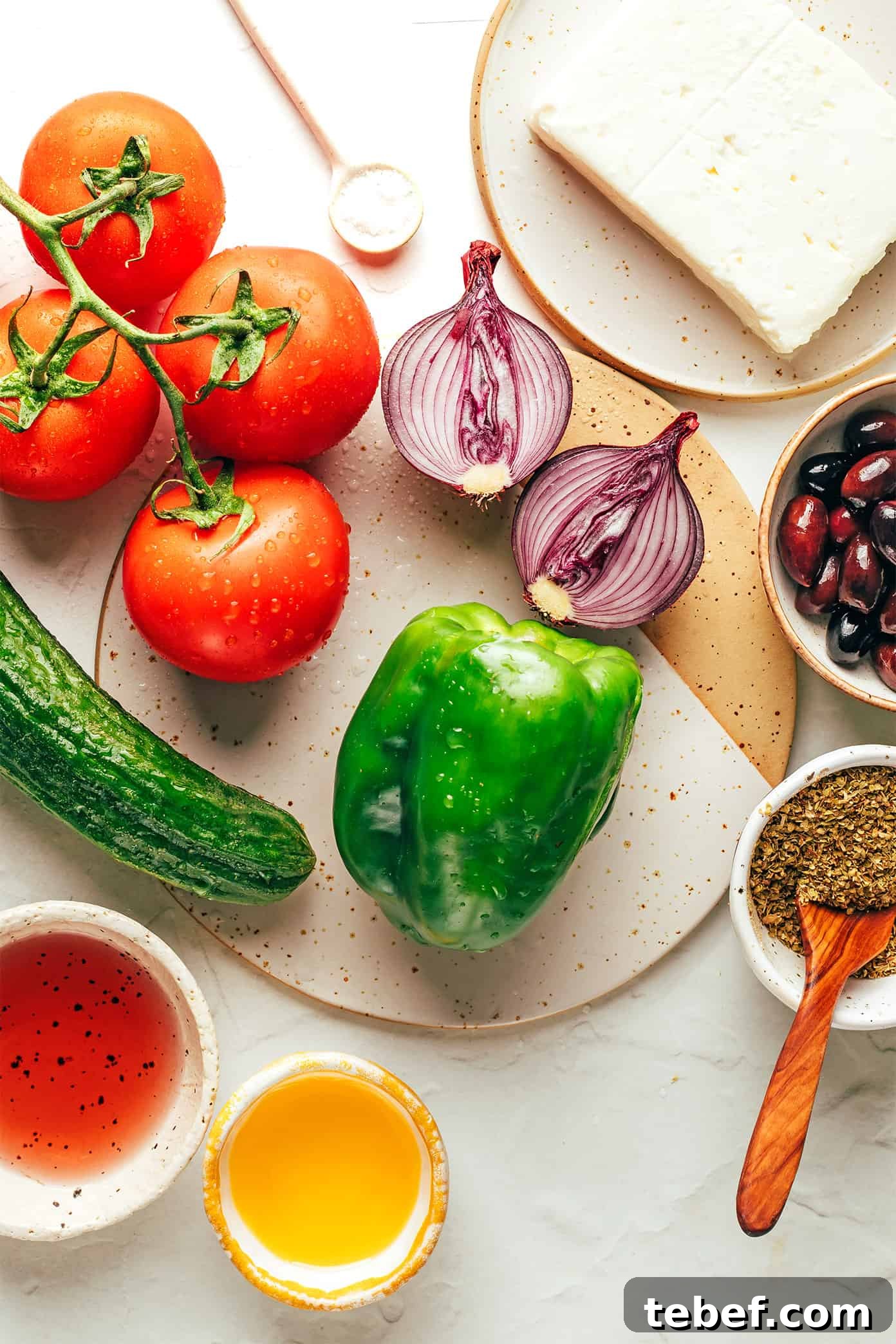
Greek Salad Ingredients
For a classic Greek salad, gather these ingredients:
- Tomatoes: Ripe, medium tomatoes cut into wedges. In-season tomatoes make a big difference.
- Cucumber: English or Persian cucumbers both work well.
- Green bell pepper: Cored and sliced thinly; traditional and slightly crisp.
- Red onion: Thinly sliced for a mild bite.
- Kalamata olives: Served whole, usually with pits.
- Feta: Thickly sliced or served as a block, ideally made from sheep’s milk.
- Extra virgin olive oil: Use a good-quality oil, since it’s the main component of the dressing.
- Dried oregano: Sprinkled on the salad or mixed in with the dressing.
- Sea salt: Add sparingly at first because feta is already salty.
Optional additions:
- Red wine vinegar: A splash brightens the flavors and is commonly used.
- Capers: Occasionally included in some regional variations for a briny pop.
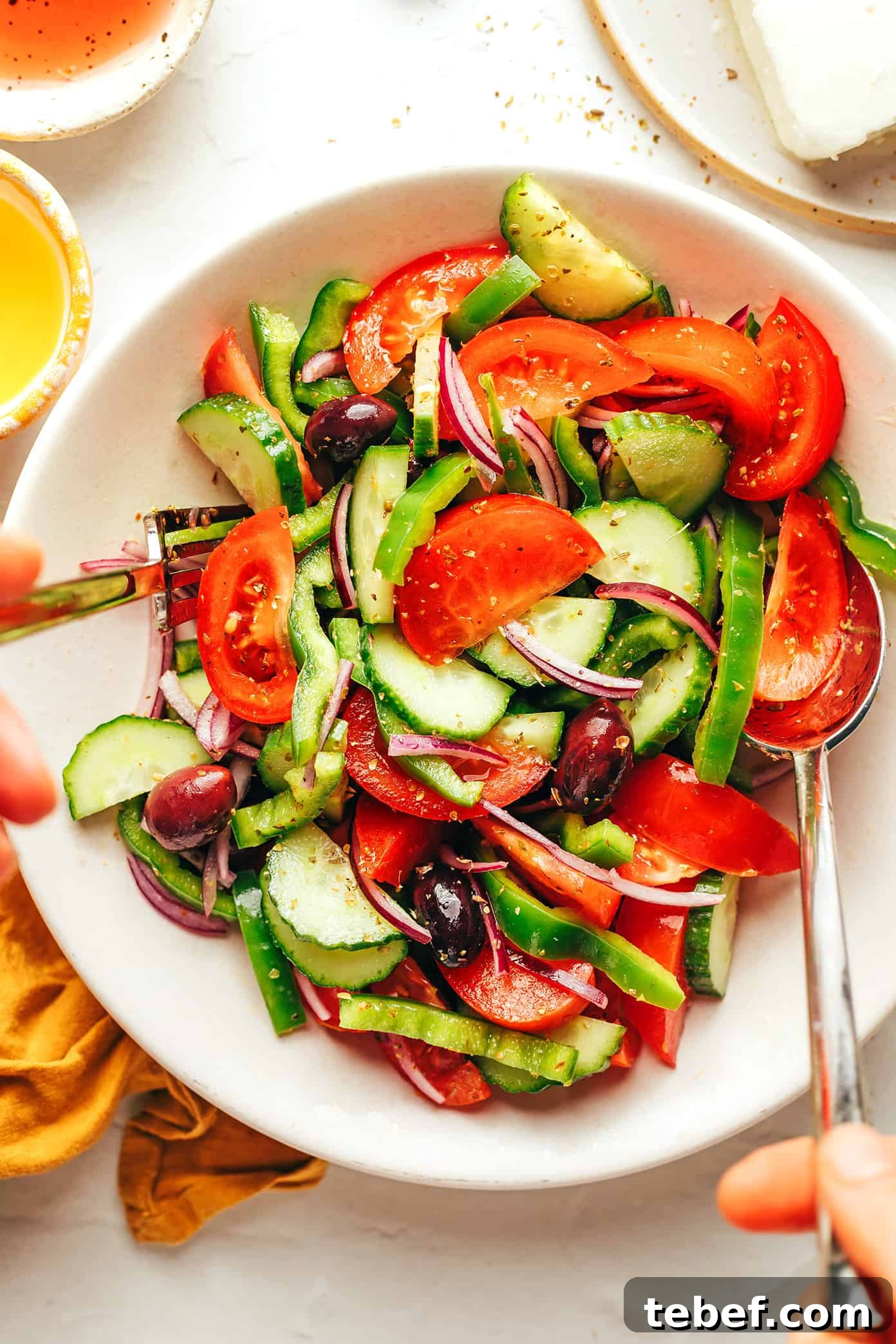
How To Make A Greek Salad
Making horiatiki is quick and easy:
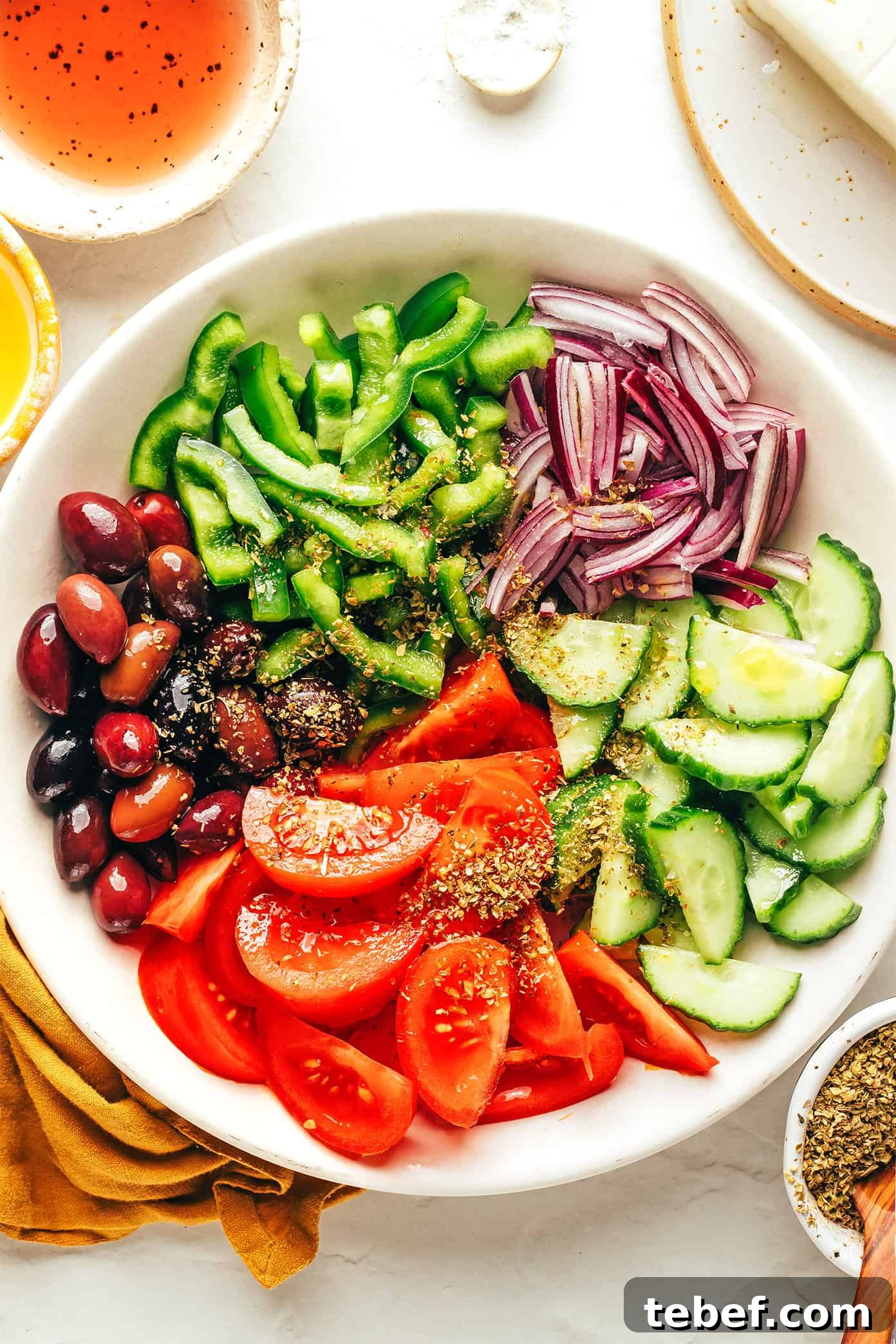
- Combine the base ingredients. In a large bowl, add tomatoes, cucumber, green pepper, red onion and olives.
- Dress simply. Drizzle with extra virgin olive oil, add a splash of red wine vinegar if desired, and sprinkle with dried oregano and a pinch of sea salt.
- Toss lightly. Mix briefly so the ingredients stay distinct—this salad shouldn’t be overworked.
- Top with feta. Place a thick slab of feta on top and add a final drizzle of olive oil and a pinch of oregano.
- Serve. Enjoy immediately, or refrigerate in a sealed container for up to three days.
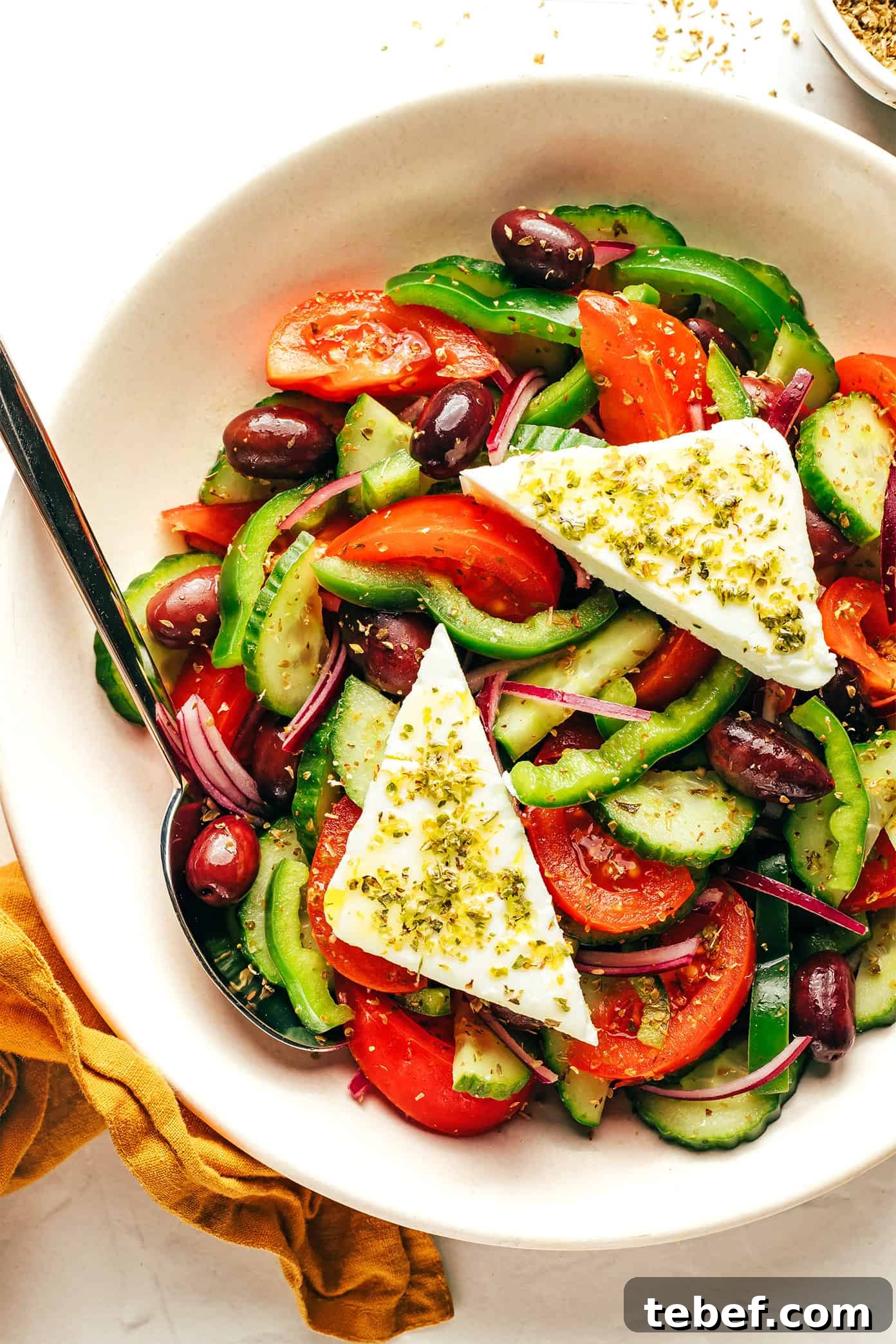
What To Serve With A Greek Salad
This fresh, summery salad pairs beautifully with grilled mains, gyros, pita sandwiches or simply crusty bread and dips. It can also be a satisfying main course on its own. A few ideas that complement a Greek salad:
- Pita sandwiches like chicken souvlaki or falafel.
- Bread served with dips such as hummus, tzatziki, or a spicy feta dip.
- Light Mediterranean desserts to finish the meal.
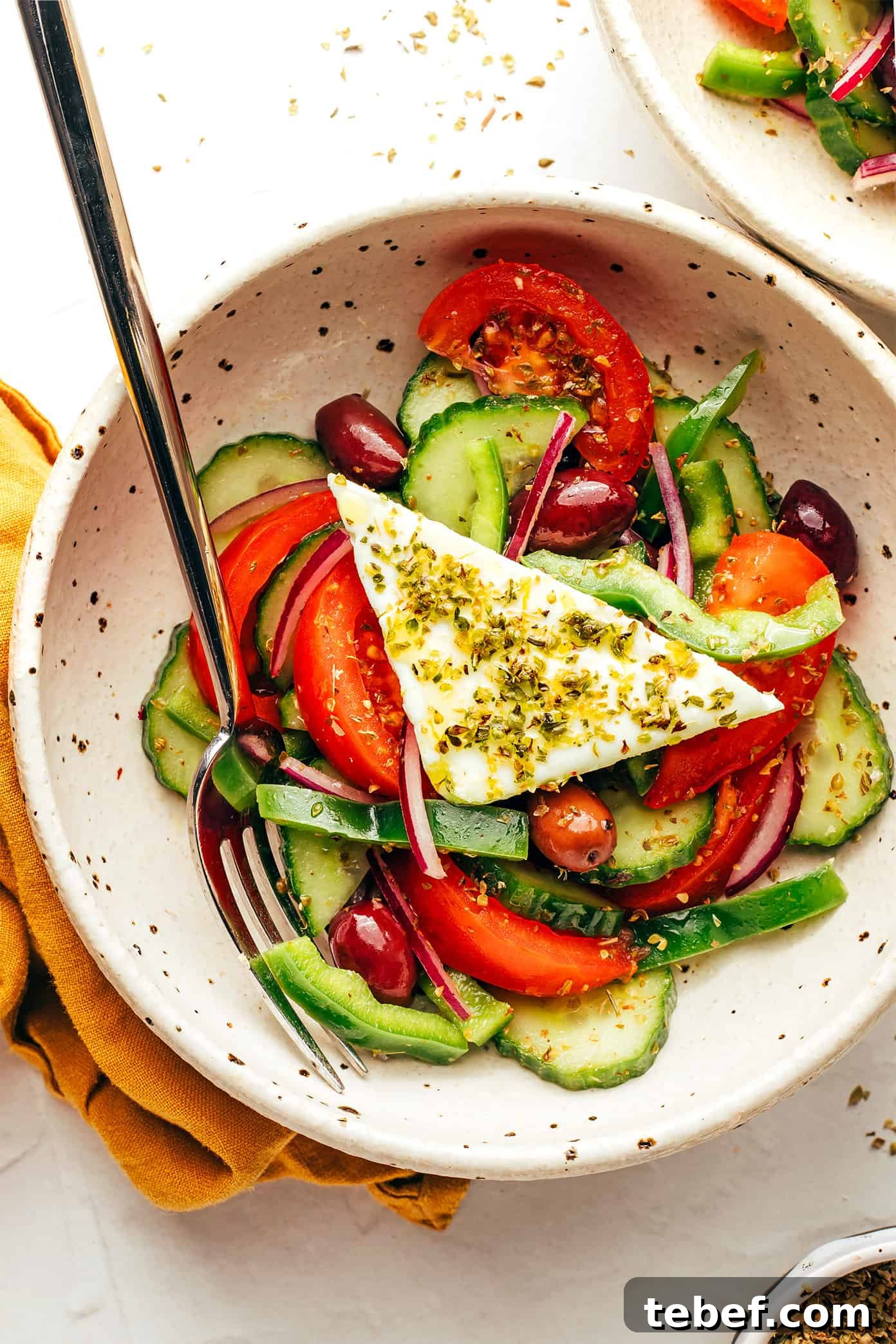
Authentic Greek Salad
Ingredients
- 4 medium-sized tomatoes, cut into wedges
- 1 English cucumber (or two small Persian cucumbers), sliced into half moons
- 1 large green bell pepper, cored and thinly sliced
- 1 small red onion, peeled and thinly sliced
- 1 cup kalamata olives
- 3–4 tablespoons olive oil
- 2 tablespoons red wine vinegar
- 1 teaspoon dried oregano, plus extra for serving
- Sea salt, to taste
- 5 ounces feta cheese, thickly sliced if possible
Instructions
- Combine the tomatoes, cucumber, bell pepper, red onion and olives in a large mixing bowl. Drizzle evenly with olive oil and red wine vinegar, and sprinkle with the oregano and a pinch of salt.
- Toss briefly so the vegetables remain distinct. Top with the slab of feta, drizzle a little extra olive oil and add another pinch of oregano.
- Serve and enjoy. Store in a sealed container in the refrigerator for up to 3 days.
Additional Info

Did you make this?
Let me know how it turned out in the comments below!