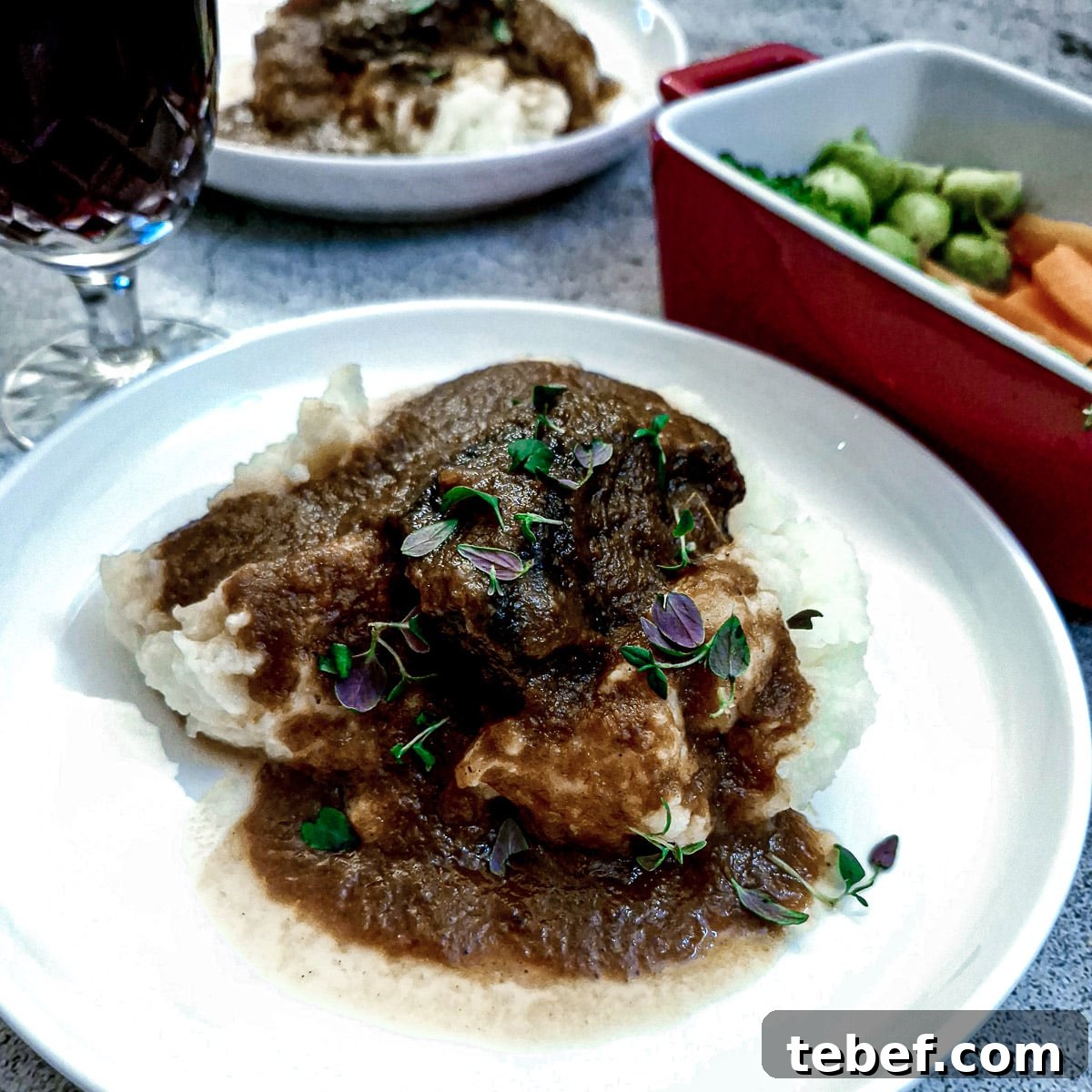
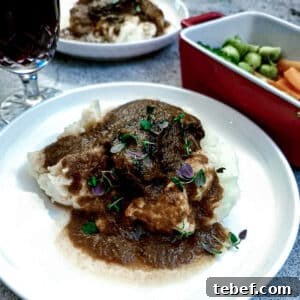
Slow‑braised beef cheeks are a real treat: a tough cut made meltingly tender by long, gentle cooking. The meat becomes so soft it almost falls apart, and the rich gravy that results is perfect spooned over creamy mashed potatoes or steamed rice. This dish is comforting, surprisingly simple to prepare, and ideal for serving when you want a hearty, satisfying meal.
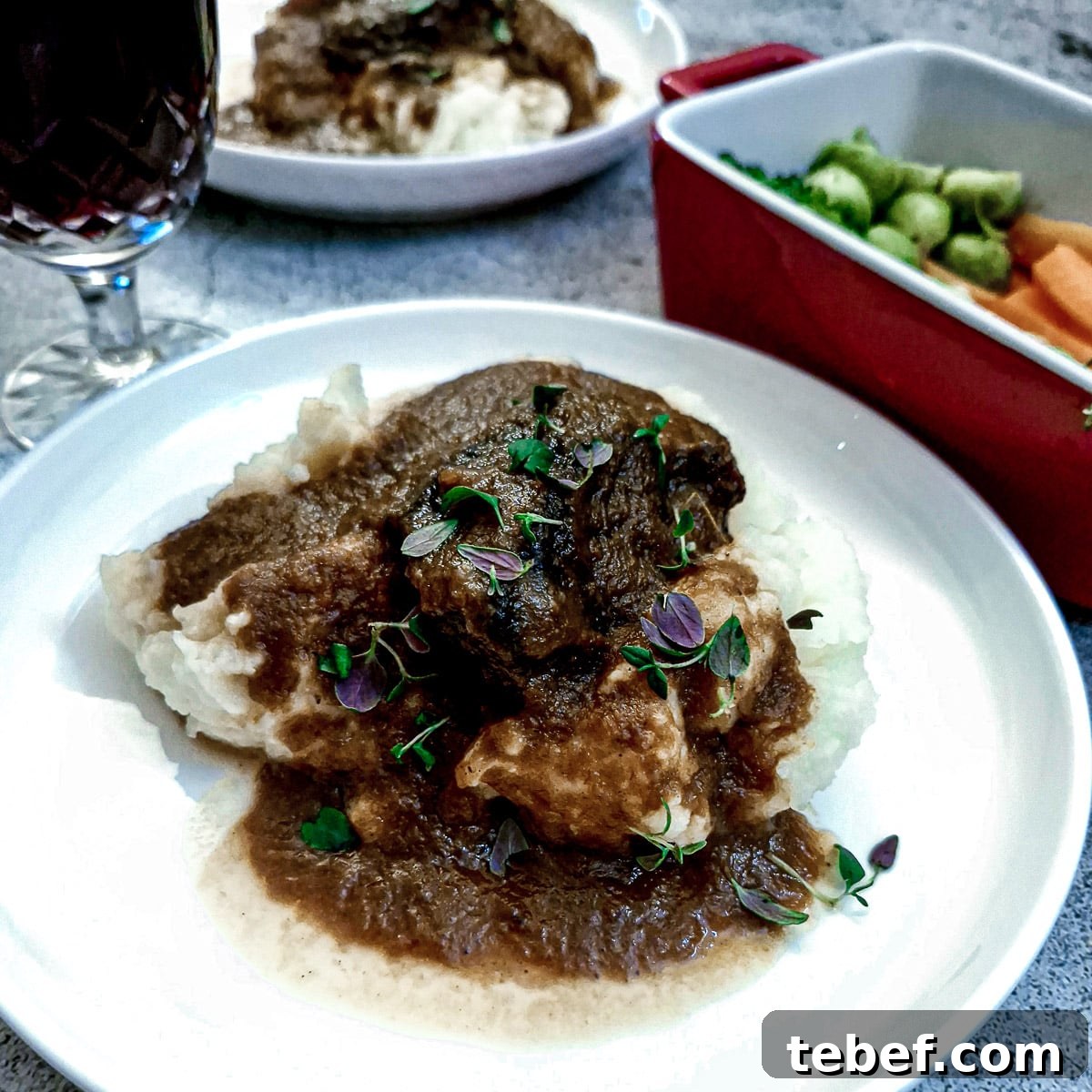
Beef cheeks were once regarded as offal, but thanks to modern chefs and restaurants they have become much more popular. Demand has driven prices up compared with the past, but cheeks still tend to be less expensive than cuts such as rump or sirloin. For their price they deliver outstanding flavour and tenderness when cooked correctly.
When slow‑braised, beef cheeks develop deep beefy flavour and a luxurious texture. I like to cook them in red wine and beef stock with a simple mirepoix of onion, carrot and celery. After braising I blend the cooked vegetables with the cooking liquid to create a silky, flavourful gravy to serve with the meat.
Best way to cook beef cheeks
The easiest method is a slow cooker, which gives the connective tissue time to break down and the meat to become tender. If you prefer, you can cook this dish in a heavy casserole on the stovetop—I’ve included stovetop directions below so you can use whichever method suits you.
A few tips before you start: use a decent drinking wine for cooking—poor wine won’t improve with heat and can negatively affect the sauce. Also, browning the beef and softening the vegetables first adds important depth of flavour to the final dish.
In short, slow‑braised beef cheeks are straightforward to prepare and rewarding to eat:
- The cut carries a lot of natural flavour, so only simple aromatics, thyme and tomato paste are required to build a great gravy.
- Once the ingredients are in the slow cooker or casserole, the dish needs little attention; finish by blending the vegetables into the liquid for a rich sauce.
Ingredients
This recipe serves 4. You can scale the meat quantity up or down, but the gravy will cover more portions—leftover gravy freezes well in portion sizes for later use.
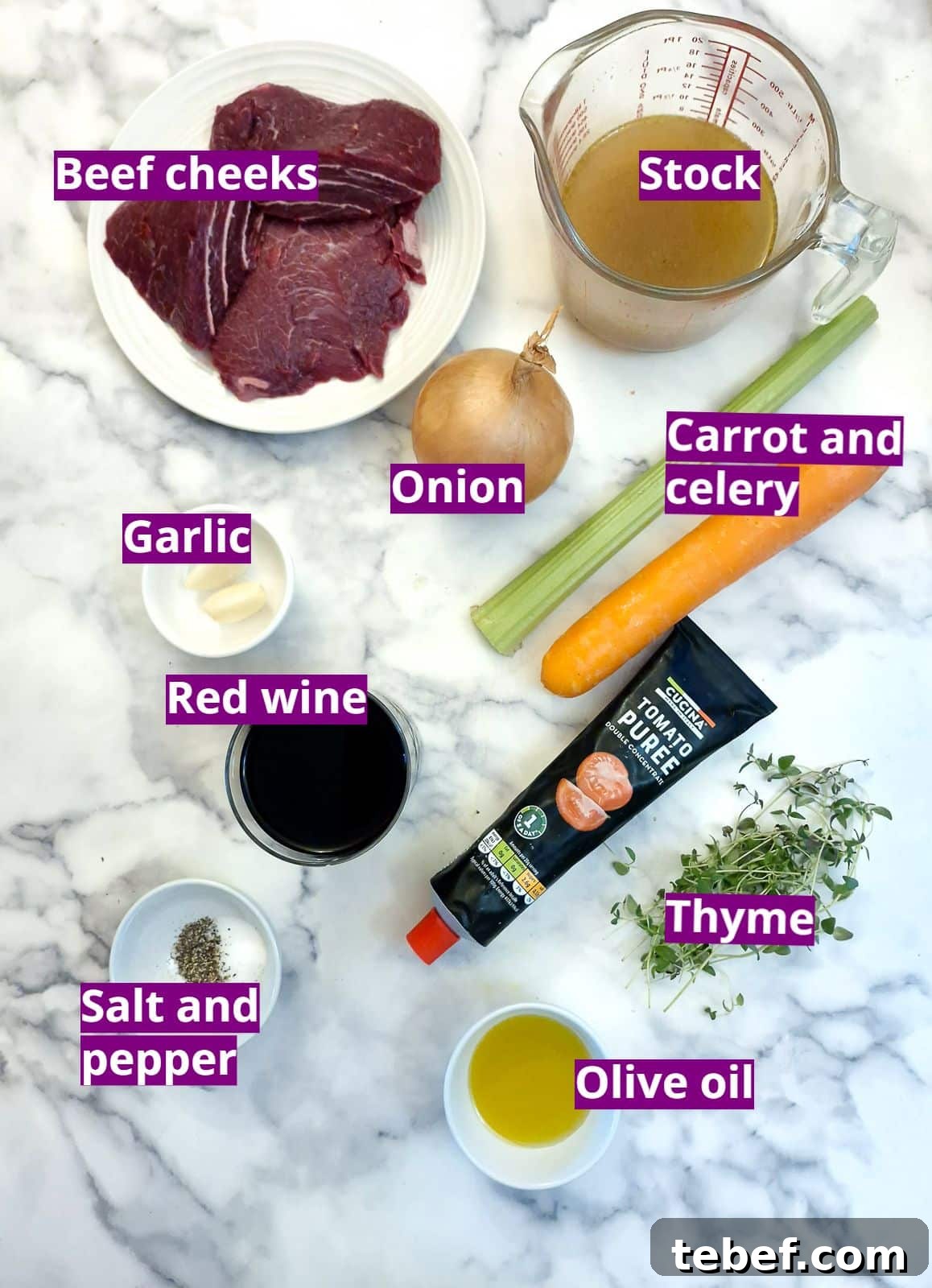
- Beef cheeks – allow about 150 g (5 oz) per person; they shrink during cooking.
- Beef stock – homemade or from a stock cube is fine.
- Onion, carrot and celery – finely chopped; these are blended into the gravy rather than served whole.
- Garlic – a few cloves, chopped.
- Red wine – a full‑bodied red works well (or use non‑alcoholic wine, fruit juice, or extra stock with a splash of red wine vinegar).
- Tomato puree (tomato paste) – adds richness to the sauce.
- Thyme – fresh sprigs are best; remove before blending. Dried thyme also works.
- Salt and black pepper – to season.
- Olive oil or another frying oil.
Exact ingredient amounts are included in the recipe card below.
Instructions
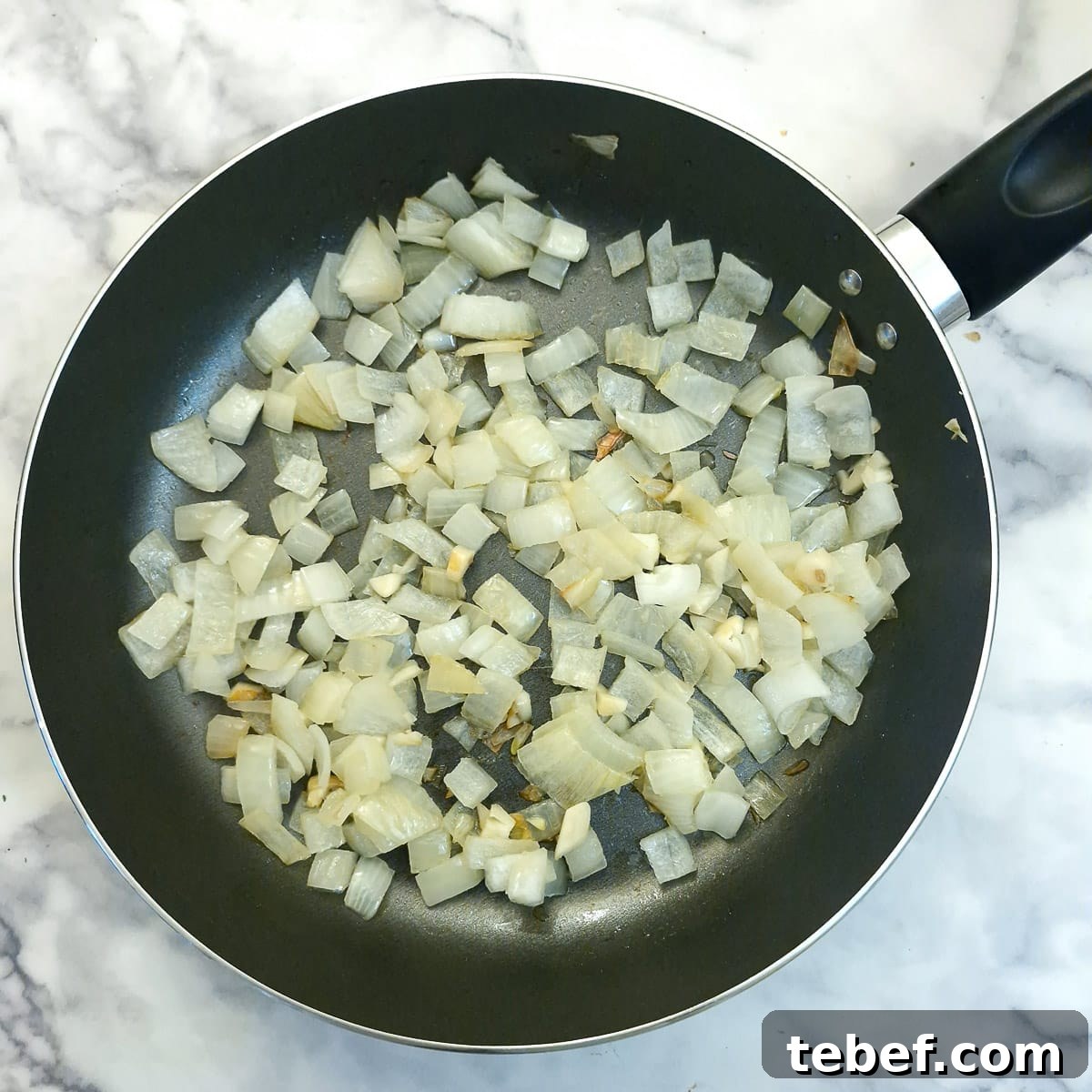
Step 1: Heat the oil in a frying pan and cook the onions over medium heat for 3–4 minutes until translucent.
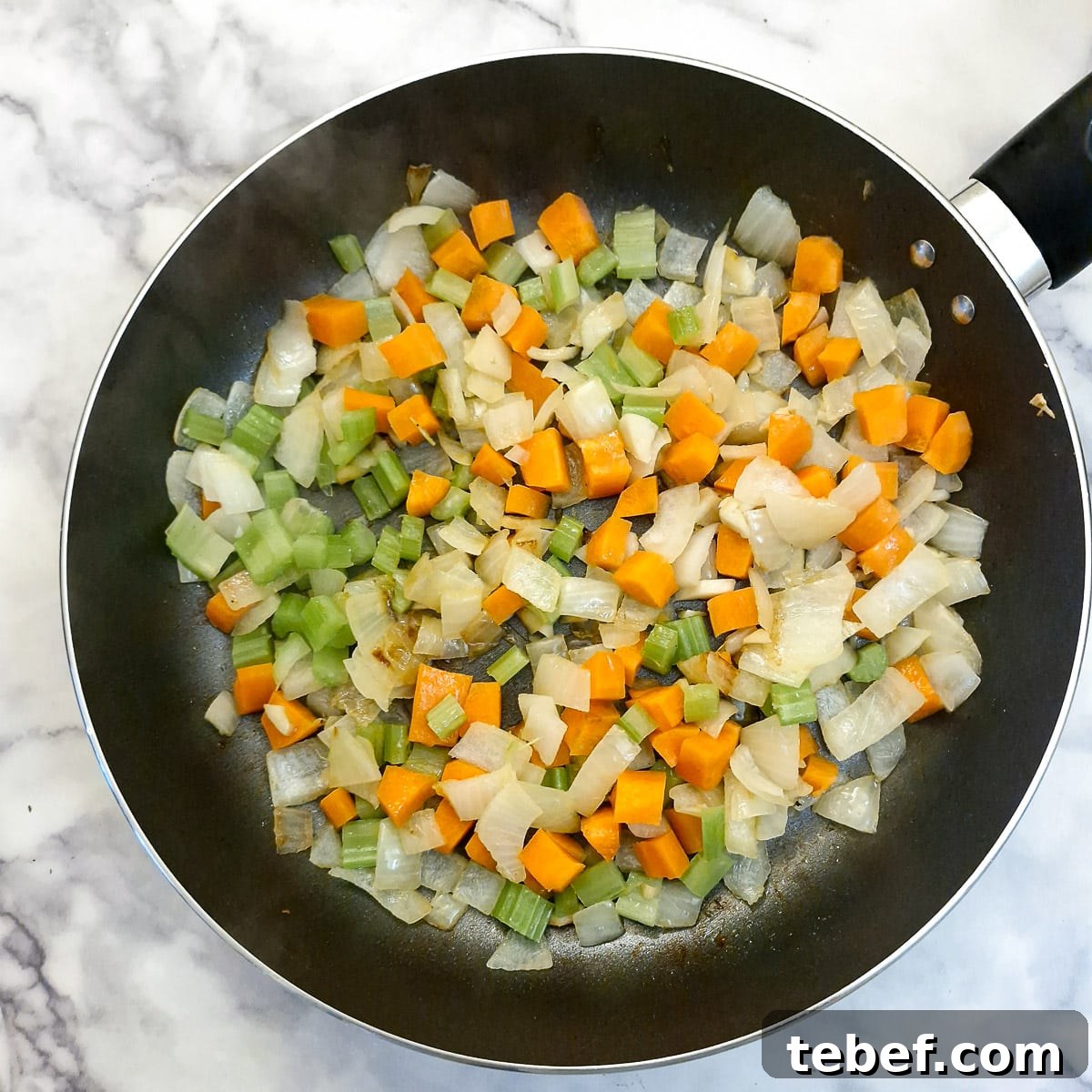
Step 2: Add the garlic, carrots and celery and cook for another 3–4 minutes until softened.
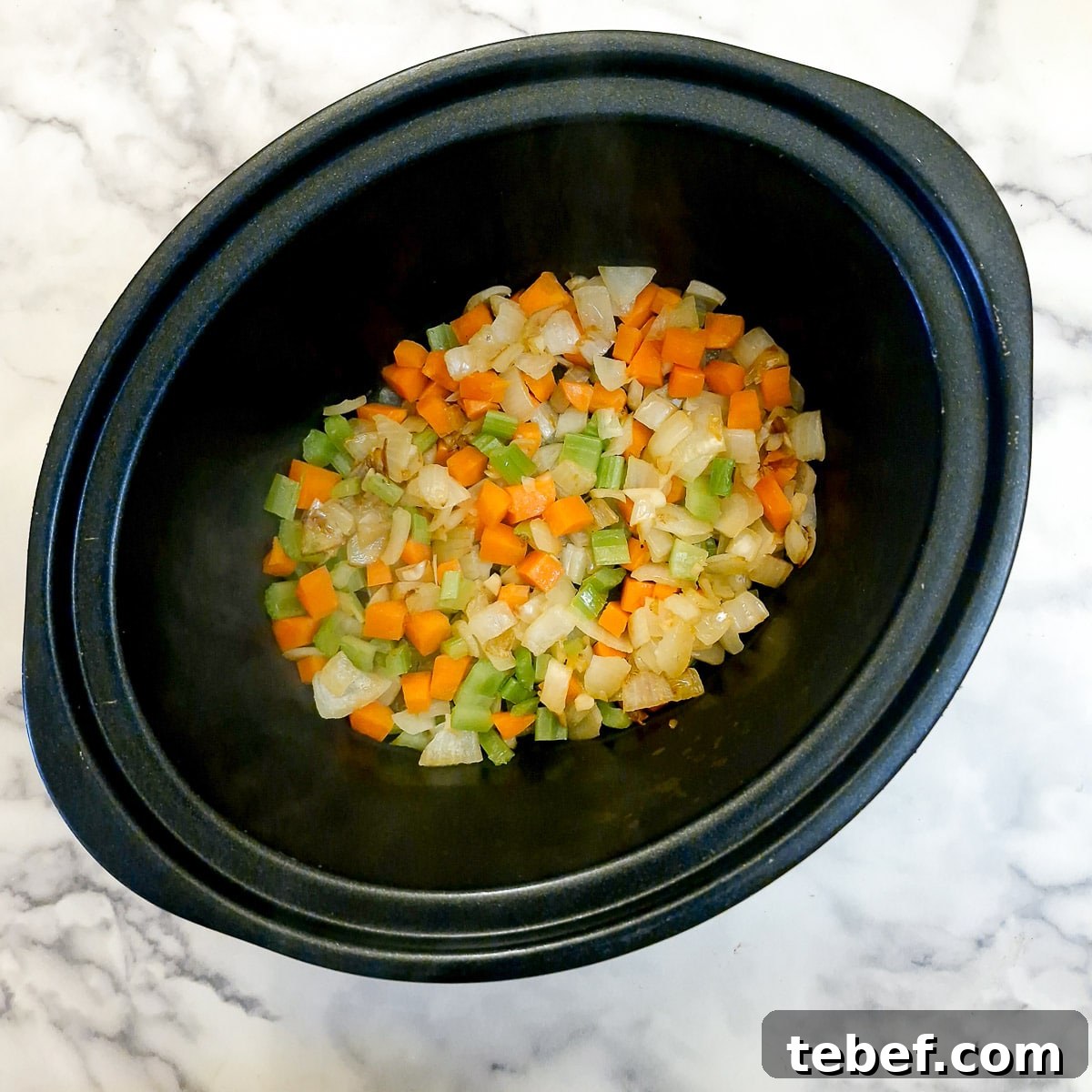
Step 3: Transfer the softened vegetables to the slow cooker.
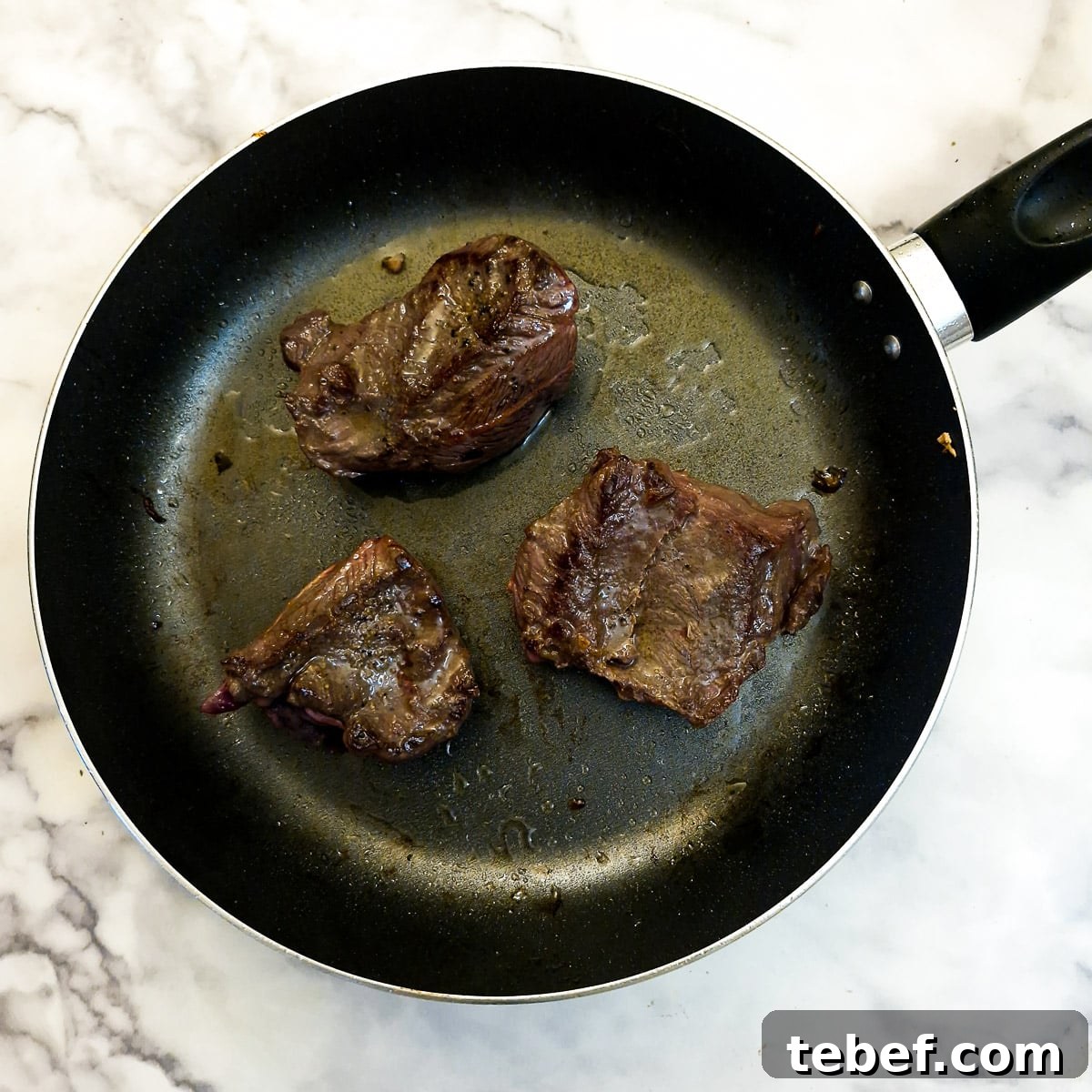
Step 4: Season the beef cheeks with salt and pepper and sear on high heat 2–3 minutes per side to brown.
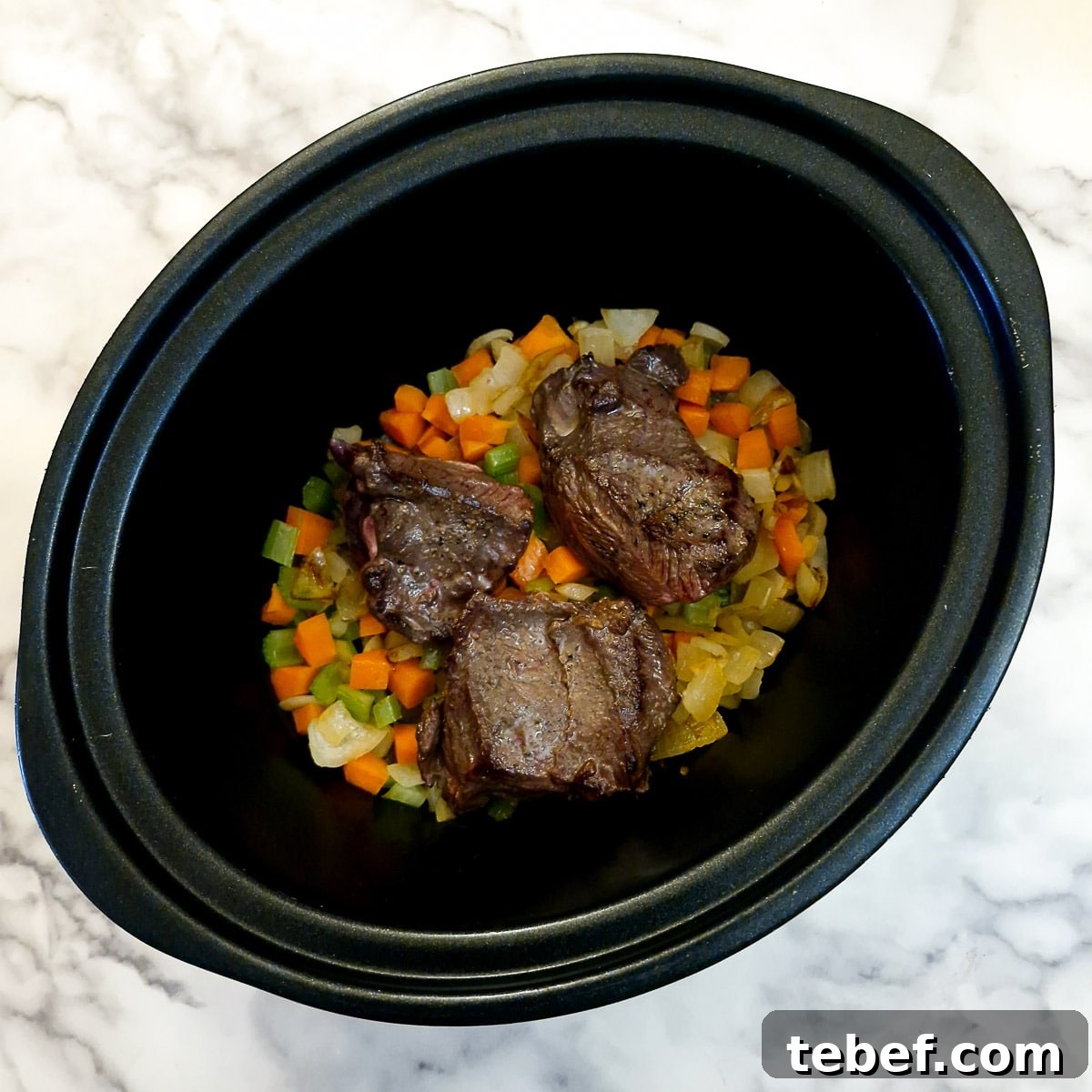
Step 5: Place the browned cheeks on top of the vegetables in the slow cooker.
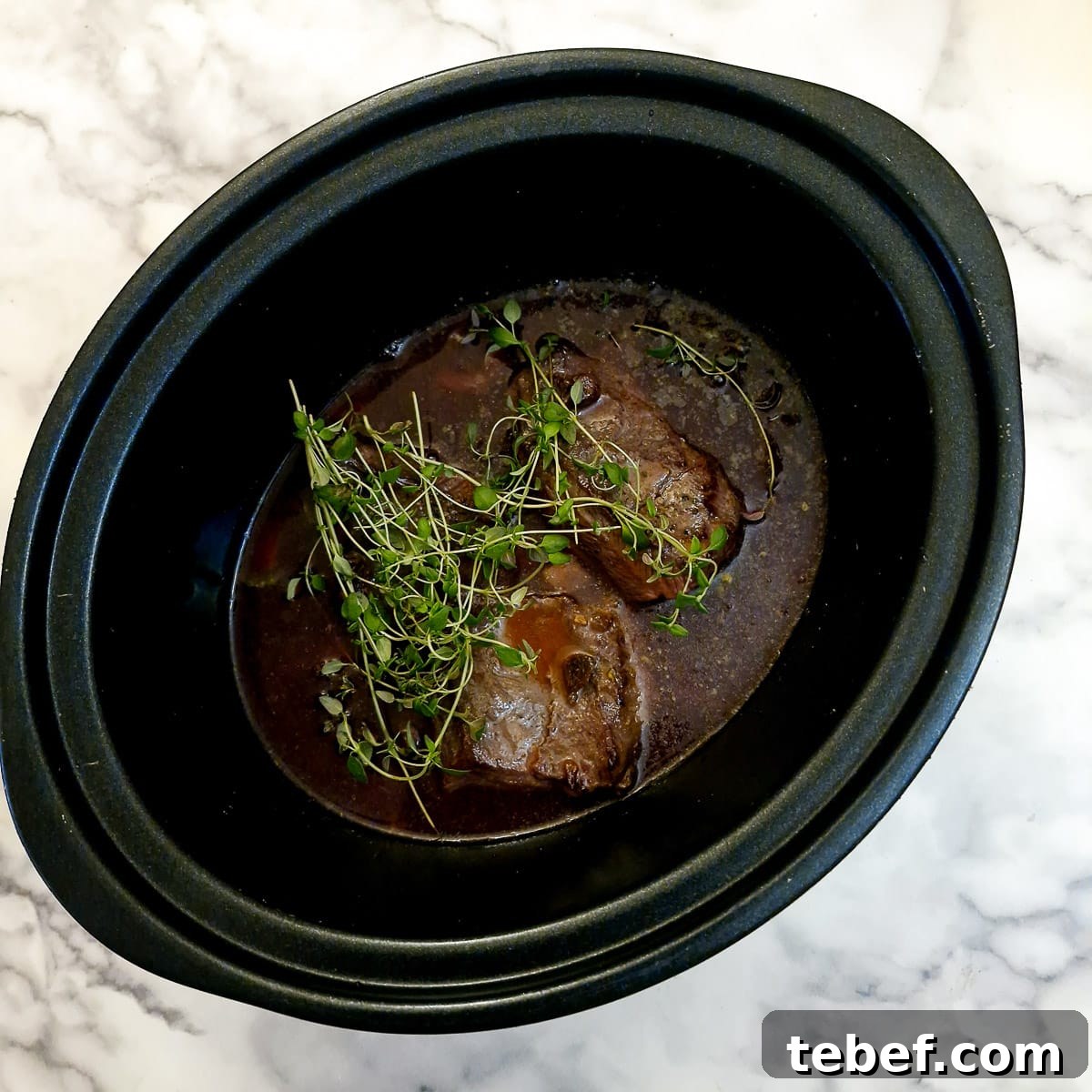
Step 6: Mix the beef stock, red wine and tomato puree, pour over the meat, and add sprigs of thyme.
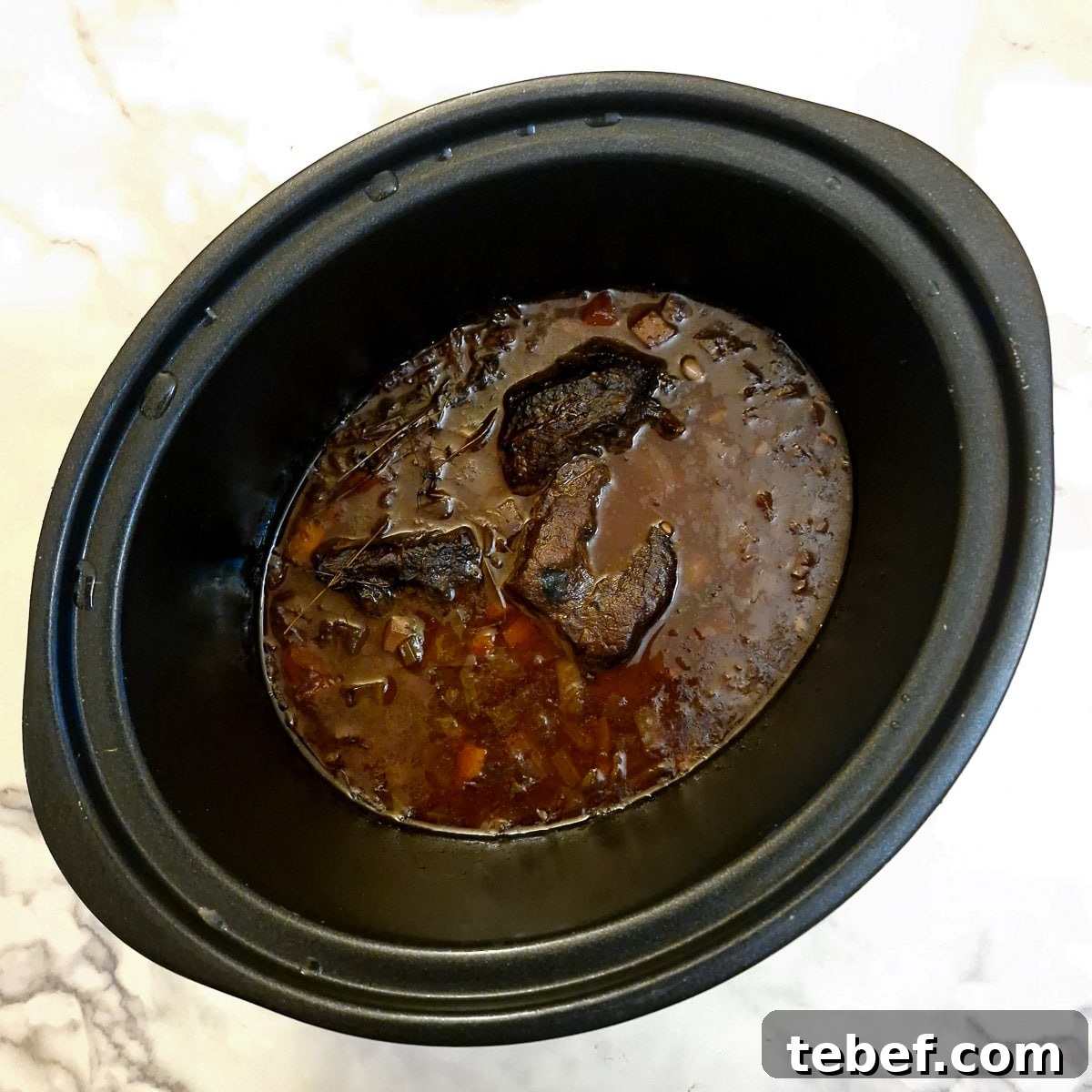
Step 7: Cover and cook on low for 7–8 hours or on high for 5–6 hours, until the meat is very tender.
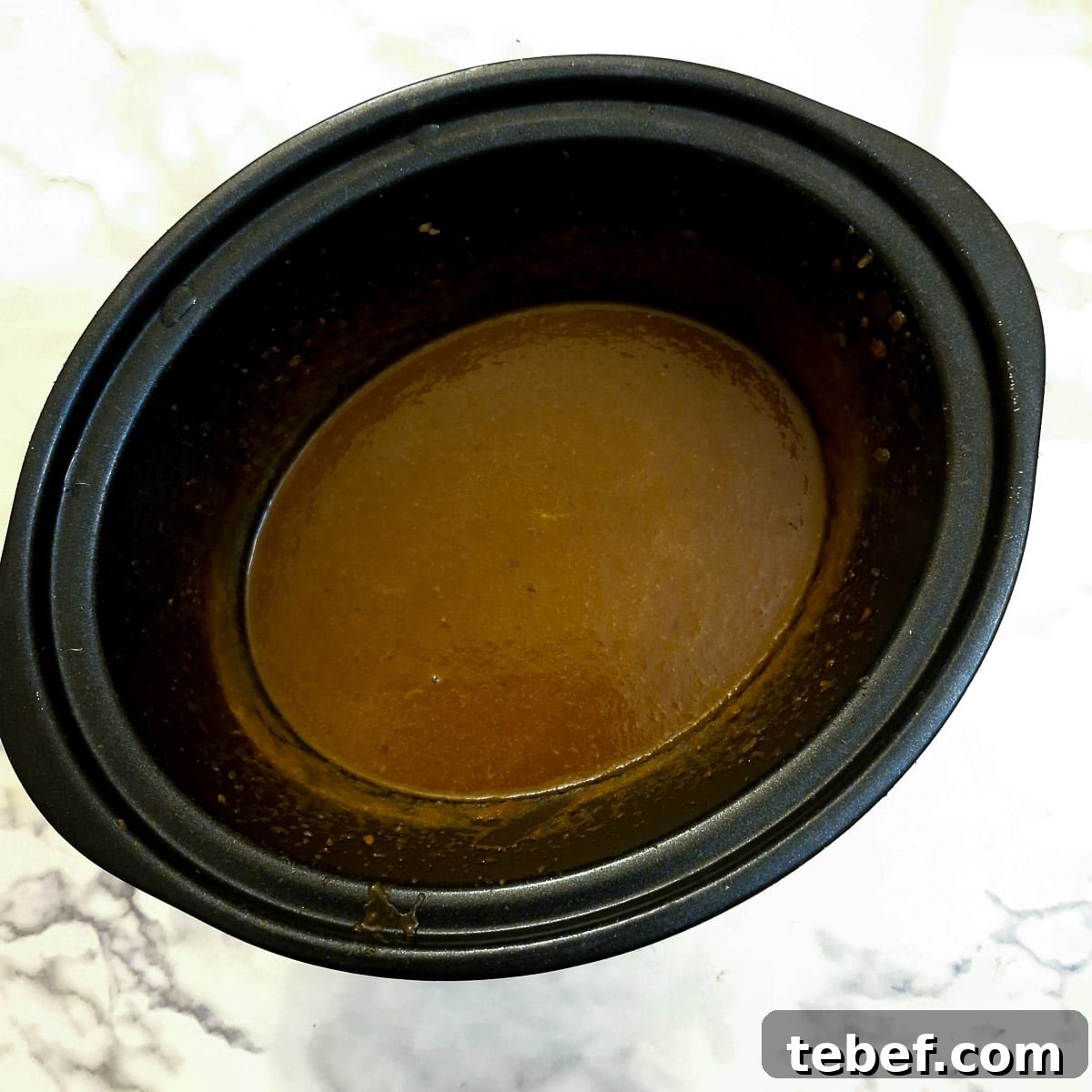
Step 8: Remove the meat and keep warm. Discard thyme stems and blend the vegetables and cooking liquid with a stick blender until smooth to make the gravy.
Stove top directions
If you prefer the hob method, follow these steps:
- Softly cook the onions and vegetables in a large, hob‑safe casserole, then remove them to a plate.
- Brown the beef cheeks in the same pan.
- Return the vegetables, place the beef on top, then add the stock, wine and tomato paste. Add an extra cup of stock to allow for evaporation and tuck in sprigs of thyme.
- Cover tightly, reduce to the lowest heat and simmer for 2–3 hours, or until the meat pulls apart easily with a fork. Cooking time depends on the size of the pieces.
- Top up the stock if it runs low. When cooked, remove thyme, blend the vegetables into the sauce and serve.
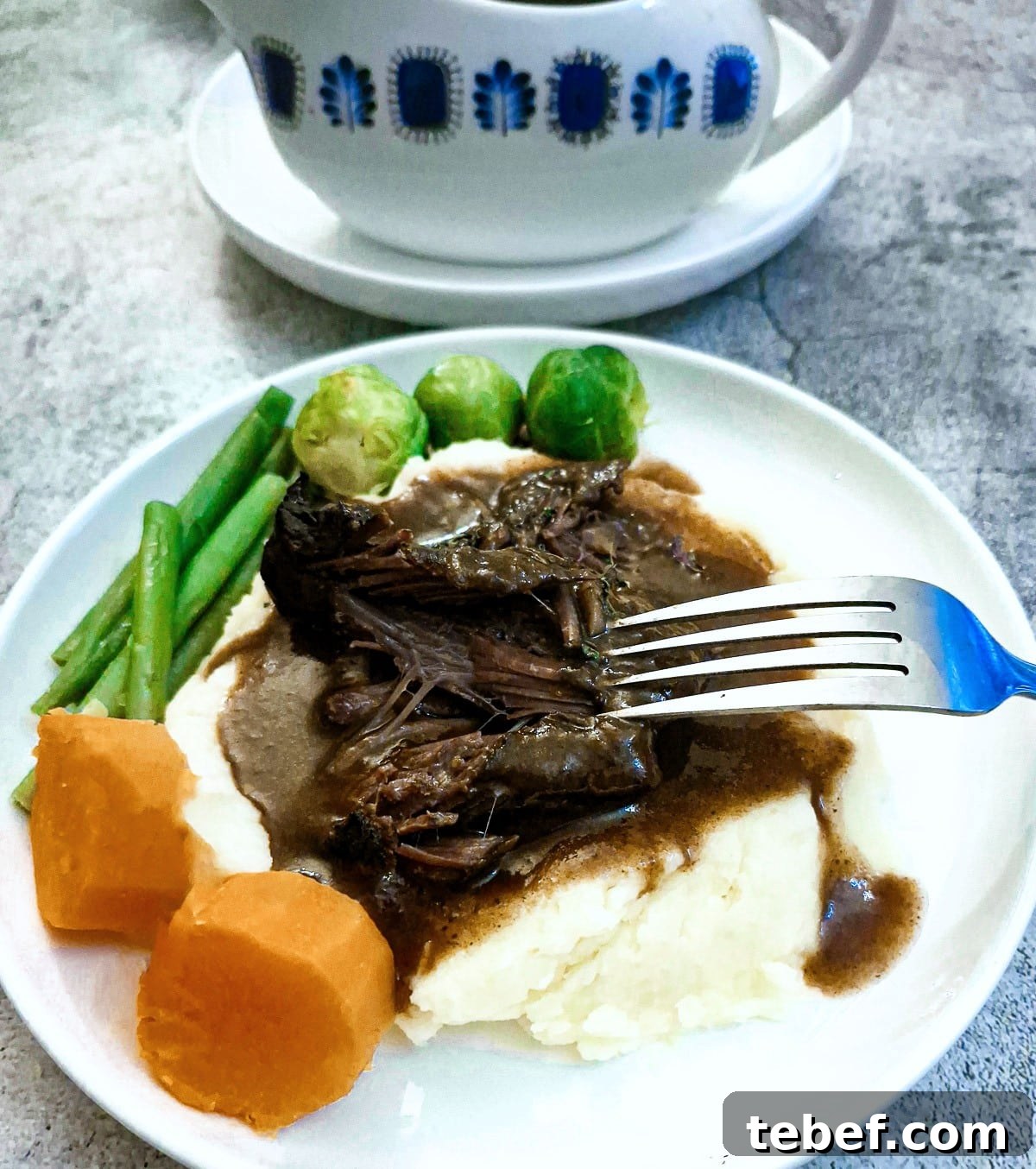
Tips for a successful outcome
Follow these tips for the best results:
- Don’t skip softening the vegetables or searing the meat—both add essential flavour.
- Cut cheeks into evenly sized portions so they cook uniformly and are easy to serve.
- Remove fresh thyme stems before blending to avoid woody bits in the gravy.
- For a smooth, thick gravy blend the vegetables with the stock. If you prefer a chunkier sauce, thicken with a cornflour slurry instead.
Serving suggestions
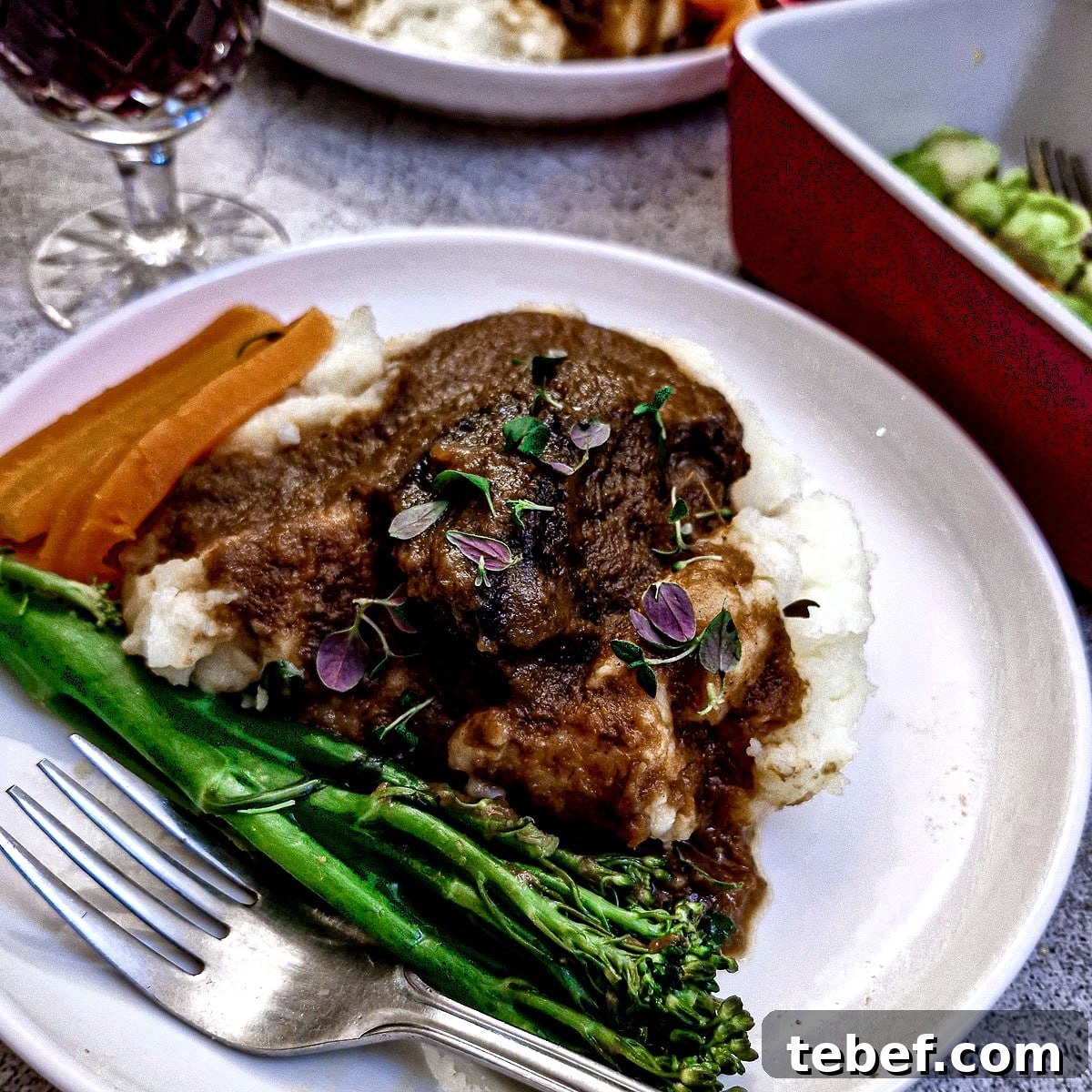
The classic way to serve beef cheeks is on creamy mashed potatoes with generous gravy. Rice is another excellent option. Steamed or braised seasonal vegetables make good accompaniments—green veg or braised cabbage work particularly well.
Equipment
Basic equipment needed:
- Slow cooker – or a heavy, lidded casserole for the stovetop method.
- Frying pan – to soften vegetables and brown the meat.
- Sharp knife and chopping board.
- Stick blender – optional but useful for a smooth gravy.
FAQ
You can freeze cooked beef cheeks, though I usually cook just what I need. The gravy freezes especially well in portion bags and can be added later to soups or stews. Store gravy in the freezer for up to four months.
Mirepoix is a flavour base of diced carrot, celery and onion—traditionally two parts onion to one part each of carrot and celery—sautéed slowly to deepen flavour. In Italian cooking a similar mix is called soffritto.
Related recipes
For more slow‑cooked ideas try other recipes that make use of long, low cooking for tender, flavourful meat.
-
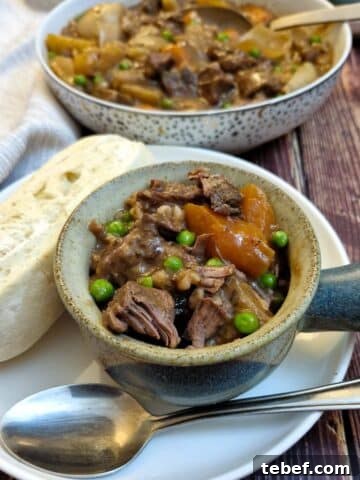
Hearty beef stew (slow cooker)
-
Slow cooker curried leg of lamb
-
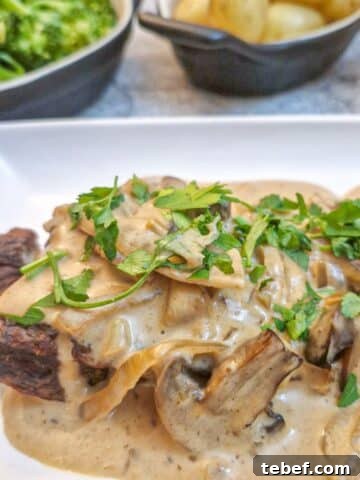
Slow cooker flat iron steak
-
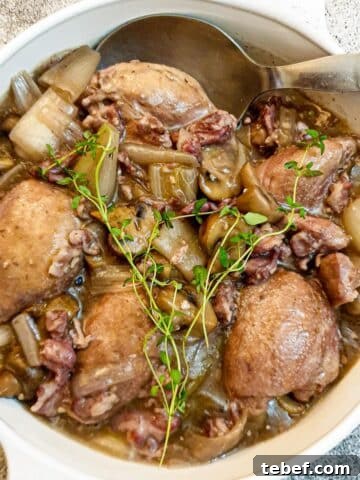
Slow‑cooker coq au vin

📋The recipe
Slow‑braised beef cheeks
Slow‑braised beef cheeks transform a firm cut into a tender, flavourful main course. Serve with mashed potatoes or rice and a slice of crusty bread to mop up the gravy.
Equipment
- Slow cooker (or hob‑safe casserole)
- Frying pan
- Spatula
- Sharp knife and chopping board
- Stick blender (optional)
Ingredients
- 1¼ pounds / 600 grams beef cheeks
- 1 medium onion, peeled and finely chopped
- 1 large carrot, peeled and finely chopped
- 1 large stalk celery, diced
- 3 cloves garlic, peeled and finely chopped
- 1 cup / 240 ml beef stock (made from a cube if needed)
- ½ cup / 120 ml red wine
- 2 tablespoons tomato puree (tomato paste)
- 2 tablespoons olive oil for frying
- ½ teaspoon salt, or to taste
- ¼ teaspoon ground black pepper, or to taste
- 1 small bunch fresh thyme (or 1 teaspoon dried thyme)
Instructions
- Heat the oil in a frying pan. Cook the onions over moderate heat for 3–4 minutes until they begin to soften.
- Add the garlic, carrots and celery and cook for another 3–4 minutes.
- Transfer the softened vegetables to the slow cooker.
- Season the beef cheeks with salt and pepper and sear on high heat for 2–3 minutes per side, adding more oil if needed.
- Place the browned cheeks on the vegetables in the slow cooker.
- Stir together the stock, red wine and tomato puree, pour over the meat and add thyme.
- Cover and cook on low for 7–8 hours or on high for 5–6 hours, until the meat is fall‑apart tender.
- Remove the meat and keep warm. Discard thyme stems and blend the vegetables and cooking liquid with a stick blender until smooth to make the gravy.
- Serve the beef cheeks hot over mashed potatoes or rice with plenty of gravy and steamed vegetables on the side.
Notes
Stovetop alternative: Follow the stovetop directions above. Add an extra cup of stock to allow for evaporation and simmer gently for 2–3 hours until tender.
Recipe tips:
- Softening the vegetables and searing the meat add essential flavour.
- Cut cheeks into equal portions for even cooking.
- Remove fresh thyme stems before blending to avoid woody pieces in the gravy.
- For a smooth, thick sauce blend the vegetables with the stock; to keep it chunky, thicken with a cornflour slurry instead.
Nutrition: Values exclude mashed potatoes or side dishes.
Nutrition
| Carbohydrates – 9.3 g | Protein – 47.5 g | Fat – 16.7 g
Nutritional data is an estimate calculated with an online tool and should be used for guidance only.
If you try this recipe and enjoyed it, please leave a star rating or comment. For questions you can contact the recipe author at [email protected].