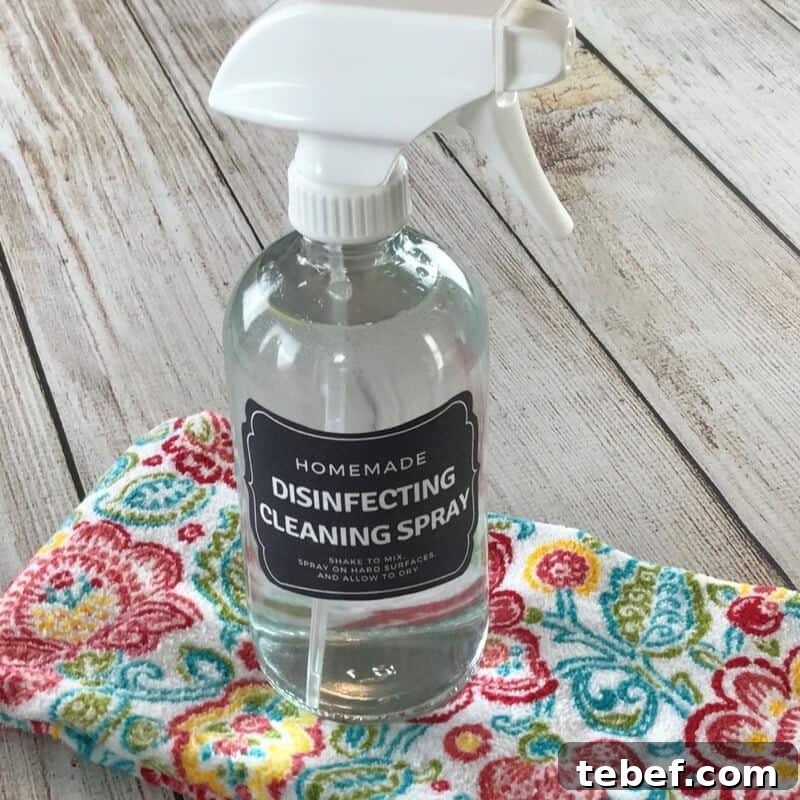
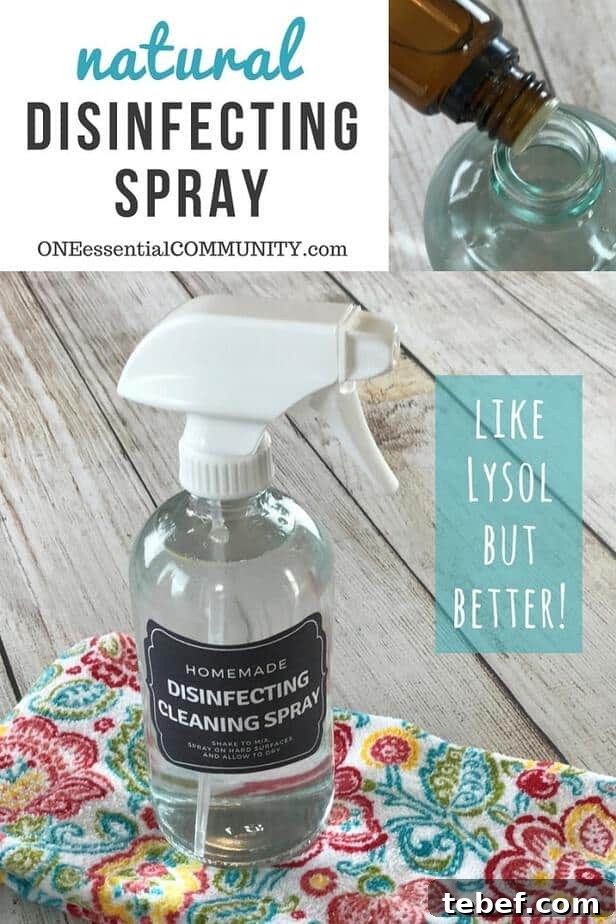
Clean and freshen your home naturally with this essential oil disinfectant spray. This all-natural, non-toxic cleaner disinfects, sanitizes, deodorizes, and helps control mold and mildew while leaving a pleasant fresh scent.
For years I relied on harsh chemical cleaners like bleach and Lysol and often experienced headaches from the fumes. I believed strong chemicals were necessary for a truly clean bathroom or kitchen, until I discovered essential oils and safer alternatives. Now I keep my home clean and disinfected without the chemical smell, irritation, or toxins.
This homemade spray is effective on hard surfaces and also works as a fabric refresher. It’s quick to make and relies on simple, readily available ingredients.
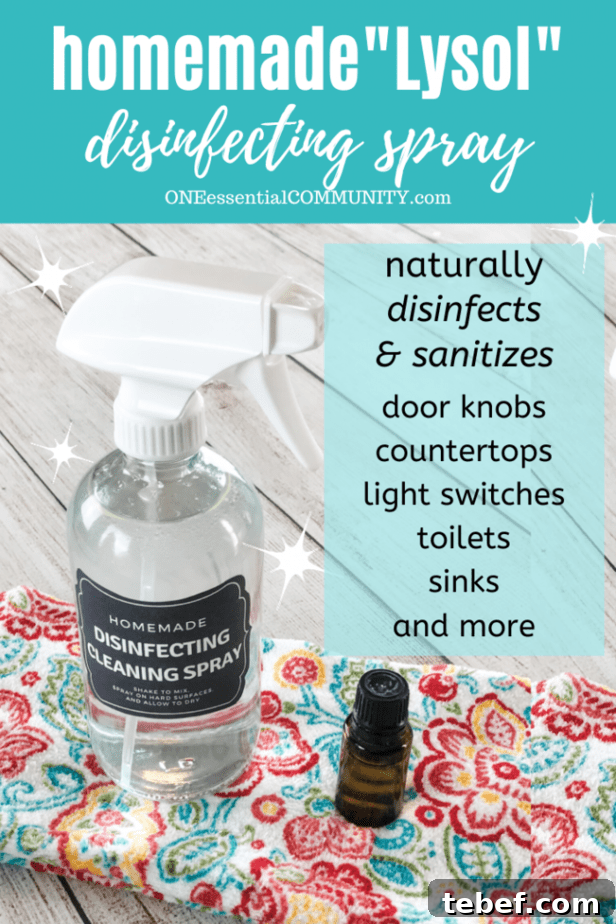
Why I prefer this DIY disinfecting spray
- Natural and non-toxic
- Powerful cleaner and disinfectant
- Eliminates unpleasant odors
- Helps fight mold and mildew
- Leaves surfaces shiny—countertops, faucets, doorknobs
- Fresh, pleasant scent
- Fast and easy to make—only a handful of ingredients and a minute to mix
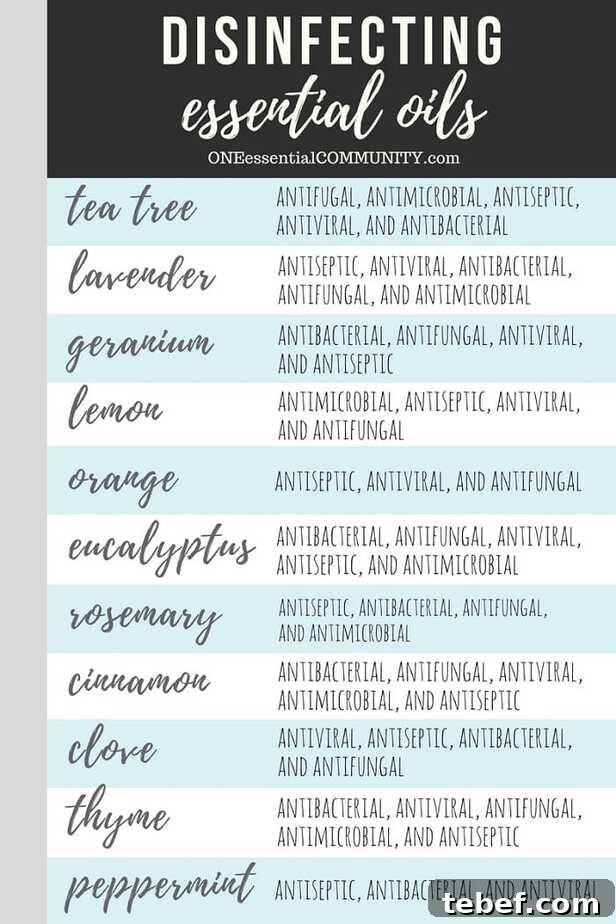
Essential oils with disinfecting properties
Many essential oils have antibacterial, antiviral, antifungal, antimicrobial, antiseptic, or deodorizing properties. Common disinfecting essential oils include:
- Tea tree
- Lavender
- Geranium
- Lemon
- Orange
- Eucalyptus
- Rosemary
- Cinnamon
- Clove
- Thyme
- Peppermint
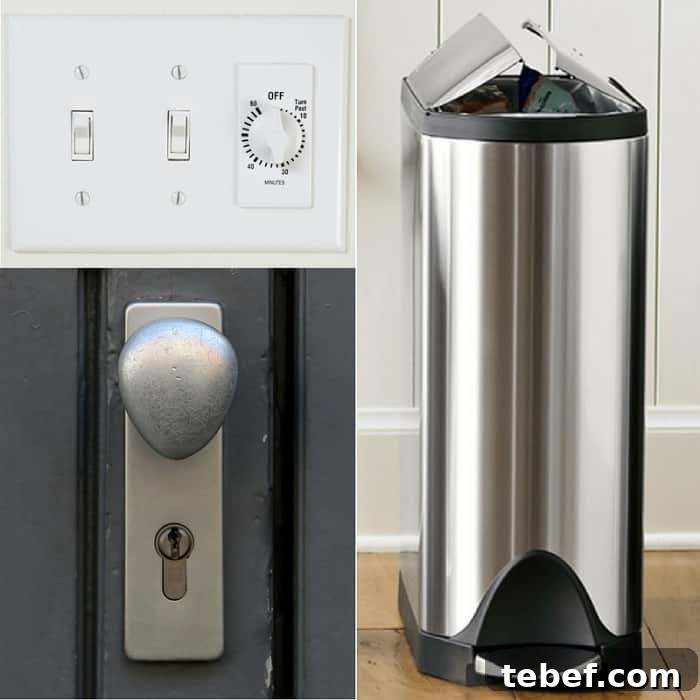
I use this spray all around the house
It’s effective on hard surfaces like countertops and doorknobs, and it doubles as a fabric refresher for items like pillows and upholstery. I use it on:
- Door handles
- Light switches
- Toilet handles
- Faucets
- Countertops
- Trash cans
- Remote controls
- Furniture—sofas, chairs, throw pillows (especially after someone has been sick)
- Stinky shoes and athletic gear
- Mattresses
- Carpet and rugs
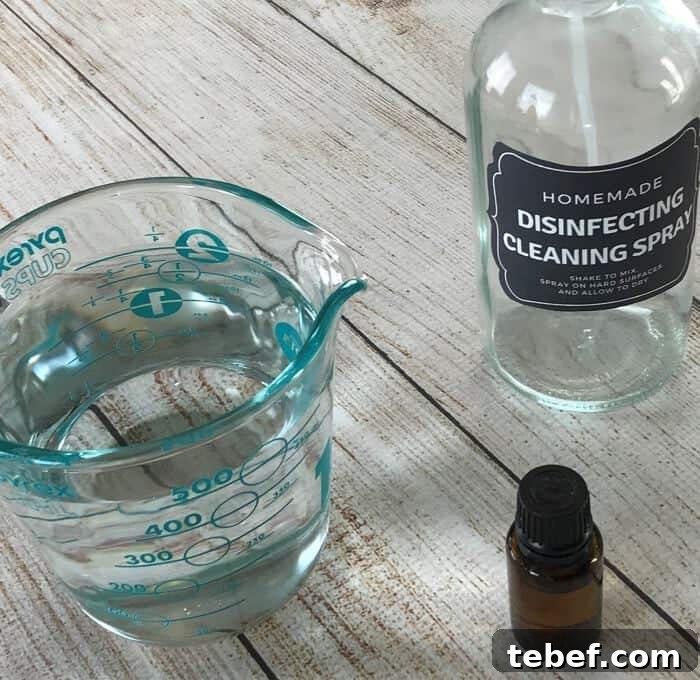
How to make the essential oil disinfectant spray
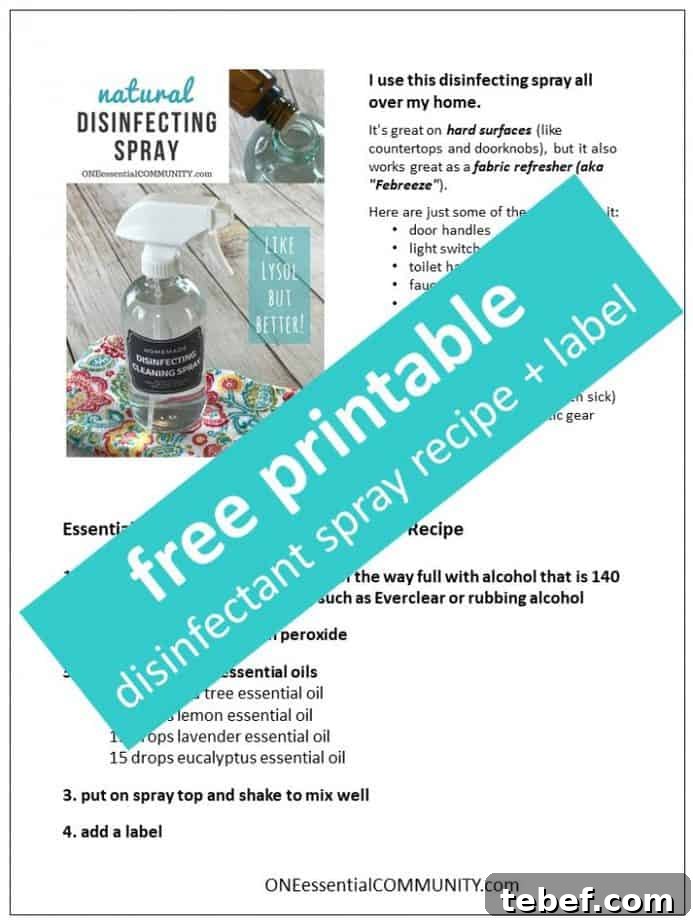
Step 1: Fill a 16 oz glass spray bottle with high-proof alcohol
Use an alcohol that is at least 70% by volume to disinfect surfaces, such as ethanol (food-grade spirits like Everclear at appropriate proof) or isopropyl (rubbing) alcohol. The CDC recommends at least 70% alcohol for effective disinfection.
Acceptable alcohol options
- 70%+ ethanol — drinkable grain alcohols at 140 proof or higher (examples commonly available include Everclear and similar high-proof spirits)
- 70%+ isopropyl alcohol — available in pharmacies and stores (70%, 91%, or 99% isopropyl)
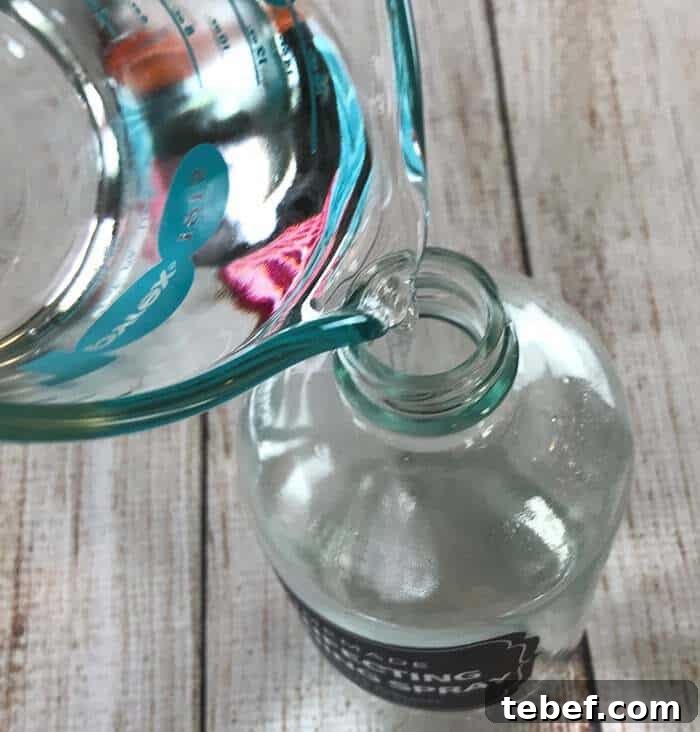
Step 2: Add 1/2 teaspoon hydrogen peroxide
Research indicates that combining alcohol with a small amount of hydrogen peroxide can enhance inactivation of certain microbes. Use 1/2 teaspoon of hydrogen peroxide in the 16 oz bottle.
Step 3: Add essential oils
Add the following essential oils for disinfecting power and a fresh scent:
- 30 drops tea tree essential oil
- 15 drops lemon essential oil
- 15 drops lavender essential oil
- 15 drops eucalyptus essential oil
These oils contribute antimicrobial properties, help control odors, and leave a pleasant aroma.
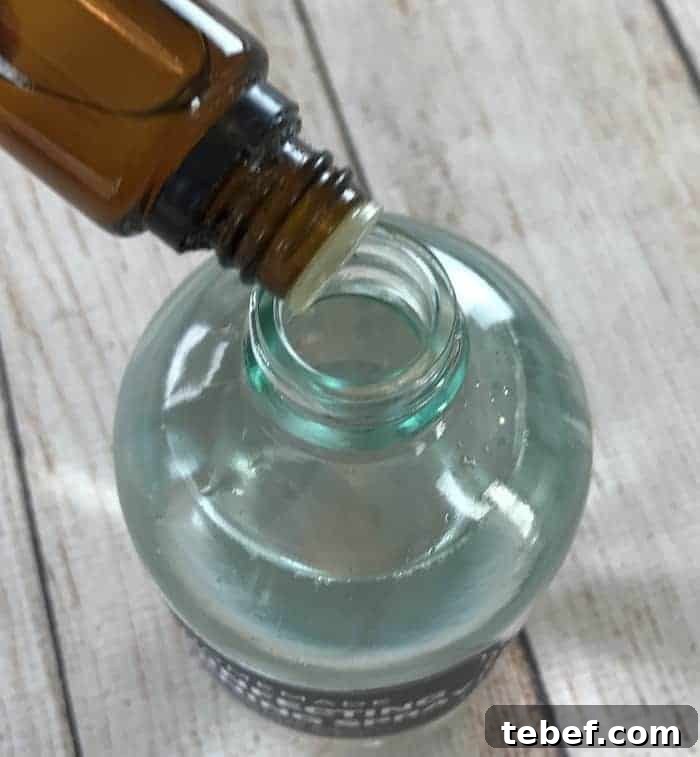
Step 4: Attach spray top and shake well
Secure the spray top and shake the bottle thoroughly to mix the alcohol, hydrogen peroxide, and essential oils.
Step 5: Label the bottle
Label the bottle with the contents and date. Proper labeling helps ensure safe storage and correct use.
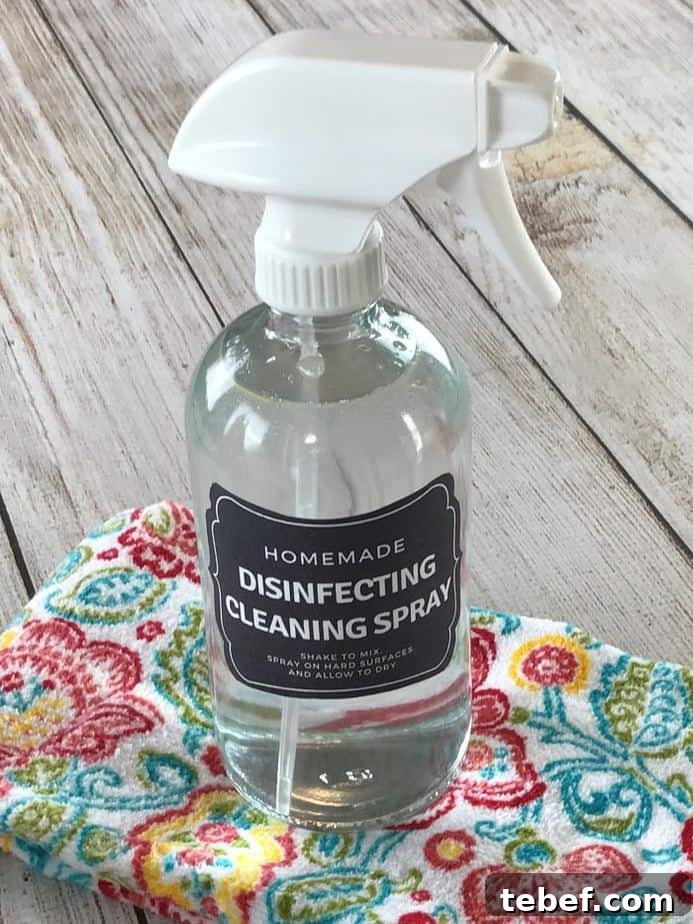
Recipe summary
- Fill a 16 oz glass spray bottle mostly full with alcohol that is at least 70% (e.g., high-proof ethanol or isopropyl alcohol).
- Add 1/2 teaspoon hydrogen peroxide.
- Add essential oils: 30 drops tea tree, 15 drops lemon, 15 drops lavender, 15 drops eucalyptus.
- Put on the spray top and shake to mix well.
- Label the bottle with contents and date.
How to use the spray
To disinfect
- Pre-clean the surface to remove visible dirt.
- Shake the bottle before each use.
- Spray directly on counters, faucets, doorknobs, and other hard surfaces. For electronics or items like remote controls and light switches, spray onto a cloth and then wipe the item.
- Allow the surface to remain wet for a few minutes, then let air dry.
To control mold and mildew
- Shake before use and apply to a pre-cleaned surface such as tile grout, shower walls, or sinks.
- Spray enough to keep the surface wet for at least three minutes, then let air dry.
- Use weekly or when mold or mildew appears.
To deodorize
- Shake before use and spray as needed.
- Use in shoes, athletic gear, or around trash cans and allow to air dry overnight.
To freshen fabrics (spot sanitize and refresh)
- Shake well and spot-test an inconspicuous area first.
- Spray until fabric is slightly damp, not soaked; keep fabric wet for about 30 seconds, then air dry.
- Reapply for stubborn odors.
Disinfecting wipes are another convenient option—easy to make and portable for disinfecting shopping carts, restaurant tables, and more.
Please note: Products mentioned here have not been evaluated by the FDA. This information is not intended to diagnose, treat, cure, or prevent any disease and is not a substitute for professional medical advice. Consult your medical provider regarding health concerns.