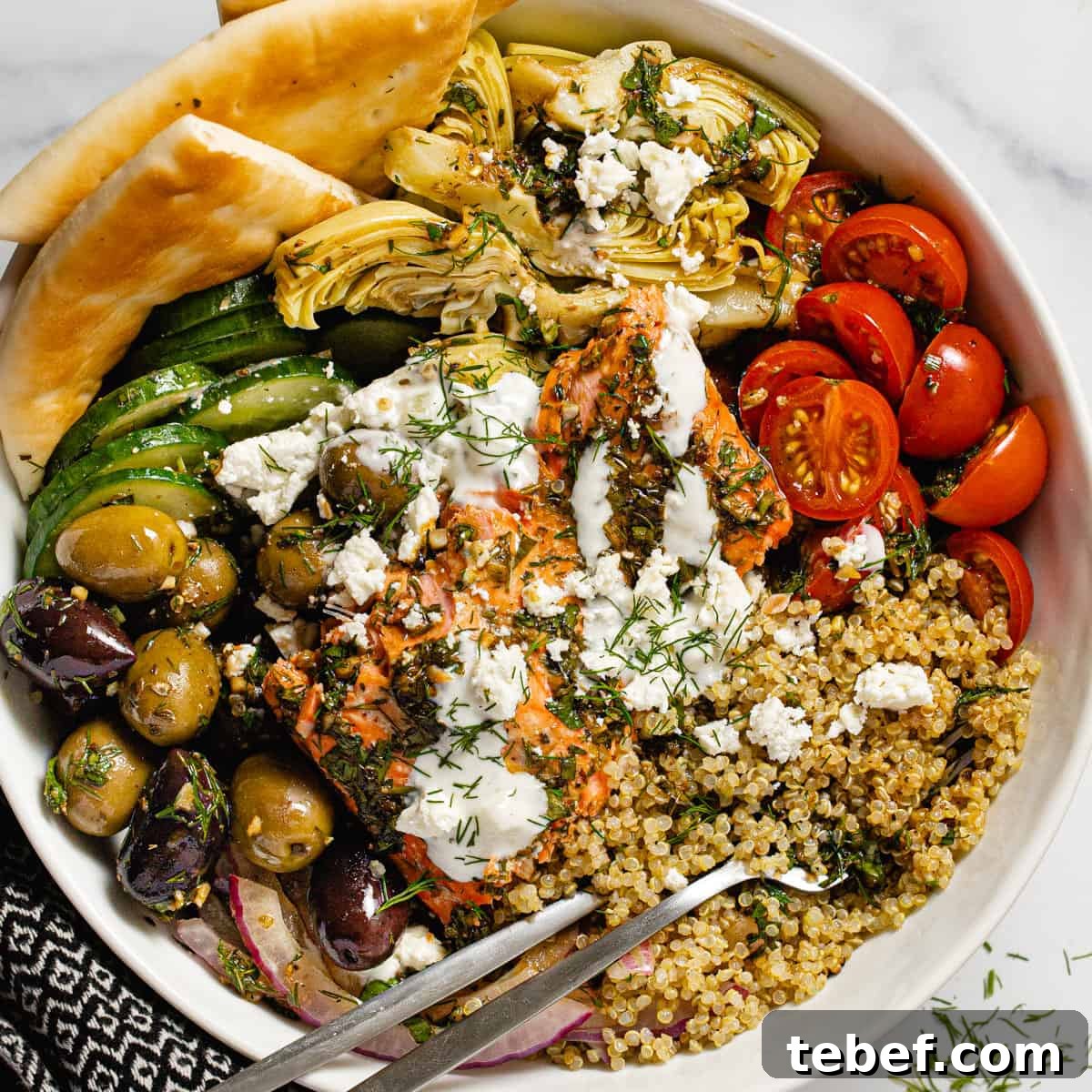
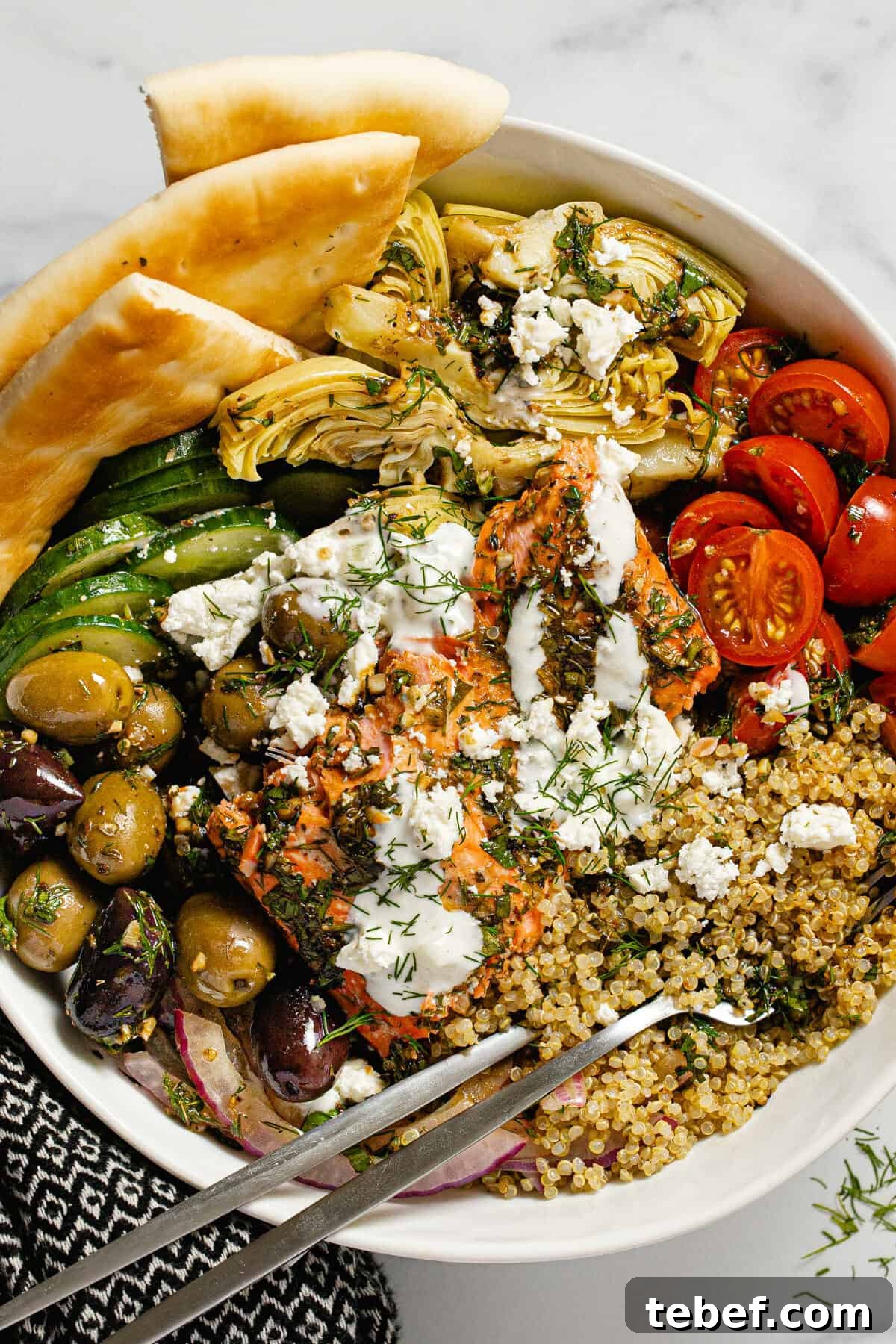
This quick and easy Greek Salmon Bowl comes together in under 30 minutes and is packed with fresh vegetables and fluffy quinoa, all tossed in a tangy, herb-forward balsamic vinaigrette. These bowls are highly customizable, so you can adapt the ingredients to what you have on hand or to your family’s preferences.
You’ll Love This
- Simple, satisfying dinner bowls. A short ingredient list keeps meal prep fast while still delivering bright Mediterranean flavors. These Greek salmon bowls are filling without feeling heavy, making them ideal for warm-weather dinners or make-ahead lunches for a busy week.
- Easy to swap ingredients. If you enjoy this recipe, try other salmon dishes or Mediterranean salads using similar flavor profiles — swap the grain, change the vegetables, or substitute a different firm white fish if needed.
Ingredients and Substitutions
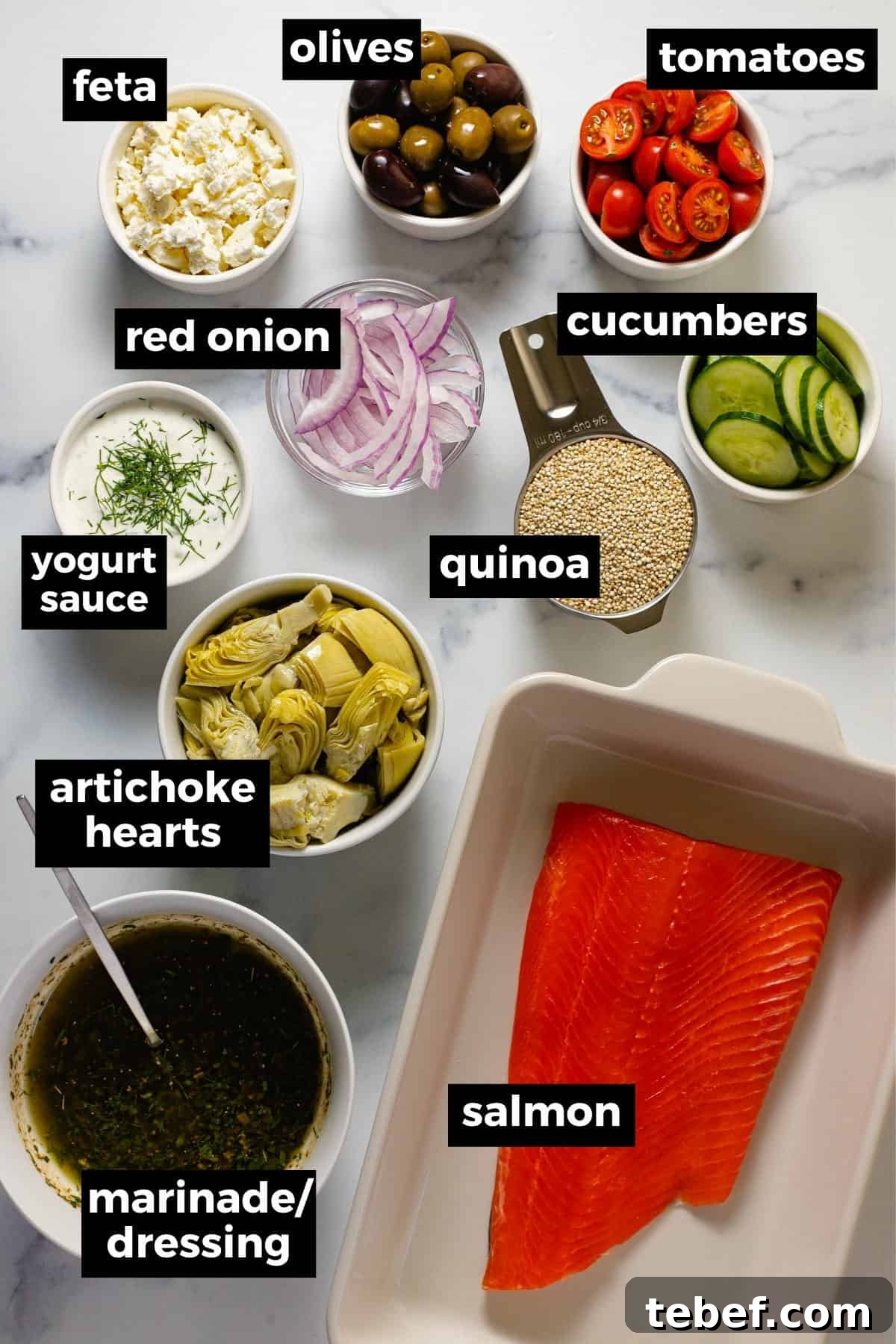
- Salmon – A hearty, flavorful fish that satisfies bigger appetites. Wild-caught sockeye is great, but you can also use farmed salmon, cod, or tilapia if preferred.
- Olive oil – The base for both the marinade and the dressing. Use a good-quality extra-virgin or cold-pressed olive oil for the best flavor.
- Balsamic vinegar – Adds depth and tang. White balsamic or white wine vinegar can be used in a pinch, though the flavor will be lighter.
- Fresh dill – Provides a sweet, bright note that balances the rich fish. If using dried dill, use about one-third of the fresh amount.
- Chopped parsley – Adds an earthy, peppery freshness. Cilantro can be substituted if you prefer its flavor.
- Dried oregano – Works well with the fresh herbs. If you don’t have oregano, dried thyme or rosemary will also pair nicely.
- Dijon mustard – Gives the dressing a gentle tang. Regular yellow mustard can be used, though the flavor will differ.
- Fresh garlic – Minced garlic brightens the dressing and the salmon. If using garlic powder, a rough conversion is 1 clove = 1/8 tsp garlic powder.
Instructions
Combine olive oil, balsamic vinegar, dill, parsley, oregano, garlic, and a couple pinches of salt and pepper in a jar. Shake well until the dressing is emulsified. Reserve some for drizzling and use about 1/3 cup to coat the salmon.
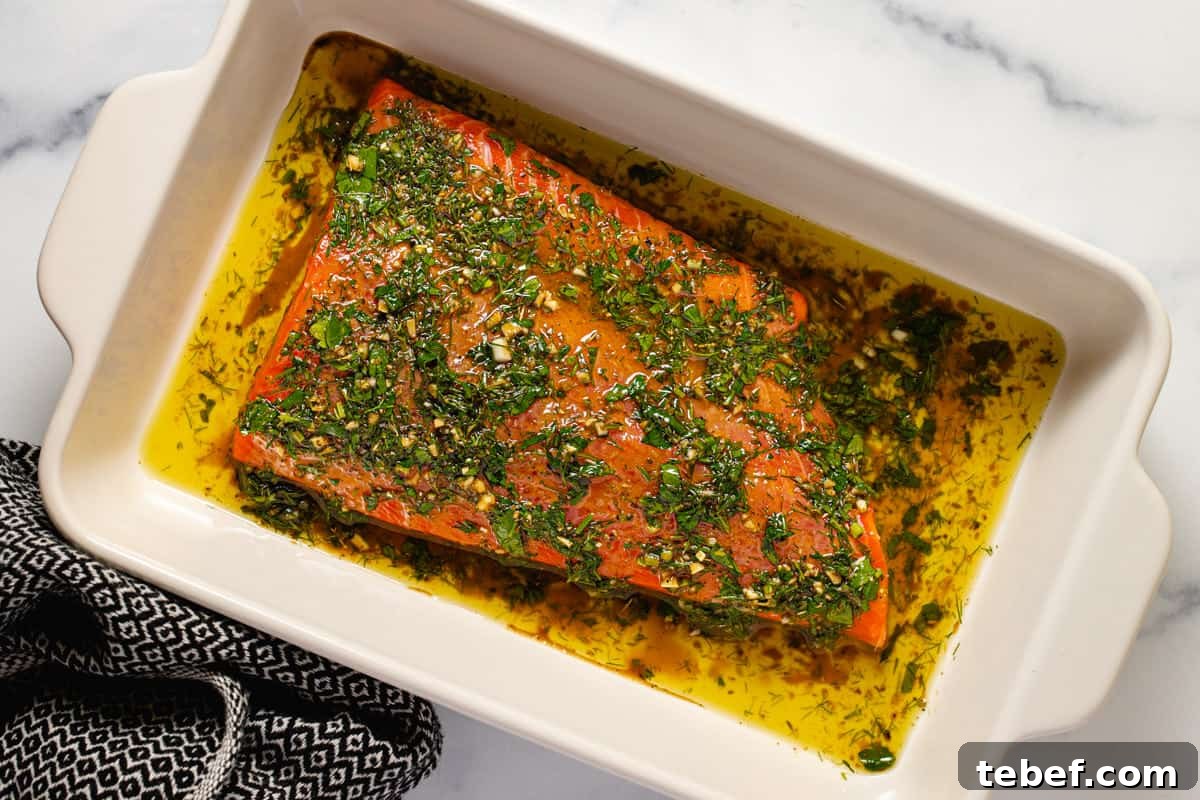
Place the salmon in a shallow baking dish or on a baking sheet and pour the dressing over it. Put the salmon into a cold oven, then set the oven to 400°F (200°C). Baking from a cold oven helps keep the salmon moist.
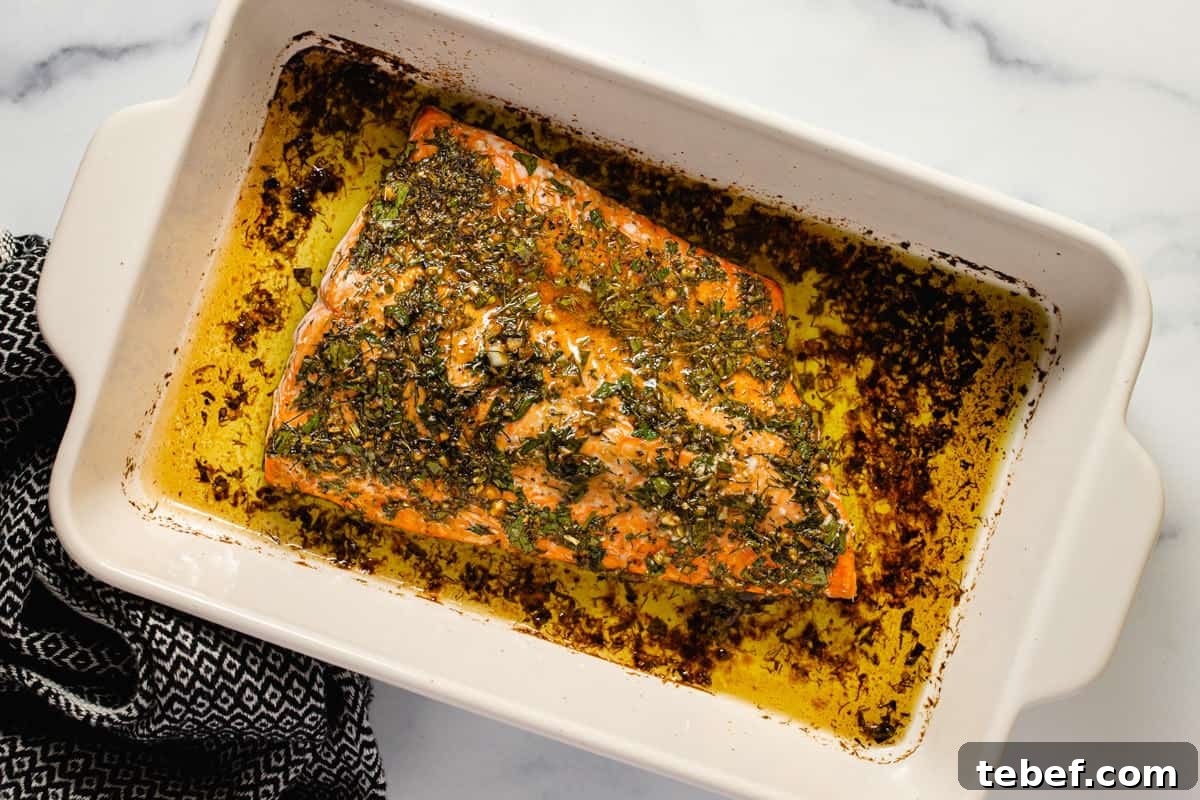
Bake for about 20 minutes, or until the salmon flakes easily with a fork and is cooked through.
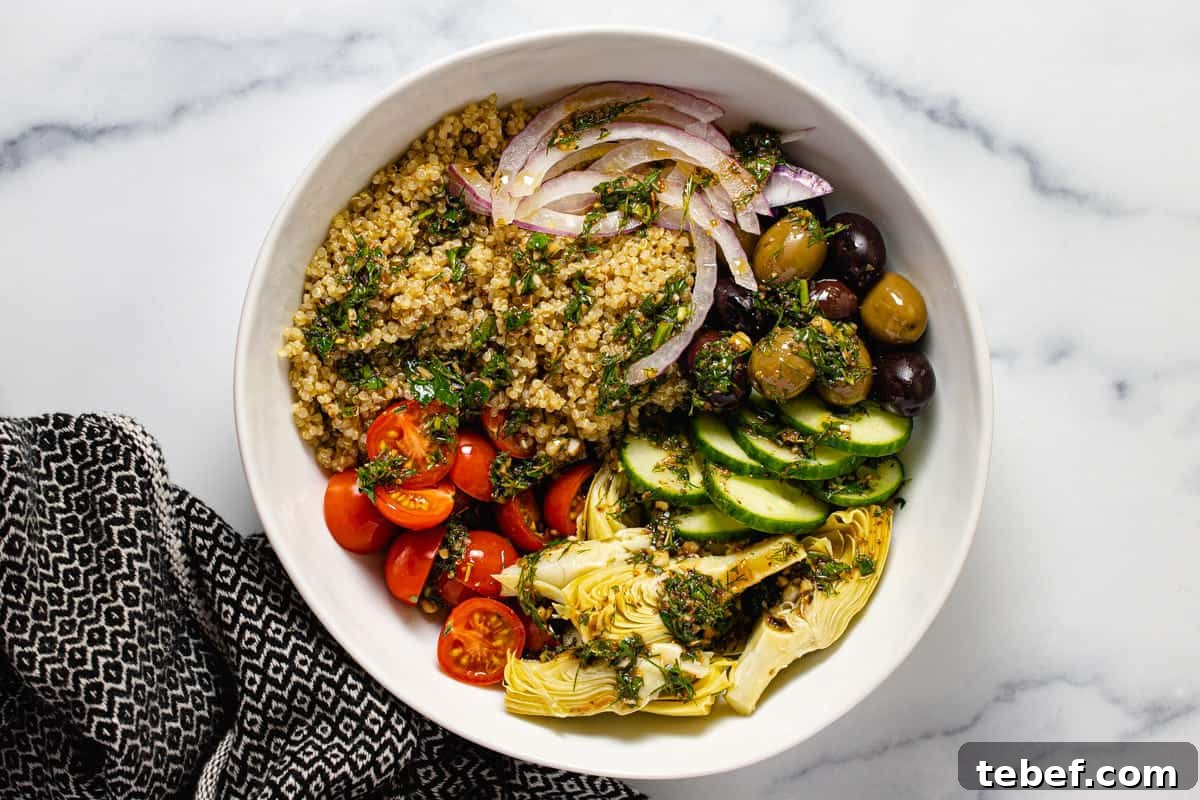
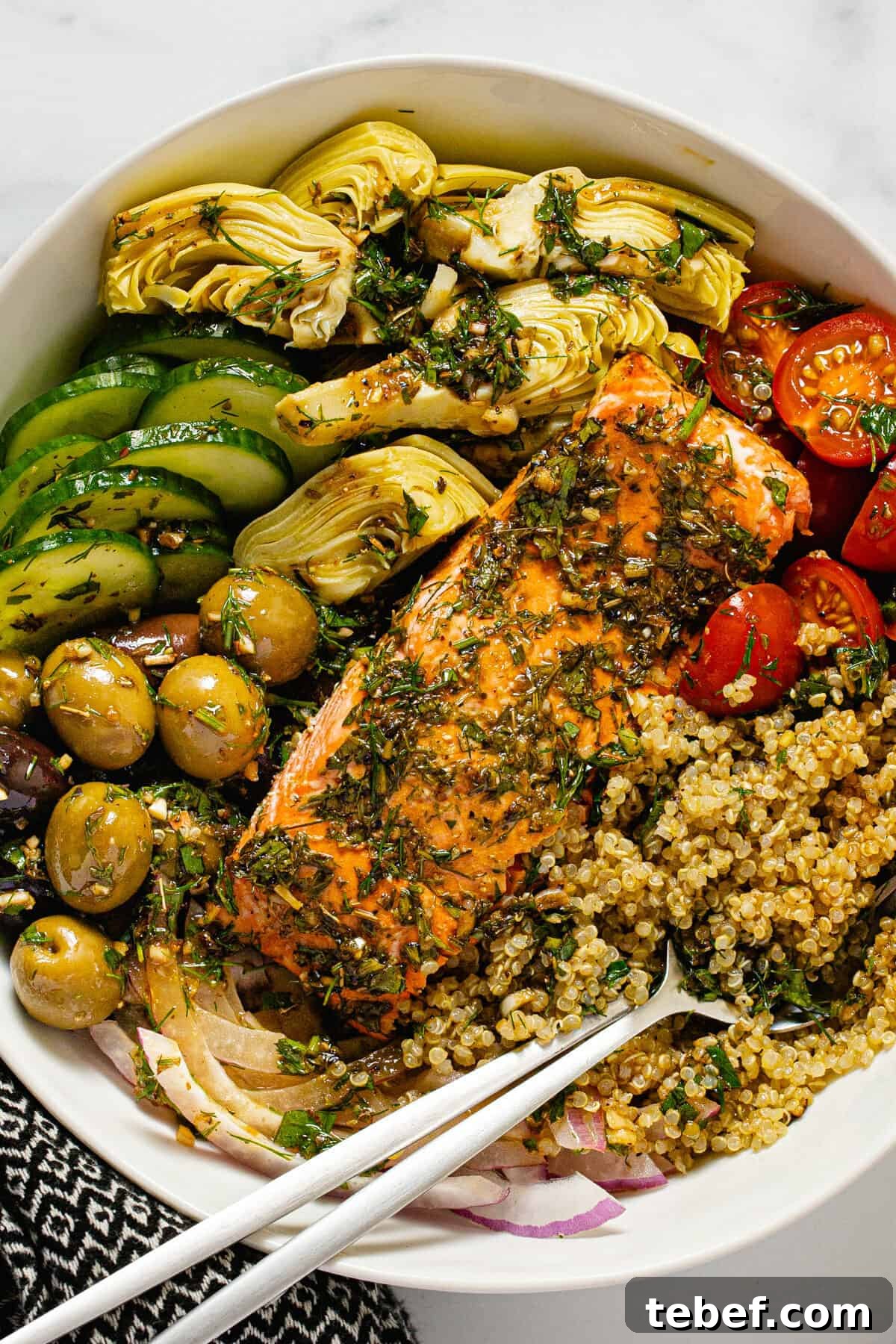
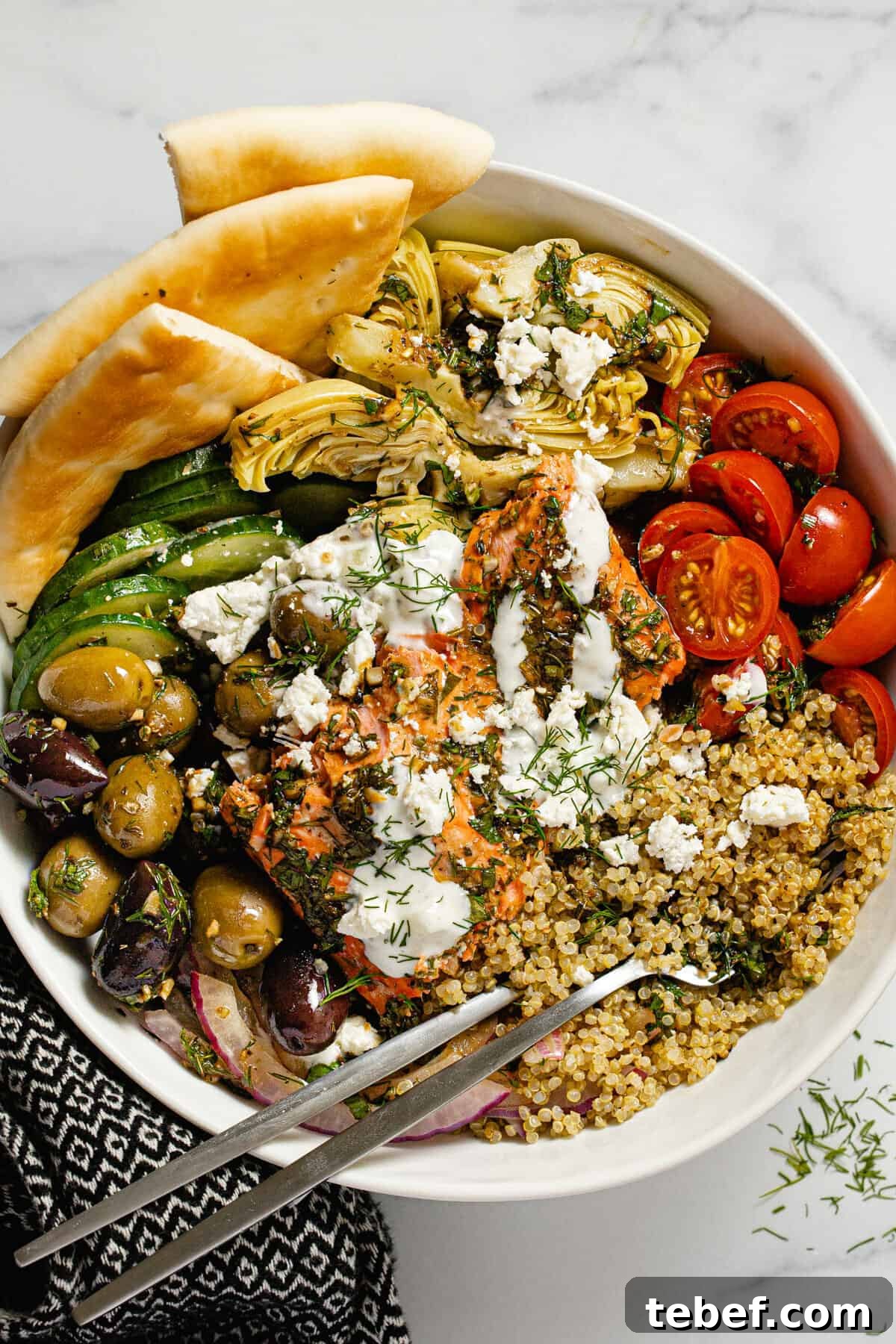
While the salmon bakes, cook the quinoa according to package directions. Fluff with a fork, season lightly, then let it cool. To assemble, divide the quinoa among four bowls and top with artichoke hearts, halved grape tomatoes, sliced cucumber, olives, thinly sliced red onion, crumbled feta, and pieces of baked salmon. Drizzle with the remaining dressing and garnish with fresh parsley.
Tips
- Start salmon in a cold oven. This low-and-slow approach prevents overcooking and yields moist, flaky salmon every time.
- Pick good-quality salmon. Fresh fish should not have a strong fishy smell and should appear moist. Frozen, flash-frozen fish is often just as good as “fresh.” Consider sustainability labels if that’s important to you.
- Thaw frozen fish safely. Thaw overnight in the refrigerator when possible. If you need to speed things up, keep the fish in its sealed package and submerge it in cold water, changing the water every 20 minutes until thawed.
- Avoid warm thawing methods. Do not leave fish at room temperature, microwave it, or use warm water to thaw, as these methods can start cooking the surface and ruin texture.
FAQ
Bake salmon at 400°F (200°C) until it flakes easily with a fork. Placing it in a cold oven and then turning the heat on helps prevent overcooking.
Bake salmon uncovered. Covering can retain moisture, but starting in a cold oven and not overcooking will keep the fish tender without wrapping it.
Baking offers even, reliable results and is very easy. Grilling adds smoky char but can be more challenging to control.
Easy Herb and Garlic Greek Salmon Bowls
These bowls are a fast, flavorful weeknight dinner with bold Mediterranean flavors and a bright herb vinaigrette. They’re perfect for customizing and for meal prep.
- Prep Time: 5 minutes
- Cook Time: 20 minutes
- Total Time: 25 minutes
- Yield: 4 servings
- Category: Main Dish
- Method: Oven
- Cuisine: Greek/Mediterranean
Ingredients
- 1 lb salmon fillet
- 5 tbsp olive oil
- 3 tbsp balsamic vinegar
- 2 tbsp fresh chopped dill
- 2 tbsp fresh chopped parsley, plus more for garnish
- 2 tsp dried oregano
- 1 tsp Dijon mustard
- 2 cloves garlic, finely minced
- Kosher salt and fresh cracked pepper, to taste
- 3/4 cup uncooked quinoa
- 1 (15 oz) can artichoke hearts
- 1 cup halved grape tomatoes
- 1 cup sliced English cucumber
- 1 cup pitted assorted olives
- 1/2 cup thinly sliced red onion
- 4 oz crumbled feta cheese
Instructions
- Whisk or shake together olive oil, balsamic vinegar, dill, parsley, oregano, garlic, Dijon mustard, and a couple pinches of salt and pepper until emulsified.
- Place the salmon in a shallow baking dish and pour about 1/3 cup of the dressing over the fillet.
- Put the salmon into a cold oven, then set the oven to 400°F (200°C). Baking from cold keeps the salmon moist.
- Bake for about 20 minutes, until the salmon flakes easily with a fork.
- While the salmon bakes, cook the quinoa according to package instructions, fluff with a fork, and let cool.
- Divide quinoa among four bowls. Top with artichoke hearts, tomatoes, cucumber, olives, red onion, and feta.
- Portion the baked salmon into four pieces and add to each bowl. Drizzle with remaining dressing and garnish with fresh parsley. Serve with an optional lemon-dill yogurt sauce if desired.
Notes
- Do not preheat the oven when baking the salmon—starting from a cold oven prevents dryness and yields a tender final result.
- Frozen, properly handled salmon can be just as good as fresh. Look for a clean smell and moist appearance when selecting fish.
- Thaw fish in the refrigerator overnight or use a cold-water submersion method. Never thaw seafood at room temperature or with warm water.