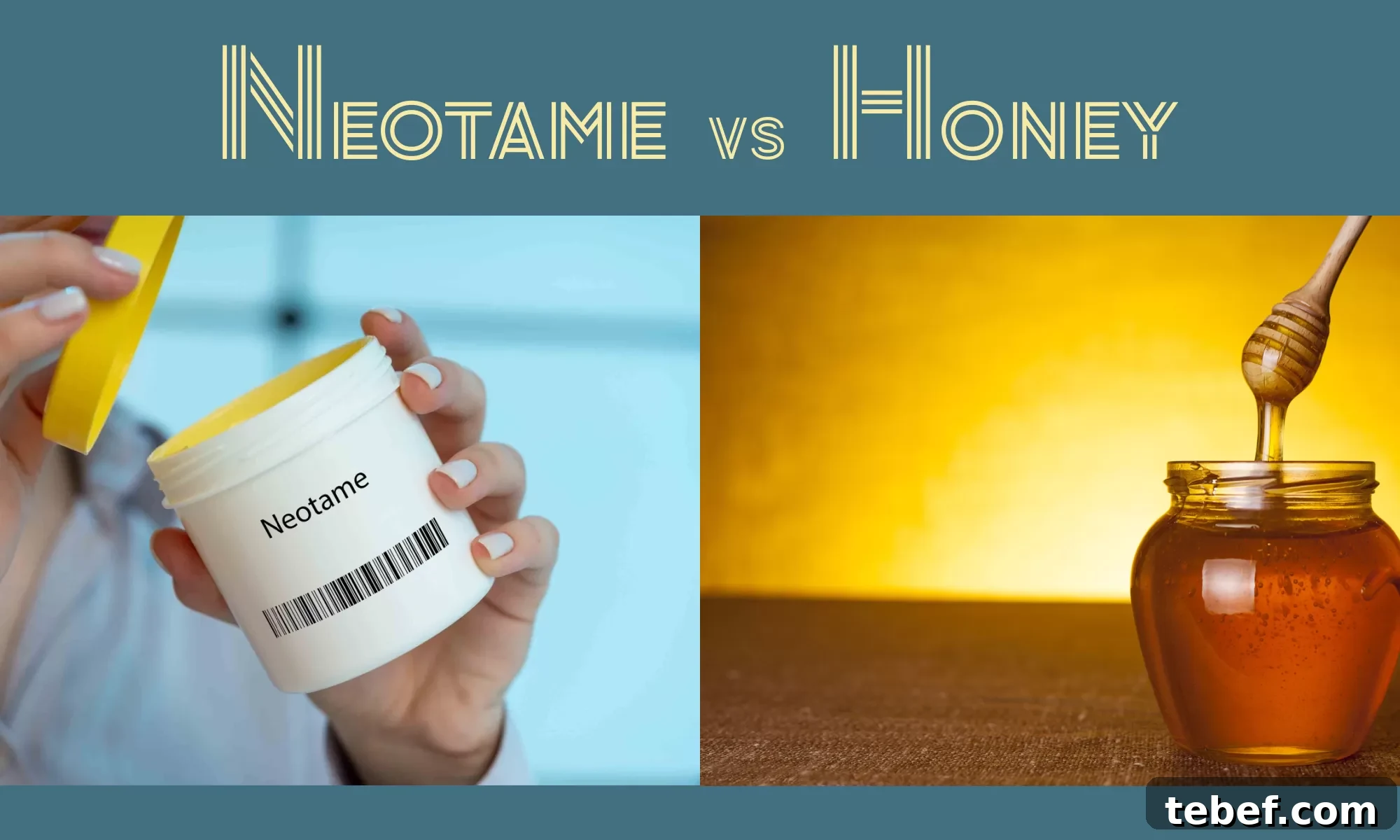
Introducing two very different sweeteners: honey and neotame. Honey is a natural, viscous sweetener made by bees from plant nectars and other sugary secretions. Its distinct flavors and aromas vary by floral source, and it has long been prized for culinary uses as well as traditional remedies. Neotame, by contrast, is an artificial, non-caloric sweetener roughly 8,000 times sweeter than sucrose. Sold under trade names like Newtame, neotame enhances sweetness without the bitter aftertaste sometimes associated with other synthetic sweeteners and is often blended with other sweeteners in commercial products. This article compares honey and neotame across taste, nutrition, culinary uses, storage, availability, environmental impact, and diet suitability to help you choose the better option for your needs.
Comparing Neotame vs. Honey
| Neotame | Honey | |
| Substitution ratio | n/a | n/a |
| Gluten-free? | Yes | Yes |
| Keto-friendly? | No | No |
| Paleo-friendly? | No | No |
| Common Allergens | Aspartame | Honey, some pollens |
| Pantry shelf life (unopened/sealed) | 5 years | Indefinite |
| Best for baking | Diet sweet food products and beverages | Flaky, sweet pastries and baked goods |
Differences Between Neotame And Honey
Honey is a complex natural product composed mainly of fructose (about 40%) and glucose (about 30%), with water (roughly 17%), minor sugars, and trace vitamins and minerals. Its flavor and color depend on the floral source, producing a wide variety of taste profiles from mild and floral to robust and earthy. Honey also exhibits antibacterial and anti-inflammatory properties, and its antioxidant compounds—such as flavonoids and polyphenols—contribute to its use in soothing coughs and promoting wound healing in traditional applications.
Neotame, derived from aspartame chemistry, is a white to off-white crystalline powder that is highly stable under heat and during processing. It provides intense sweetness with minimal off-flavors and can be used in baked goods, beverages, confections, chewing gum, and dairy products. It is also used to mask bitter tastes in pharmaceuticals and nutritional supplements. Because neotame is so much sweeter than sugar, only minute quantities are needed, which affects formulation and texture when replacing bulk sweeteners.
Taste and Culinary Uses
Honey contributes far more than sweetness: its viscosity, acidity, and aromatic compounds add depth and mouthfeel that complement both sweet and savory dishes. It enhances dressings, marinades, sauces, baked goods, and preserves, and its caramelization behavior affects texture and browning in cooking.
Neotame closely mimics the sweet perception of sucrose with a subtle licorice-like note for some palates. Its primary culinary advantage is intense sweetness without calories, and it enhances fruit flavors—especially berry and citrus—making it useful in processed foods, beverages, ice creams, and desserts. Because neotame does not provide bulk, recipes often require bulking agents or reformulation when replacing honey or sugar.
Are Neotame and Honey Substitutes for Each Other?
They are not direct substitutes in most applications. Neotame can sweeten beverages where volume and texture are less important, but in baking and recipes where honey contributes moisture, browning, and structure, using neotame alone will change the final product. Because neotame is far sweeter, tiny amounts are used, which can disrupt consistency, volume, and flavor balance unless the recipe is specifically reformulated.
Nutritional Profile And Health Benefits
- Honey (1 tbsp.):
- Calories: 60
- Total carbs: 17 g
- Sugars: 17 g
- GI: 58
- Neotame:
- Calories: 0
- Total carbs: 0 g
- Sugars: 0 g
- GI: 0
Honey contains bioactive compounds with antioxidant, antimicrobial, and anti-inflammatory effects that support its traditional medicinal uses. These constituents may provide modest benefits when included as part of a balanced diet. Neotame offers the advantage of zero calories and no glycemic impact, which can be helpful for people managing caloric intake or blood sugar, though it lacks the micronutrients and bioactive properties found in honey.
Diet Suitability
Diet considerations differ: honey is not vegan due to its animal origin, and while it is a whole-food sweetener, it can disrupt ketosis and is therefore unsuitable for strict keto diets. Whole30 excludes all sweeteners, including honey. Neotame is vegan and calorie-free, but it is an artificial ingredient and is not compatible with paleo or Whole30 principles. It is also not considered keto-friendly by some practitioners due to its synthetic nature, despite having no glycemic effect.
How to Store Neotame and Honey
Store honey in a sealed glass jar with an airtight lid at room temperature, away from direct heat and sunlight; properly stored honey can remain shelf-stable indefinitely. Keep neotame in a dry, airtight container in a cool, dark place to preserve potency and prevent moisture absorption. Avoid storing honey in reactive metal containers and avoid non-food-grade plastics for either product.
Price and Availability
Honey pricing varies widely by quality and origin; a typical average price might be around $2.96 per pound, though artisanal or single-origin honeys cost more. Neotame is sold commercially and can range roughly from $12 to $40 per pound depending on purity and supplier. Honey is generally easier to find at grocery stores and farmers’ markets, while neotame is more common through ingredient suppliers and specialized retailers.
Environmental Impact
Honey production relies on beekeeping and pollination services, which can be sustainable when managed responsibly; beekeeping generally has a smaller carbon footprint than industrial sweetener production and contributes to ecosystem services through pollination. Artificial sweeteners like neotame are synthetic compounds produced through industrial processes; some synthetic sweeteners persist in the environment and may be more difficult to degrade, raising concerns about long-term ecological effects. Choosing sustainably produced honey or responsibly manufactured sweeteners can help reduce impact.
Neotame vs. Honey: The Ultimate Verdict
Both sweeteners have clear advantages. Honey is a natural, flavorful ingredient with a long culinary and medicinal history, while neotame provides intense, calorie-free sweetness useful in processed foods and calorie-conscious formulations. If you prefer whole foods and the additional functional benefits of a natural sweetener, honey is likely the better choice. If you need a calorie-free sweetening solution that closely mimics sugar’s sweetness in low-volume applications, neotame may be worth considering. The best choice depends on your dietary goals, taste preferences, and the specific culinary application.
FAQs
Neotame’s extreme sweetness makes dosing challenging, and some consumers react negatively to its association with aspartame derivatives. Sweetness onset and perception can differ from sugar, requiring formulation adjustments.
Experts note that neotame may produce trace amounts of phenylalanine, but at typical use levels this is not considered a significant risk for most people. As with all additives, regulatory approvals and safety assessments guide its use in foods.
Neotame, sold under trade names such as Newtame®, is approved for use in certain foods by regulatory agencies; always check current product labeling and regulations in your region.