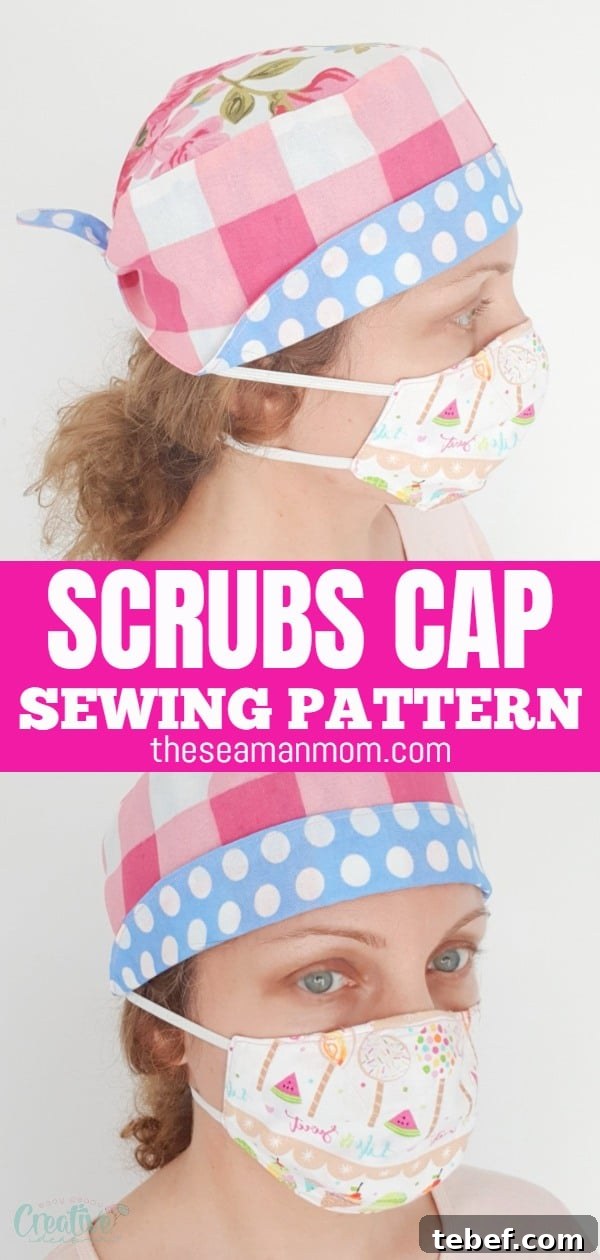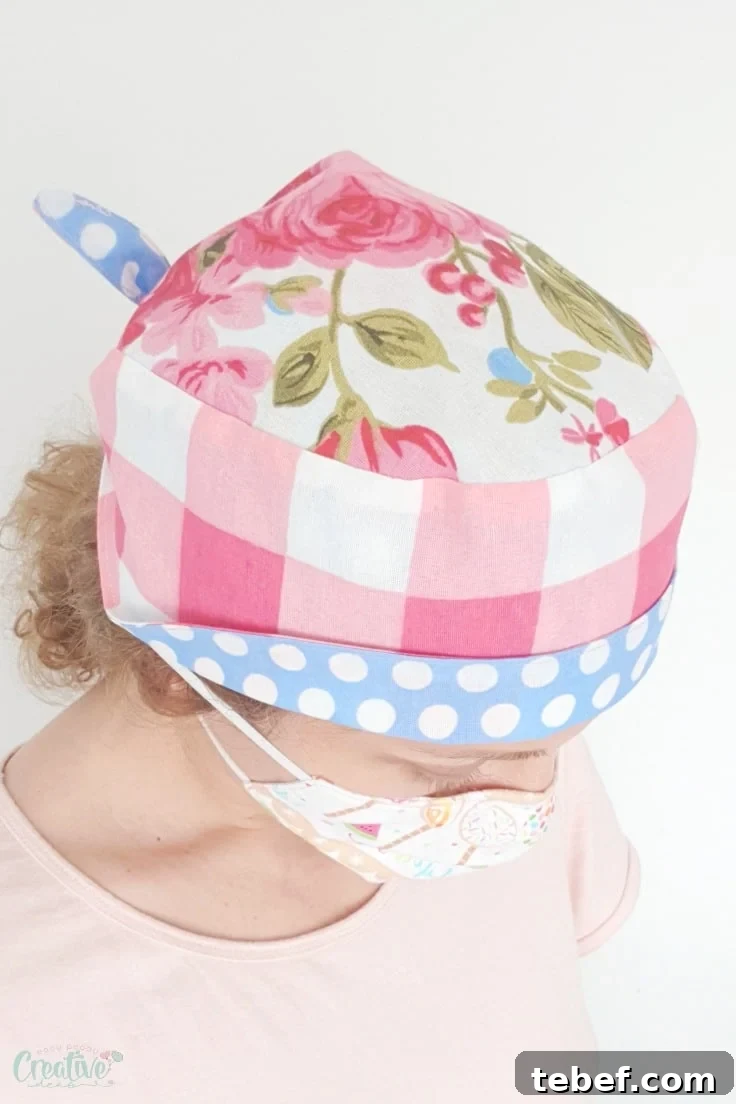
If you want to support medical staff, this scrub cap pattern is an excellent sewing project. Pair it with a matching face mask and a headband with buttons for a thoughtful gift set for healthcare workers.
Scrub cap pattern
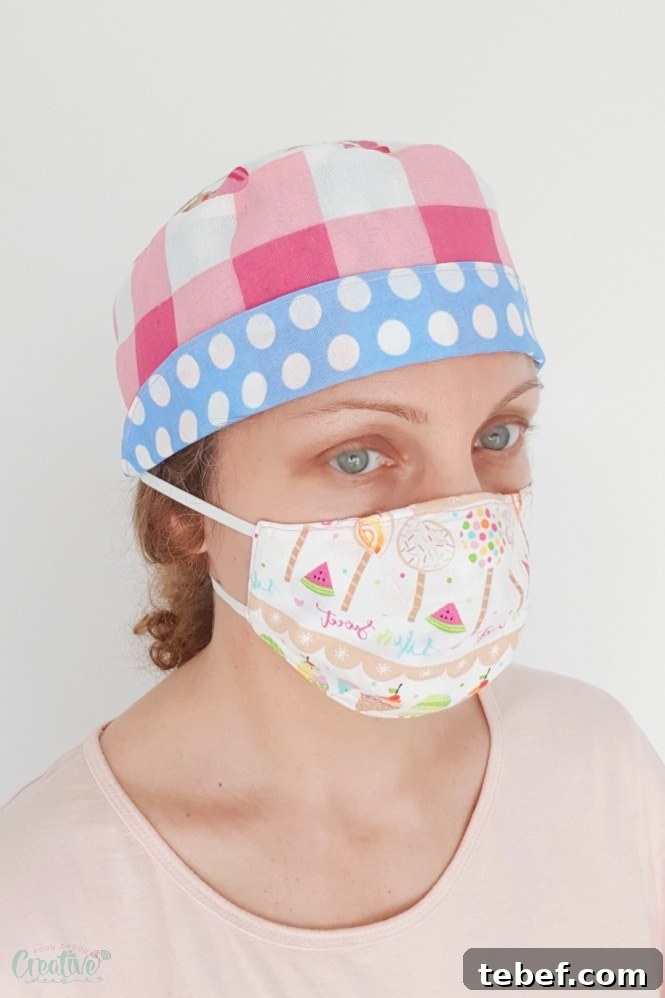
This tutorial shows how to sew a reversible textile scrub cap that can be washed, disinfected and reused. Reusable caps are a practical alternative to disposable caps: they save money, reduce waste and can be laundered at high temperatures and steam-ironed for proper sanitizing. You can sew caps for yourself, family members who work in the medical field, or donate them to a local hospital.
Scrub caps are used in hospitals and other medical settings to reduce contamination risk. Even clean hair carries bacteria and can harbor viruses, so tying and covering hair helps protect vulnerable patients. These caps are often referred to as nurse caps, medical caps, surgery hats or scrub hats—different names for the same protective function.
Similar projects you will love:
- No elastic face mask with filter pocket
- Headband with buttons
- Simple waterproof face mask with filter pocket
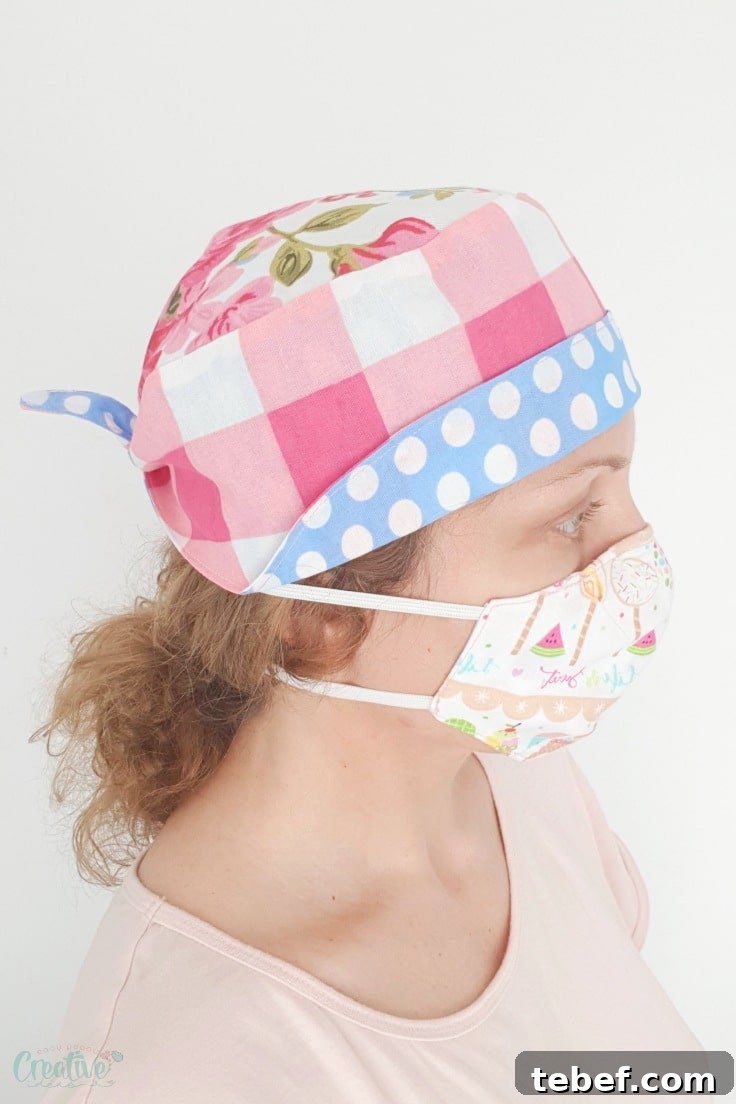
This pattern uses only a small amount of fabric, and because the cap is reversible you can change the look easily. The finished cap offers a more personalized appearance than standard disposable blue caps. The sewing is straightforward—many crafters can complete a cap in 20–30 minutes—so it’s suitable for beginners. If children are old enough to use a sewing machine safely, they can help with simpler steps. The pattern is budget-friendly compared with buying manufactured caps and reduces reliance on scarce disposable supplies.
For durability and effective sanitizing, choose medium-weight cotton or another tightly woven fabric that withstands hot water wash cycles and steam ironing. These fabrics tolerate the temperatures needed to reduce germs and viruses on the cap before reuse.
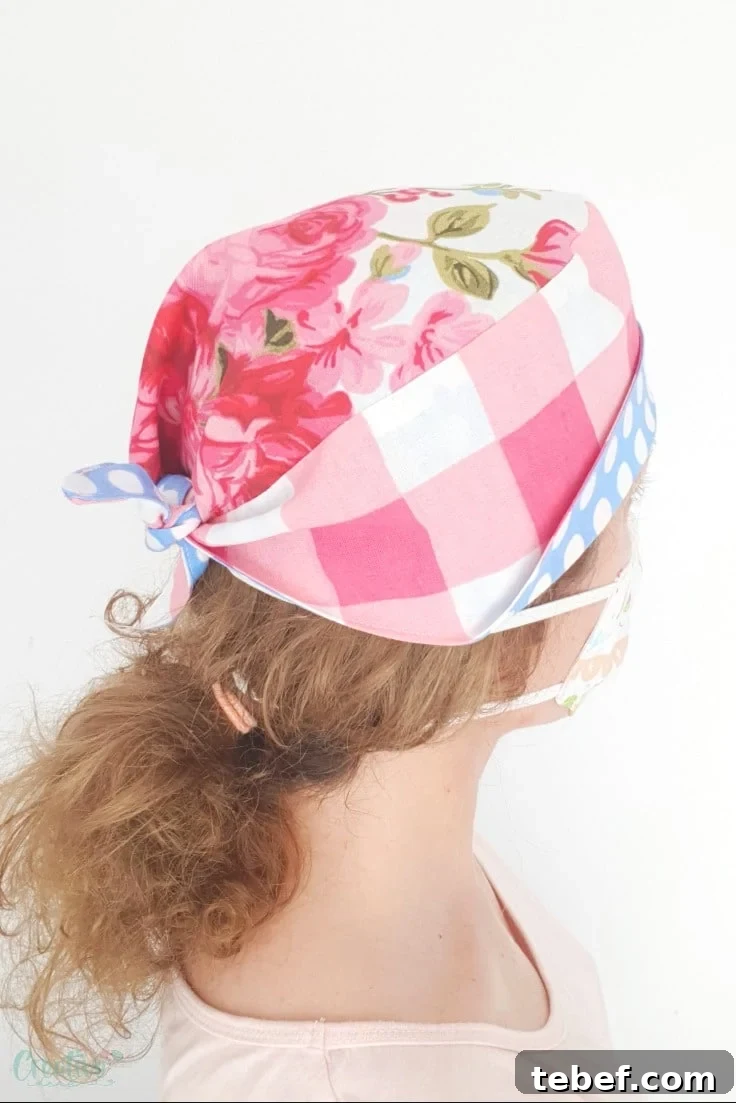
Even if you’re not in healthcare, a scrub cap can be useful for grocery shopping or other outings where you’d like hair coverage. While not a complete barrier, a cap helps reduce contact with environmental contaminants. Always wash your hair and clothes after returning home if you’ve been in high-exposure environments.
These caps are also helpful for people undergoing chemotherapy, those recovering from cranial surgery, kitchen staff, or anyone needing head coverage for sanitary or aesthetic reasons.
Tips that improve comfort and functionality:
- Add buttons to the band so mask loops can hook there instead of pulling on the ears, which reduces pressure and discomfort;
- Leave extra length at the back or add a small pouch for ponytails or long hair so it tucks comfortably inside the cap;
- For large, curly hair or larger head sizes, make a looser, fuller style similar to a chef’s cap to provide more room and comfort.
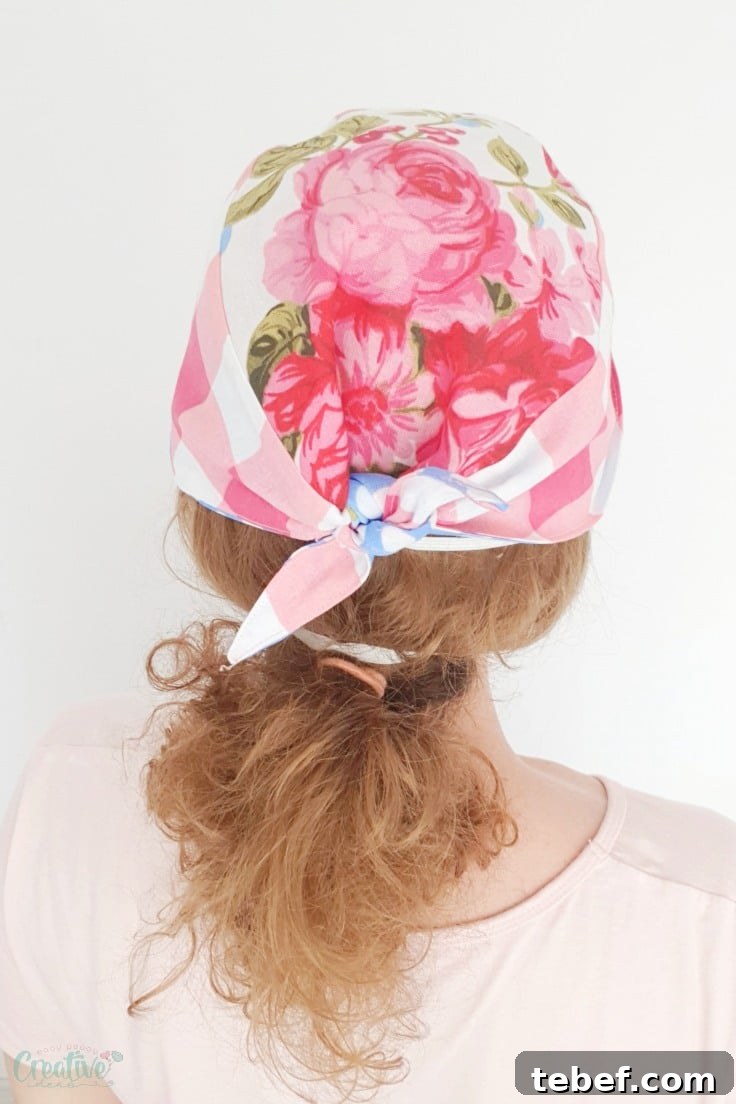
Whether you sew one for yourself, make one for a partner, or produce several to donate, this scrub cap is an excellent project during lockdown or whenever you want to support caregivers. Use fabrics that can be cleaned thoroughly—avoid embellishments that can’t be laundered or sanitized.
I welcome feedback on this cap and any ideas you have to make it more attractive or functional.
The full printable pattern is available in sizes S, M and L.
Surgical cap pattern
Materials:
- Printed scrub cap pattern (choose S, M or L)
- 100% cotton or similar medium-weight woven fabric — about 1/2 yard for a reversible cap (main and lining). You can mix fabrics for the top and band if you like contrasting looks.
- Scissors
- Pins
- Matching thread
- Sewing machine
- Pressing iron
Directions:
Prepare pattern pieces
- Print the pattern and align pieces at the marked circles or semi-circles. You should end up with two top cap pieces and two band strips with ties.
- You have two construction options depending on the look and fit you prefer:
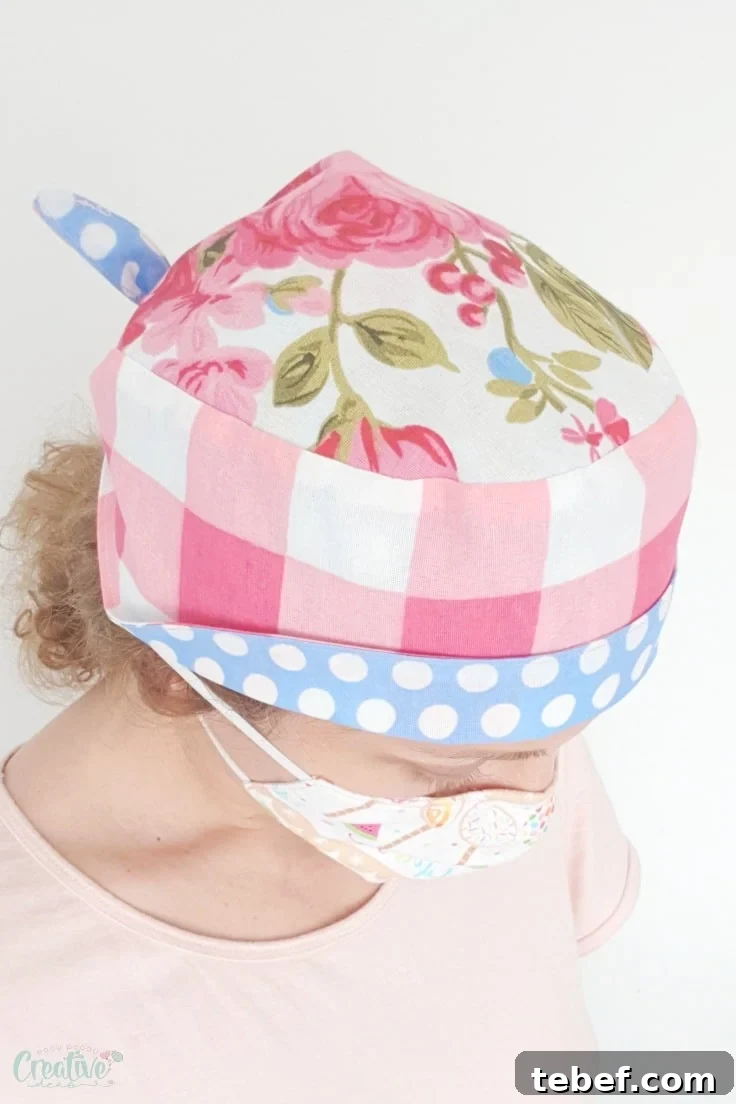
- Attach the band by its straight edge to the top piece. If you prefer a folded band appearance like the photos, use dart option #1 on the pattern.
- Attach the band by its curved edge for more forehead and ear coverage and more internal volume to hold larger or longer hair. For this version, do not fold the band when wearing; use dart option #2.
This tutorial describes attaching the straight edge of the band to the top piece; the steps are the same for the curved-edge option.
Construct the caps
- Place one top cap piece right side up.
- Lay the band piece on top, wrong side up, aligning the straight edges with the top piece. Pin the raw edges together. If you’re new to sewing curves, review techniques for matching concave and convex curves to make this step easier.
- Sew the joined edge using approximately 1/2″ seam allowance.
- Repeat the same steps to construct the lining cap.
- Press the seam allowances toward the band on both the main and lining caps.
- Trim corners and clip notches along curved edges, being careful not to cut the stitching, to help the cap turn smoothly and lie flat.
Sew caps together
- Place the main cap right side up and insert the lining cap wrong side up, so right sides face each other.
- Align all raw edges and pin around the band and bottom edge of the top cap.
- Sew around the pinned edges with a 1/2″ seam allowance, leaving a 2–3″ opening to turn the cap right side out.
- Turn the cap through the opening and smooth the seams.
Finish the cap
- Press the cap thoroughly so the seams sit flat.
- Topstitch around the band and lower edge with an 1/8″ allowance for a neat, durable finish.
- Fold the front of the band up when wearing for a classic scrub-cap look.
Pin to save for later